

Airbus’ Aeolus-2 Satellite Signals New Era of AI-Driven Weather Forecasting from Space
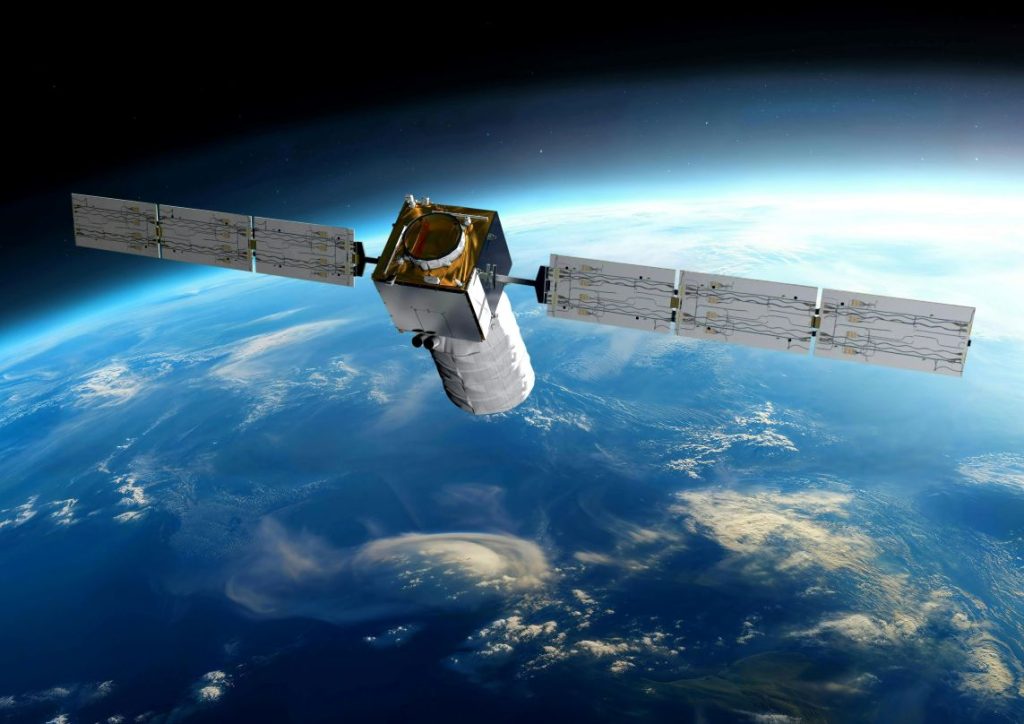
A next-generation wind-sensing satellite promises faster, more accurate weather intelligence by combining advanced laser technology with near real-time data delivery, highlighting how space-based Earth observation is becoming critical digital infrastructure.
European aerospace giant Airbus, has secured a contract from the European Space Agency (ESA) to design and build Aeolus-2, a next-generation Earth observation satellite that promises to deliver faster and more detailed global wind measurements, strengthening weather prediction, climate research and disaster preparedness.
Rather than simply replacing its predecessor, Aeolus-2 represents the evolution of weather forecasting into a data-intensive digital service. Modern forecasting models increasingly rely on artificial intelligence and high-performance computing, both of which depend on vast streams of accurate atmospheric data. By supplying high-resolution wind information from every region of the globe, the satellite is expected to become an essential data source for these systems.
The original Aeolus mission, launched in 2018, was the world’s first satellite capable of directly measuring global wind profiles from space. According to ESA, the mission improved numerical weather forecasting by about four percent, a significant gain in an industry where even marginal improvements can translate into better storm warnings, aviation safety and agricultural planning.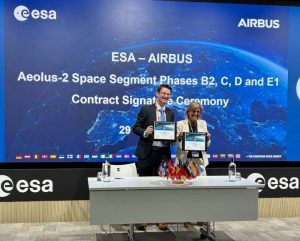
“Aeolus exceeded expectations and demonstrated the transformative impact that space-based wind observations can have on weather forecasting. Aeolus-2 represents the natural evolution of that achievement – from pioneering research to an operational service that will benefit citizens and businesses worldwide. We are happy to provide the authorisation to proceed, which marks an important milestone in ensuring Europe remains at the forefront of atmospheric observation and meteorological innovation,” said Simonetta Cheli, ESA’s Director of Earth Observation Programmes.
Aeolus-2 aims to build on that success with more sophisticated technology. At the heart of the satellite is an advanced Doppler wind lidar instrument that fires ultraviolet laser pulses through the atmosphere. By analysing the tiny changes in the reflected light, the system can determine both wind speed and direction from ground level to approximately 30 kilometres in altitude. The instrument performs measurements every one-hundredth of a second while scanning the planet, allowing the satellite to build a continuously updated picture of global atmospheric circulation.
Unlike the first mission, Aeolus-2 will also carry an additional detector capable of measuring atmospheric aerosols, including dust, smoke and volcanic ash. These observations will improve climate research while also supporting aviation by providing better information on airborne hazards.
The satellite is designed to orbit Earth about 15 times each day at an altitude of roughly 450 kilometres. Weather centres are expected to receive data within two hours of collection, enabling faster assimilation into forecasting systems and allowing models to update more rapidly as weather conditions evolve.
That capability reflects a broader shift in Earth observation, where satellites are increasingly viewed not simply as scientific instruments but as providers of operational digital services. Continuous, near real-time environmental data has become essential infrastructure for governments, airlines, shipping companies, emergency responders and energy providers that depend on accurate forecasts to make operational decisions.
The programme is being developed by ESA in partnership with the European Organisation for the Exploitation of Meteorological Satellites (EUMETSAT), with users expected to include major forecasting institutions such as the UK’s Met Office and the European Centre for Medium-Range Weather Forecasts.
“Aeolus-2 is more than a scientific mission; it is a major investment in British talent,” said Kata Escott, Managing Director of Airbus Defence and Space in the UK. “This project allows our highly skilled UK teams to apply their unique expertise to enhance weather monitoring and lead the way globally in Earth observation and science.”
The contract reinforces Airbus’ position in Europe’s growing space technology ecosystem while demonstrating how satellite innovation is increasingly converging with artificial intelligence, cloud computing and advanced analytics.
As climate variability increases and demand for more precise forecasts continues to grow, satellites like Aeolus-2 are becoming as important to the digital economy as communication and navigation systems—turning space into one of the world’s most valuable sources of environmental intelligence.
Related Posts
 Airbus sees USD420bn Global Aviation Services Boom: Can Africa Capture its Share?
 IATA says Aviation Safety’s Next Gains Will Depend on People, Technology and Standards
 Uganda Architects to Celebrate 60 Years as Profession Confronts a Technology-driven Future
 28 Ethiopian Students Graduate from Ethiopian Airlines-Boeing STEM Programme
 Kigali to Host Carbon Markets Africa Summit as Climate Finance Opportunity Grows
 2,626 Students complete Boeing-FASESA programme as Space sector Expands across Africa
Get business news delivered to you everyday
Latest News

Uganda Coffee Roasters Tap Richard Rugaya as Executive Director, with Focus on Commercial Growth

Equity Bank Reports UGX37.6 Billion in Green Loans as Uganda Seeks to Scale Climate Investment

Why Africa’s Institutions Must Turn Knowledge and Investment into Farmer Prosperity

Forbes ranks MTN Group third globally on best telecom employer list

Stanbic experts offer investment insights to navigate current market uncertainty

Africa Carbon Markets Urged to Turn Potential into Investment and Delivery

Bank of Uganda hikes base rate from 9.75% to 12% amidst global tensions

Corporate Buyers Could Help Unlock SAF Market Worth Millions of Tonnes by 2030

Airbus sees USD420bn Global Aviation Services Boom: Can Africa Capture its Share?

Nile Breweries Celebrates 75 Years of Growing with Uganda