

How a Mother’s Struggle for Breath Sparked a Clean Energy Revolution
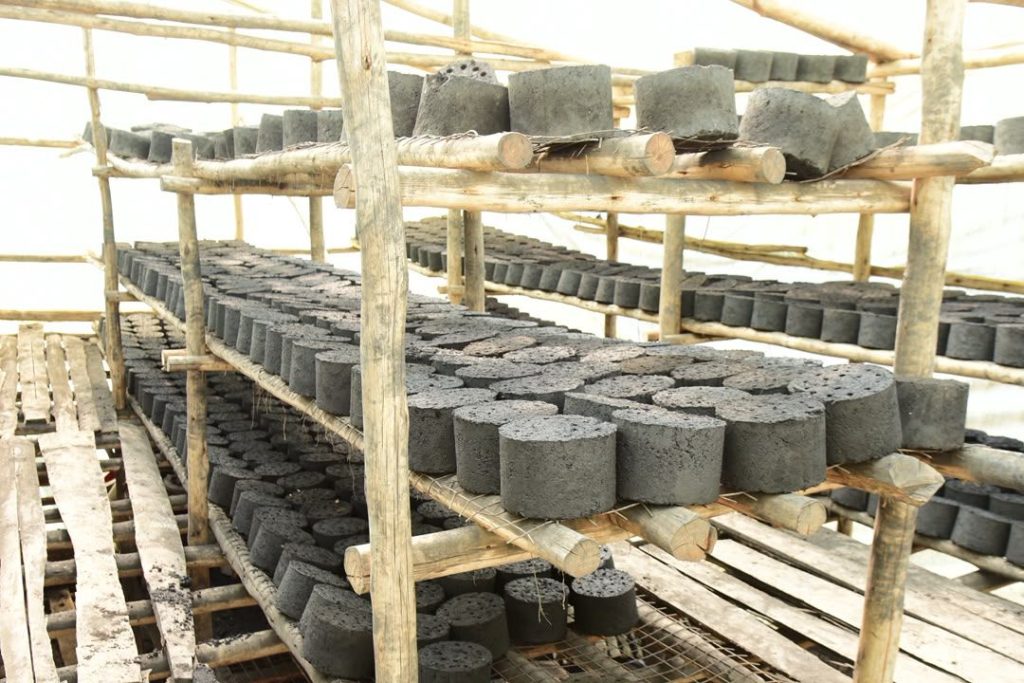
What began as a son’s determination to spare his mother the suffering caused by smoke-related illness has grown into a thriving clean energy enterprise. In Mbarara, Elsmart Conservation Technologies is transforming agricultural waste into cleaner cooking fuels and improved cookstoves, proving that business success, public health and environmental conservation can go hand in hand.
For years, Matovu Muhudi helplessly watched as his mother struggled for every breath. The woman who had spent much of her life cooking over smoky charcoal and firewood stoves eventually developed Chronic Obstructive Pulmonary Disease (COPD), a debilitating illness that made even simple tasks exhausting.
As a medical professional, Muhudi could help treat the disease. But standing beside his mother’s hospital bed, he realised medicine alone would never solve the problem.
The smoke filling millions of Ugandan kitchens every day was creating new patients faster than hospitals could treat them.
“I realised I needed to stop the illness before people reached the hospital,” Muhudi recalls.
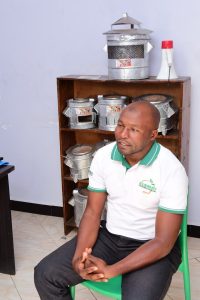
Matovu Muhudi
That deeply personal decision would change not only his own life but also the lives of thousands of families across Western Uganda.
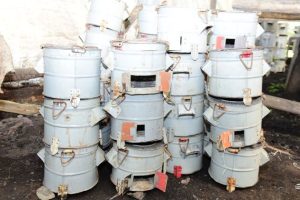
In March 2020, he founded Elsmart Conservation Technologies, a Mbarara-based clean energy enterprise that manufactures improved cookstoves from recycled scrap metal and produces biomass briquettes from agricultural waste. What began as one son’s determination to spare other families the pain his own had endured has steadily evolved into one of the region’s emerging clean cooking businesses.
Today, the company is tackling three of Uganda’s most pressing challenges at once – household air pollution, deforestation and youth employment.
“My mother’s illness changed everything,” Muhudi says. “I wanted ordinary Ugandans to have cooking technologies that protect their health without becoming too expensive.”
Every day, tonnes of coffee husks, sawdust and other agricultural waste are discarded or burned across Uganda. Elsmart gives that waste a second life, converting it into clean-burning briquettes that provide households and businesses with an affordable alternative to charcoal while easing pressure on the country’s forests.
The improved cookstoves use less fuel, produce significantly less smoke and reduce the indoor air pollution that health experts associate with respiratory diseases, particularly among women and children who spend long hours around cooking fires.
Yet transforming a personal mission into a sustainable manufacturing business required more than passion.
A major breakthrough came after Elsmart joined the Uganda National Alliance on Clean Cooking (UNACC) and participated in the Results-Based Financing (RBF) programme implemented by GIZ EnDev in partnership with Equity Bank Uganda.
Unlike traditional grants, the programme rewards verified results.
“Results-Based Financing is not about promises. The systems must first be installed, operational and independently verified before incentives are paid,” explains Virginia Semakula, Equity Bank’s Head of Energy, Environment and Climate Change.
Through the programme, Elsmart was contracted to supply 600 household cookstoves and 213 commercial stoves for restaurants and other businesses.
Muhudi exceeded those commitments—and used the opportunity to reinvent his business.
“The programme gave us confidence to invest in mechanised production,” he says. “Before then, everything was done on a much smaller scale.”
The investment transformed Elsmart from a largely manual workshop into a mechanised manufacturing operation capable of producing both honeycomb and stick briquettes. Production capacity increased, product quality improved and annual turnover rose from about Shs72 million to Shs98 million.
One of the company’s most significant innovations has been the introduction of biomass briquettes retailing at about Shs1,500 per kilogram, making cleaner cooking more accessible to ordinary households.
For Muhudi, however, financial growth has never been the ultimate measure of success.
“We are trying to eliminate diseases caused by smoke while protecting the environment,” he says.
The journey has not been without obstacles.
Traditional cooking stoves, some costing as little as Shs8,000, remain the preferred choice for many households because of their lower upfront cost.
Although Elsmart sold 1,200 household stoves during the RBF programme—twice the contractual target of 600—it still fell short of Muhudi’s own goal of reaching 2,000 households.
He believes broader adoption will depend on continued financing programmes that make improved cooking technologies more affordable, alongside stronger quality enforcement to eliminate substandard products that undermine consumer confidence.
The programme also changed how Elsmart does business.
 To satisfy strict verification requirements, the company developed detailed customer databases and after-sales support systems. What initially seemed like paperwork has become one of Elsmart’s greatest competitive advantages, enabling the business to follow up with customers, monitor stove performance and build loyalty through responsive service.
For employee Alapha Nakayima, who previously worked with USAID on health programmes, the company’s mission resonates on a personal level.
“I joined Elsmart because I understood the health benefits,” she says. “There has been an increase in respiratory illnesses caused by prolonged exposure to smoke from traditional cooking. These improved stoves help families live healthier lives.”
She now uses the products in her own home and encourages neighbours to make the switch.
Looking ahead, Elsmart plans to automate its production line, expand distribution across Western Uganda and enter the carbon credit market, creating an additional revenue stream from the environmental impact of its clean cooking technologies.
But for Muhudi, the company’s greatest achievement cannot be measured only in sales or profits.
Every improved stove installed represents one less family breathing dangerous smoke. Every bag of briquettes produced turns agricultural waste into cleaner energy. Every customer reached brings Uganda a step closer to healthier homes and a more sustainable future. For a business born beside a hospital bed, that may be the most meaningful return of all.
Related Posts
 Independence Marathon Turns to Blood Storage Gap in Maternal Health Drive
 Fine Spinners Injects Fresh USD5m Into Technology as Uganda Textile Maker Targets African, European Markets
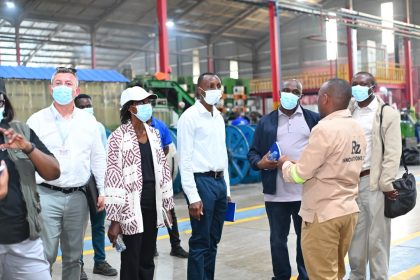 Equity Trade Mission Puts Uganda’s Manufacturing Capacity to Regional Test
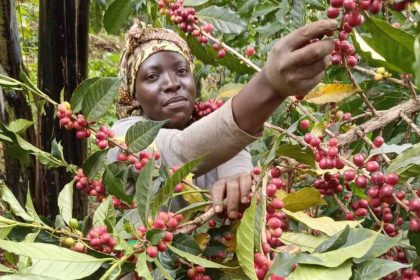 Uganda Seeks to Calm Coffee, Cocoa Markets as Global Prices Fluctuate on Positive Sentiment
 Uganda Green Entrepreneurs Set for Paris Visit as Stanbic-France Partnership Graduates 106
 Entebbe Airport Passenger Traffic Recovers in August but Remains Below 2025 Levels
Get business news delivered to you everyday
Latest News

Independence Marathon Turns to Blood Storage Gap in Maternal Health Drive

Fine Spinners Injects Fresh USD5m Into Technology as Uganda Textile Maker Targets African, European Markets

Equity Trade Mission Puts Uganda’s Manufacturing Capacity to Regional Test

Uganda Seeks to Calm Coffee, Cocoa Markets as Global Prices Fluctuate on Positive Sentiment

Uganda Green Entrepreneurs Set for Paris Visit as Stanbic-France Partnership Graduates 106

Nile Breweries, Next Media Renew Road Safety Push with Focus on Boda Boda Riders

Equity Bank Explores Value-Chain Financing to Support Zigoti Coffee Expansion

Uganda Breaks Ground on USD310m Kampala Fuel Terminal, Targets September 2028 Completion

Uganda Will Not Close Its 2.4-Million-Unit Housing Deficit with Ribbon-Cuttings in Kira

Nairobi’s 2029 World Athletics Win Draws Doping Scrutiny in UK Media