

Tumwebaze Urges Purpose-driven Approach as Uganda Targets Organic Food Markets
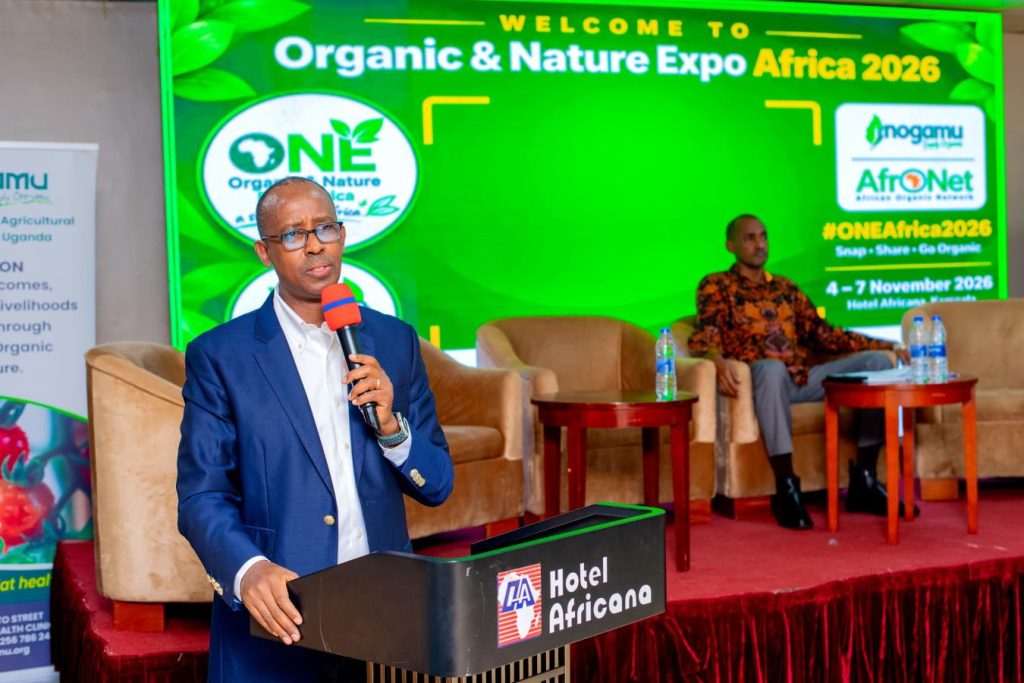
Uganda’s organic agriculture sector is targeting a a bigger share of expanding global demand, but farmer capacity, certification, affordable finance and export logistics remain critical to translating production potential into commercial growth.
Uganda’s growing footprint in organic agriculture offers an opportunity to tap into expanding global demand for healthier food, but converting that potential into a competitive export industry will require investment in farmer education, standards compliance and market infrastructure, Agriculture Minister Frank Tumwebaze has said.
Speaking on November 4, at the opening of the fifth National Organic Week and the inaugural Organic and Nature Expo Africa 2026 in Kampala, Tumwebaze said Uganda had established a significant production base, with 930,000 hectares under organic production and approximately 740,000 farmers engaged in the practice.
However, he cautioned that expanding the sector would require more than legislation and regulatory enforcement, arguing that farmers and extension workers needed a deeper understanding of the principles and purpose of organic agriculture.
“The law alone will neither fix compliance nor scale up the sector. What is needed is people having an all-round understanding and appreciation of the benefits of organic farming,” Tumwebaze said.
He advocated a culture of voluntary compliance, supported by informed producers and consumers who understand the benefits of organic production and demand credible standards in the marketplace.
The minister called for deliberate efforts to increase the number of farmers participating in organic agriculture and expand the acreage under production. He also urged the sector to develop a stronger domestic supply of organic agricultural inputs, including pesticides, fertilisers and soil modifiers, to support a more self-sustaining production system.
Tumwebaze said the conversation on organic agriculture needed to move beyond policy forums and reach farmers through extension services and agricultural training institutions.
Speaking at the same event, Odrek Rwabwogo, chairman of the Presidential Advisory Committee on Exports and Industrial Development (PACEID), said Uganda was well positioned to benefit from two major forces driving the growth of organic food consumption globally: increasing health consciousness and consumers’ willingness to pay for products that offer value.
He identified health as the first major market driver, pointing to the growing burden of lifestyle-related diseases and the increasing recognition of nutrition as part of preventive healthcare.
“The market for organic food is driven by two incentives. The first is the health incentive because without healthy food, the rest of the things about the human body don’t work,” Rwabwogo said.
Citing an estimated 830 million people living with diabetes globally, he argued that the economic burden of treating the disease was strengthening the case for greater investment in healthier food systems.
He estimated that global spending on diabetes treatment had approached USD1.1 trillion in the previous year, arguing that the cost of pharmaceuticals, healthcare infrastructure and insurance made preventive nutrition an increasingly important consideration.
For organic producers, he said, this presented an opportunity to position their products within a growing market for food associated with healthier diets.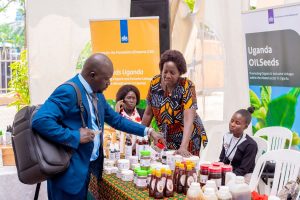
Rwabwogo cited the United States as a major market, accounting for an estimated USD440 billion in organic consumption, while annual demand for organic food in Africa was estimated at about USD10 billion.
He said Uganda and NOGAMU were therefore operating in a market with considerable growth potential, but would need to organise production and trade around identifiable consumer needs rather than simply increasing output.
The second driver, he said, was the price incentive, with consumers increasingly prepared to pay for products that deliver value for money.
“The second incentive is the price incentive. People come to you because you offer value for money. We need to stop blind trade, answer to market needs and comply with the standards of that market,” he said.
Rwabwogo urged NOGAMU to build partnerships beyond the traditional organic farming community and bring together stakeholders across the value chain, including processors, exporters, financiers and logistics providers.
He argued that Uganda’s competitiveness would depend not only on the quality of its agricultural products but also on the cost and reliability of getting them to market.
Among the priorities he identified were improved transport systems to lower export logistics costs, access to affordable credit for businesses in the sector, stronger market intelligence and investment in infrastructure connecting producers to domestic, regional and international buyers.
He cited historical spending on organic food in Europe and the United States as evidence of the commercial opportunity, noting that Europe had been spending approximately €58 billion annually and the United States between USD23 billion and USD25 billion three years earlier, while African consumption was also expanding.
For Uganda, he said, the task was to move from production potential to organised trade, with compliance and competitiveness treated as central elements of the business.
NOGAMU chief executive Chariton Namuwoza said building that competitiveness required sustained investment in the capacity of farmers and agribusinesses to meet certification requirements and international market standards.
He said NOGAMU was working to prepare producers and businesses for certification by helping them understand applicable standards and navigate the processes required to demonstrate compliance.
The emphasis is particularly relevant as export markets, notably the European Union, continue to place greater demands on agricultural suppliers regarding traceability, production records and documentation.
For smallholder farmers, who form a substantial part of Uganda’s agricultural production base, meeting these requirements is a tall order that requires systems for documenting production, maintaining records, demonstrating compliance and organising farmers into reliable supply arrangements.
Namuwoza also stressed that organic agriculture should not be viewed narrowly as a niche food market or an export opportunity, but as an investment in environmental protection, food safety and the long-term resilience of agricultural systems.
“Organic agriculture isn’t just about farming. It’s about protecting our future,” he said.
A key demand from NOGAMU during the symposium was the implementation of Uganda’s National Organic Agriculture Policy and the integration of organic agriculture into major government development programmes, particularly the Parish Development Model and the forthcoming Fourth National Development Plan.
Such integration would give organic producers a stronger institutional framework and potentially extend the reach of training, financing and agricultural extension services to more farmers.
The symposium also witnessed the co-launch of the Kilimohai Agroecology Blue Mark, an initiative intended to strengthen the identification, verification and market recognition of sustainable and regenerative agricultural products from Uganda.
The mark is expected to provide greater assurance of production standards and sustainability credentials, helping Ugandan products establish a stronger identity in regional and international markets.
The four-day National Organic Week and the inaugural Africa Organic and Nature Expo 2026, held under the theme Organic and Regenerative Innovations: Africa Africa’s Competitive Edge, brings together farmers, processors, exporters, investors, policymakers, academics and agricultural innovators to showcase products, exchange knowledge and explore commercial opportunities.
With an established farmer base and a sizeable area already under organic production, Uganda is the world’s second largest organic producer after India and the top African producer. According to statistics compiled by NOGAMU, the country had 744,288 certified organic farmers in 2025 while earnings from exports of organic foods reached USD225.7 million.
The figures place Uganda as Africa’s largest country by area under certified organic farmland and the world’s second largest organic agriculture producers after India, strengthening its position in a market increasingly shaped by demand for sustainably produced food and agricultural products
Related Posts
 Emirates Group Defies Gulf Conflict to Deliver USD1.1bn Half-year Profit
 UDB Mobilises USD200m for Climate Finance Ahead of COP31
 Africa’s Leisure Spending Projected at USD150 Billion in 2026
 €145 Million Lake Victoria Water Project Targets Greater Kampala’s Western Supply Gap
 Uganda Cuts New HIV Infections by 64pc as Youth Remain a Prevention Priority
 Behind the Surge in Equity Bank Uganda’s Bancassurance Portfolio
Get business news delivered to you everyday
Latest News

Tumwebaze Urges Purpose-driven Approach as Uganda Targets Organic Food Markets

Emirates Group Defies Gulf Conflict to Deliver USD1.1bn Half-year Profit

UDB Mobilises USD200m for Climate Finance Ahead of COP31

Africa’s Leisure Spending Projected at USD150 Billion in 2026

€145 Million Lake Victoria Water Project Targets Greater Kampala’s Western Supply Gap

Uganda Cuts New HIV Infections by 64pc as Youth Remain a Prevention Priority

African Airlines Lead Passenger Growth but Struggle to Fill Expanding Capacity

Shift to Value sees Equity Bank Bancassurance Premiums Rise to UGX16.13bn

Uganda Airlines Expands its West-African Footprint with Direct Service to Accra

Airlines Spent USD 24.5bn Processing Payments in 2025, IATA Says