

Emirates Group Defies Gulf Conflict to Deliver USD1.1bn Half-year Profit
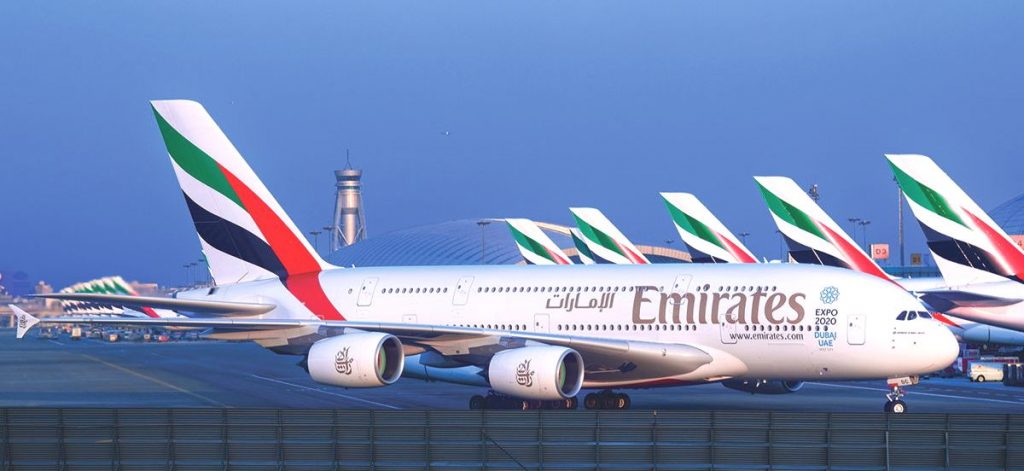
Emirates Group reports USD1.1 billion in half-year pre-tax profit despite Gulf conflict, higher fuel costs and a 12pc decline in revenue.
The Emirates Group remained profitable through six months of regional conflict and sharply higher fuel costs, reporting a half-year profit before tax of AED4.1 billion (USD1.1 billion) for the six months ended September 30, 2026. But earnings were 66pc down on the previous year.
The Dubai-based aviation group attributed its resilience to sustained travel demand, a strong cargo contribution and its ability to draw on substantial cash reserves as airspace restrictions and operational disruptions across the Gulf affected its business.
Group revenue declined 12pc to AED66.2 billion (USD18 billion), from AED75.4 billion a year earlier, while profit after tax fell to AED3.6 billion (USD1 billion). The group ended September with cash reserves of AED54.1 billion (USD14.7 billion), providing a buffer against continued market volatility.
Emirates airline accounted for the bulk of earnings, recording a profit before tax of AED3.7 billion (USD1 billion), down 68pc, on revenue of AED56.9 billion (USD15.5 billion), which declined 13pc.
The airline’s operations were constrained by intermittent airspace restrictions and travel advisories, leaving it operating 91pc of its pre-disruption network by the end of September. Passenger numbers fell 22pc to 21.8 million, while passenger seat occupancy declined to 72pc, from 79.5pc a year earlier.
Fuel costs were a major pressure point, rising 60pc before hedging despite a 12pc reduction in fuel uplift. Gains of AED7.1 billion from fuel price risk management helped contain the net increase in fuel costs to 13pc.
Cargo provided an important counterweight with Emirates SkyCargo transporting 1.2 million tonnes, broadly unchanged from the previous year, but cargo revenue increased 52pc as reduced regional airfreight capacity and disruptions to maritime transport pushed more shippers towards air cargo.
The group’s ground handling and travel services subsidiary, dnata, recorded a 51pc decline in profit before tax to AED410 million (USD112 million), while revenue fell 7pc to AED11 billion (USD3 billion). Its international operations helped cushion weaker activity in the UAE and wider Gulf market.
Group chairman and chief executive Sheikh Ahmed bin Saeed Al Maktoum said sustained customer demand and cargo performance had helped preserve profitability despite the regional disruption and a doubling of global jet fuel prices against the comparable period.
Despite the weaker earnings, Emirates continued investing in fleet renewal and infrastructure, taking delivery of nine A350 aircraft, refurbishing 12 aircraft and expanding its Starlink-equipped fleet to 57 aircraft. It also maintained progress on a USD5.1 billion engineering and maintenance facility at Al Maktoum International Airport.
The group’s cash position, although down from AED59.6 billion at the end of March, remained substantial after meeting operational requirements, aircraft pre-delivery payments, debt obligations and a further AED2 billion dividend payment to its owner, the Investment Corporation of Dubai.
Emirates said it would enter the second half of its financial year with cautious optimism, keeping a close watch on fuel costs and geopolitical developments while continuing its investment programme.
Related Posts
 €145 Million Lake Victoria Water Project Targets Greater Kampala’s Western Supply Gap
 Behind the Surge in Equity Bank Uganda’s Bancassurance Portfolio
 Shift to Value sees Equity Bank Bancassurance Premiums Rise to UGX16.13bn
 Uganda Airlines Expands its West-African Footprint with Direct Service to Accra
 ERAM Award puts Uganda’s Animal-Health Manufacturing Ambitions in Focus
 Energy Ministry and Equity Bank target lower hotel energy costs through green investment initiative
Get business news delivered to you everyday
Latest News

Emirates Group Defies Gulf Conflict to Deliver USD1.1bn Half-year Profit

UDB Mobilises USD200m for Climate Finance Ahead of COP31

Africa’s Leisure Spending Projected at USD150 Billion in 2026

€145 Million Lake Victoria Water Project Targets Greater Kampala’s Western Supply Gap

Uganda Cuts New HIV Infections by 64pc as Youth Remain a Prevention Priority

Behind the Surge in Equity Bank Uganda’s Bancassurance Portfolio

African Airlines Lead Passenger Growth but Struggle to Fill Expanding Capacity

Shift to Value sees Equity Bank Bancassurance Premiums Rise to UGX16.13bn

Uganda Airlines Expands its West-African Footprint with Direct Service to Accra

Airlines Spent USD 24.5bn Processing Payments in 2025, IATA Says