

Uganda Cuts New HIV Infections by 64pc as Youth Remain a Prevention Priority
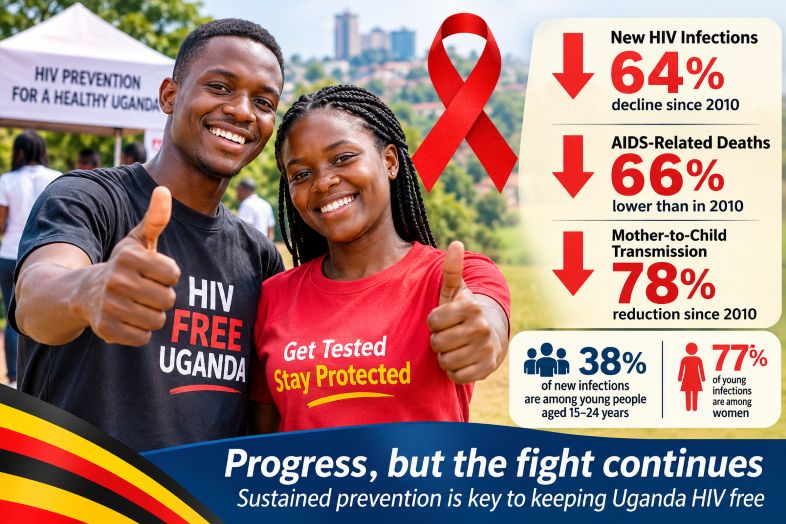
Uganda has reduced new HIV infections by 64 percent and AIDS-related deaths by 66 percent since 2010, although young people still account for 38 percent of new cases.
Uganda has reduced new HIV infections by 64 percent and AIDS-related deaths by 66 percent since 2010, marking substantial progress in its response to the epidemic, even as young people continue to account for a significant share of new cases.
Statistics released by the Uganda AIDS Commission (UAC) on November 3, show that the country recorded approximately 34,000 new HIV infections in 2025, down significantly from levels recorded 15 years ago.
The figures also point to progress in preventing mother-to-child transmission, with new infections among children through vertical transmission declining by 78 percent since 2010 to approximately 4,400 in 2025.
However, the latest data show that sustaining these gains will require greater attention to young people, women and populations that remain disproportionately exposed to HIV.
Young people aged 15 to 24 accounted for 38 percent of new infections in 2025, while women represented 77 percent of infections within this age group. The male-to-female ratio among newly infected young people was approximately one to four.
Adults accounted for 87 percent of the estimated 34,000 new infections, while children represented 13 percent.
Uganda has approximately 1.567 million people living with HIV, including 1.496 million adults aged 15 years and above and about 71,000 children below the age of 15.
HIV prevalence among adults stands at 5.9 percent, while prevalence among people aged 15 to 49 is 5.5 percent. Women in this age group have a prevalence rate of 7.2 percent, compared with 3.5 percent among men.
The geographical distribution of the epidemic remains uneven. The South Western region has the highest prevalence at 8 percent, followed by South Buganda at 7.3 percent, North Buganda at 7.2 percent and Mid North at 6.8 percent.
Karamoja and West Nile recorded the lowest prevalence rates at 1.3 percent and 1.4 percent respectively.
At district and city level, Fort Portal has an HIV prevalence of 16.7 percent, followed by Kalangala at 12.1 percent and Kabarole at 10.7 percent, according to programme data cited by the commission.
The commission also estimates that key and priority populations account for between 55 and 70 percent of new infections, equivalent to approximately 20,300 to 25,900 cases annually.
Female sex workers account for 31 percent of infections within the reported priority population categories, followed by fisherfolk at 22 to 29 percent, truckers at 25 percent, people who inject drugs at 16 percent and men who have sex with men at 13 percent.
The figures highlight the importance of prevention programmes tailored to populations whose exposure to HIV may be compounded by occupational, social and behavioural factors.
Progress in preventing infections among children has been particularly notable. The mother-to-child transmission rate stands at 2.18 percent at six weeks after birth, although it rises to 5.9 percent after breastfeeding.
The commission identified infections occurring during pregnancy and breastfeeding, alongside interruptions in antiretroviral therapy, as areas requiring further intervention. Maternal infections account for 37 percent of vertical transmissions, while treatment dropouts during pregnancy and breastfeeding contribute 46 percent.
The reduction in infections has been accompanied by a substantial decline in AIDS-related deaths, which fell by 66 percent from 2010 levels to approximately 19,000 in 2025. Adults accounted for 85 percent of these deaths, with children representing the remaining 15 percent.
The latest figures suggest that Uganda’s HIV response has made considerable gains in reducing transmission and improving survival, but that progress has not been uniform across population groups.
Analysts say the concentration of new infections among young people, particularly young women, points to the need for stronger prevention interventions alongside sustained access to testing, treatment and care.
Related Posts
 €145 Million Lake Victoria Water Project Targets Greater Kampala’s Western Supply Gap
 Behind the Surge in Equity Bank Uganda’s Bancassurance Portfolio
 African Airlines Lead Passenger Growth but Struggle to Fill Expanding Capacity
 Uganda Airlines Expands its West-African Footprint with Direct Service to Accra
 Airlines Spent USD 24.5bn Processing Payments in 2025, IATA Says
 Uganda Returnees Look to Rebuild Livelihoods as Government Pledges UGX2bn
Get business news delivered to you everyday
Latest News

€145 Million Lake Victoria Water Project Targets Greater Kampala’s Western Supply Gap

Uganda Cuts New HIV Infections by 64pc as Youth Remain a Prevention Priority

Behind the Surge in Equity Bank Uganda’s Bancassurance Portfolio

African Airlines Lead Passenger Growth but Struggle to Fill Expanding Capacity

Shift to Value sees Equity Bank Bancassurance Premiums Rise to UGX16.13bn

Uganda Airlines Expands its West-African Footprint with Direct Service to Accra

Airlines Spent USD 24.5bn Processing Payments in 2025, IATA Says

Beyond Gold Exports, Uganda’s Next Test Is Economic Transformation

ERAM Award puts Uganda’s Animal-Health Manufacturing Ambitions in Focus

Why Community-Led Climate Action Is Essential to Building Climate Resilience