

Uganda Returnees Look to Rebuild Livelihoods as Government Pledges UGX2bn
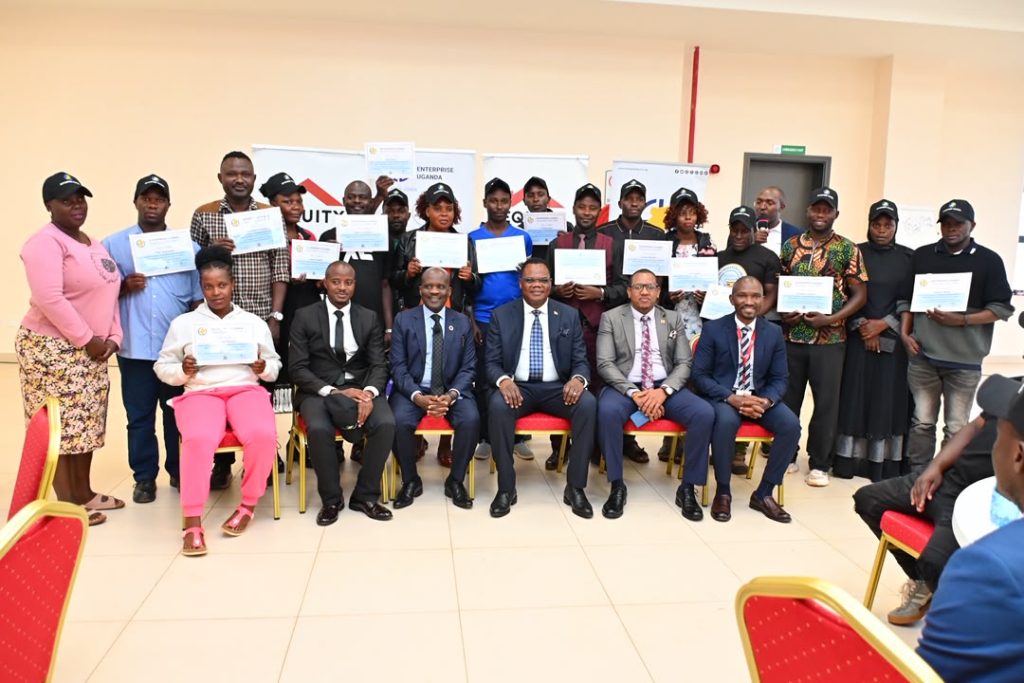 Ambassador Dickson Ogwang-Okul with the Returnees at the climax of the Conference
Two hundred Ugandans returning from South Africa have received financial literacy and entrepreneurship training as government pledges UGX2 billion to support business creation and livelihood recovery.
Two hundred Ugandans who returned from South Africa are preparing to rebuild their livelihoods through entrepreneurship after receiving financial literacy and business training, alongside a government commitment to inject UGX2 billion into their savings and credit cooperative organisation (SACCO).
The two-day workshop, held at Enterprise Uganda offices in Butabika, focused on financial management, business formation and investment decisions intended to help participants establish sustainable sources of income after returning home.
The initiative combines skills development with the prospect of access to capital, addressing two challenges facing returnees who must rebuild their economic lives after leaving behind assets and livelihoods accumulated abroad.
Ambassador Dickson Ogwang Okul, representing the Minister of Gender, Labour and Social Development, said President Yoweri Museveni had committed UGX2 billion to support the returnees’ SACCO.
The funds are intended to help members establish businesses and generate income, although the practical impact will depend on how the money is disbursed, the financing terms and the viability of the enterprises it supports.
“This support is an important step towards helping our people rebuild their livelihoods. We want returnees to invest in productive businesses, restore their financial independence and create opportunities for fellow Ugandans who may return in the future,” Okul said.
He added that the government would assist returnees seeking documentation to recover equipment left in South Africa and engage the South African government over possible compensation for assets abandoned during their departure.
For Enterprise Uganda Executive Director Charles Ocici, however, financial assistance alone will not guarantee successful reintegration. Returnees must also overcome the psychological and practical challenges of starting again after losing property, savings or businesses.
“What is the mindset of a returnee who comes back thinking, ‘I have lost everything I worked for, and I am home with nothing’? Recovery requires more than money. They must recognise that they still have skills, experience and the ability to build again,” Ocici said.
He said entrepreneurship training could help participants identify viable opportunities, manage limited resources and make informed investment decisions.
Equity Bank Uganda supported the workshop, with Bob Paul Lusembo, its Head of Micro Segments, representing Managing Director Gift Shoko. Lusembo encouraged participants to begin with the resources available to them and expand their enterprises gradually through disciplined financial management.
“There is no dignity in poverty. We want our returnees to regain their confidence, start small and build businesses that support their families,” he said.
The training is intended to help participants move from financial recovery towards enterprise development, but that transition will require more than the ability to prepare budgets or manage savings. Access to customers, reliable suppliers, appropriate financing and sound business opportunities will also influence whether the enterprises survive.
Mathias Baguma, chairman of the returnees, said the workshop had provided participants with practical knowledge and direction on restarting their livelihoods.
“The training has equipped us not only with knowledge but also opened avenues on where we are to restart and how,” he said.
The UGX2 billion SACCO commitment could provide an important source of financing for the group, particularly if lending arrangements allow members to start businesses without taking on unsustainable debt.
Related Posts
 ERAM Award puts Uganda’s Animal-Health Manufacturing Ambitions in Focus
 Why Community-Led Climate Action Is Essential to Building Climate Resilience
 Agroecology Week Targets Stronger links Between Farmers, Policy and Markets
 Stanbic Commits UGX20m to Virunga Gorilla Marathon’s Conservation Drive
 Energy Ministry and Equity Bank target lower hotel energy costs through green investment initiative
 Aviation Industry Coalition Presses EU to Protect Voluntary use of Biometric Travel Technology
Get business news delivered to you everyday
Latest News

Uganda Returnees Look to Rebuild Livelihoods as Government Pledges UGX2bn

Beyond Gold Exports, Uganda’s Next Test Is Economic Transformation

ERAM Award puts Uganda’s Animal-Health Manufacturing Ambitions in Focus

Why Community-Led Climate Action Is Essential to Building Climate Resilience

Agroecology Week Targets Stronger links Between Farmers, Policy and Markets

Stanbic Commits UGX20m to Virunga Gorilla Marathon’s Conservation Drive

Energy Ministry and Equity Bank target lower hotel energy costs through green investment initiative

FAA Certifies Boeing 737-10, Clearing Path for Deliveries of Largest 737 MAX Variant

Somalia Recognises IATA Safety Audits in Push for Common African Aviation Standards

Stanbic Donates UGX40 Million in Maternal Health Equipment to Obongi Facility