

FAA Certifies Boeing 737-10, Clearing Path for Deliveries of Largest 737 MAX Variant
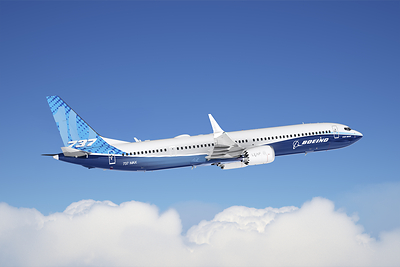
Boeing has secured FAA certification for its largest 737 MAX model, clearing the way for deliveries as airlines seek higher-capacity single-aisle aircraft.
The US Federal Aviation Administration (FAA) has certified Boeing’s 737-10, the largest member of the 737 MAX family, clearing the way for deliveries to begin in the coming months and bringing the aircraft programme closer to meeting demand from airlines seeking greater capacity on short- and medium-haul routes.
Boeing announced the certification on October 20, following a testing and regulatory review programme that included nearly 1,000 test flights, more than 2,000 flight hours and 1,000 hours of ground testing.
The approval covers an amended type certificate for the 737-10, which completes the planned 737 MAX family. Boeing says the aircraft can accommodate up to 230 passengers in a maximum-density configuration, while typically seating between 185 and 210 passengers in a two-class layout.
The manufacturer is positioning the aircraft as a lower-cost option for airlines seeking to increase capacity without moving to widebody aircraft. It claims the 737-10 offers the lowest seat costs among single-aisle aircraft currently in service, although actual operating economics will depend on configuration, utilisation, fuel prices and route characteristics.
The aircraft has a stated range of up to 3,100 nautical miles, or approximately 5,740 kilometres. Boeing says it offers 365 nautical miles more range than competing aircraft without auxiliary fuel tanks and delivers a 20pc reduction in fuel use and carbon dioxide emissions compared with the aircraft it is designed to replace.
More than 30 customers have ordered the 737-10, with Boeing reporting 1,555 orders for the variant. That represents more than 30pc of the 737 MAX programme’s order backlog, underscoring the commercial importance of completing certification of the largest model.
Across the entire 737 MAX family, Boeing reported 7,350 orders and nearly 2,500 deliveries by the end of September 2026.
The certification is significant beyond the aircraft’s commercial prospects because the 737-10 is the first commercial aircraft to be certified to the full extent of the 2020 Aircraft Certification, Safety, and Accountability Act.
The legislation strengthened oversight and documentation requirements following the two fatal 737 MAX crashes in 2018 and 2019, which killed 346 people and led to the global grounding of the aircraft type.
Boeing said the 737-10 certification process included extensive safety assessments, design reviews, documentation and formal meetings with the FAA, alongside flight and ground testing.
The aircraft also introduces an enhanced angle-of-attack system that Boeing says will become standard across the 737 MAX family. Angle-of-attack data helps flight crews and aircraft systems assess the relationship between an aircraft’s wing and the airflow approaching it.
Boeing Commercial Airplanes president and chief executive Stephanie Pope said certification would allow the company to move towards deliveries while offering airlines greater capacity and operational flexibility.
The approval marks an important milestone for a programme that has faced years of additional regulatory scrutiny.
The 737-10 is designed for airlines seeking to carry more passengers on established routes while retaining the operational characteristics of a single-aisle aircraft. Its capacity could make it attractive on high-demand regional and medium-haul services where airlines want to increase seat supply without introducing larger widebody jets.
For African carriers, the aircraft’s appeal would depend on route demand and financing costs. Its maximum range could support a range of intra-African and longer regional services.
The 737-10 joins the 737-7, 737-8, and 737-9 in the MAX family. The 737-8 is designed to seat approximately 160–180 passengers, while the 737-9 typically accommodates 175–195, giving airlines several capacity options within the same aircraft family.
The 737-10’s certification therefore gives Boeing a larger-capacity option for customers whose networks have outgrown smaller single-aisle aircraft but do not require widebody capacity.
Related Posts
 Energy Ministry and Equity Bank target lower hotel energy costs through green investment initiative
 Stanbic Donates UGX40 Million in Maternal Health Equipment to Obongi Facility
 Airlink Adds Lanseria–Harare Route, Expands Regional Flights for Summer
 Uganda SGR Nears €1bn Funding Milestone as OPEC Fund Targets November Approval for €150m
 Stanbic Seeks Northern Uganda Business Feedback as It Marks 35 Years in Country
 SITA Acquisition of Collins Airport Solutions Signals Moves to Consolidate Aviation Technology
Get business news delivered to you everyday
Latest News

Energy Ministry and Equity Bank target lower hotel energy costs through green investment initiative

FAA Certifies Boeing 737-10, Clearing Path for Deliveries of Largest 737 MAX Variant

Aviation Industry Coalition Presses EU to Protect Voluntary use of Biometric Travel Technology

Somalia Recognises IATA Safety Audits in Push for Common African Aviation Standards

Stanbic Donates UGX40 Million in Maternal Health Equipment to Obongi Facility

Airlink Adds Lanseria–Harare Route, Expands Regional Flights for Summer

Uganda SGR Nears €1bn Funding Milestone as OPEC Fund Targets November Approval for €150m

Solar Power Linked to More Births and Better Patient Access at Rural Ugandan Clinics

China’s GPMI Interface Leapfrogs HDMI, USB With 192Gbps Speeds and 480W Power

Stanbic Seeks Northern Uganda Business Feedback as It Marks 35 Years in Country