

Uganda SGR Nears €1bn Funding Milestone as OPEC Fund Targets November Approval for €150m
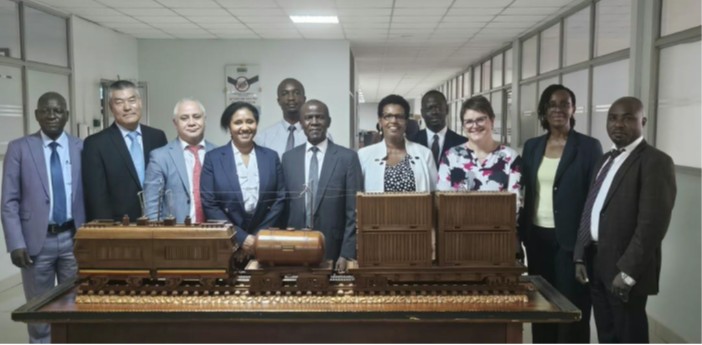
OPEC Fund is targeting €150 million in SGR financing by November 30, following the Islamic Development Bank’s €650 million approval, as Uganda works to close the funding gap ahead of planned construction in January 2027.
Funding push follows Islamic Development Bank’s €650m commitment as Uganda seeks to close financing gap for Malaba–Kampala railway
Uganda’s Standard Gauge Railway (SGR) project is poised for another financing boost, with the OPEC Fund for International Development targeting board approval of €150 million by the end of November as the government moves to close the funding gap for the Malaba–Kampala line.
A team from the Vienna-based development financier arrived in Uganda over the weekend for an appraisal mission that will assess the project’s designs, implementation arrangements, disbursement schedule and environmental and social safeguards before making a funding recommendation to the institution’s board.
“We are targeting Board approval by November 30, 2026,” Kemi Afun-Ogidan, OPEC Fund Senior Country Manager, said on Monday, October 19, during an entry meeting with the SGR project management team at its Kampala headquarters.
“If approved, this will be our largest financing to Uganda since 1976 when we started here. So, we do not have a lot of time,” she added.
The proposed financing follows the Islamic Development Bank’s approval of €650 million for the railway in June, strengthening prospects for a project whose implementation has depended on securing a combination of government resources and external financing.
The €2.7 billion project has a financing framework under which export credit agencies are expected to provide up to 60pc of the funding, development finance institutions approximately 25pc, and the government the remaining 15pc.
The government’s contribution is expected to be mobilised through a €405 million Sukuk bond, an Islamic financing instrument that enables capital mobilisation without conventional interest payments.
OPEC Fund’s proposed €150 million would add to the development finance component, although its final contribution will depend on the outcome of the appraisal and board approval process.
The financing push comes as the government continues to secure the right of way for the railway, which will cross 12 districts and two cities between Malaba on the Kenyan border and Kampala.
According to the SGR project management team, close to 70pc of the required land has been acquired. Land acquisition entered its final three districts — Mukono, Wakiso and Kampala — in November 2025, with compensation in those areas still ongoing.
Securing the remaining land is an important implementation milestone, alongside completing the financing arrangements needed to move from preparatory activities into full construction.
The government signed a construction contract with Turkish contractor Yapi Merkezi on October 14, 2024, and launched the project in Tororo District the following month.
Yapi Merkezi has largely completed early works at its Iganga camp under a Limited Notice to Proceed (LNTP) arrangement financed by the government to the tune of €75 million.
The preparatory works under the LNTP included the establishment of a sleeper factory, a concrete batching plant, a materials laboratory and workers’ accommodation, as well as completion of geotechnical studies.
These facilities are intended to support the construction phase once the project has secured the necessary financing and the full implementation programme can proceed.
The project has a 48-month implementation period from commencement, with the start of full construction currently targeted for January 2027, subject to the conclusion of financing arrangements.
Beyond the financing requirements, the government is positioning the railway as a strategic investment in lowering Uganda’s transport costs and improving the competitiveness of its exports.
SGR Project Coordinator Can. Eng. Perez Wamburu said the current cost and unpredictability of freight transport constrained manufacturers and exporters.
“High freight costs and unpredictable delivery times raise production costs and weaken competitiveness,” Wamburu said.
The project aims to halve freight costs from about USD0.14 per tonne-kilometre to approximately USD0.07, while cutting freight transit time from 8.5 days to one day.
If achieved, the reductions could improve the economics of moving agricultural produce, manufactured goods and other cargo between Uganda and regional markets, while easing pressure on the road network.
The railway is also expected to support industrialisation, agricultural exports, employment creation and skills development.
Related Posts
 Stanbic Donates UGX40 Million in Maternal Health Equipment to Obongi Facility
 Airlink Adds Lanseria–Harare Route, Expands Regional Flights for Summer
 Solar Power Linked to More Births and Better Patient Access at Rural Ugandan Clinics
 Uganda Emerges as Africa’s Largest Organic Farming Country as Exports Reach USD225 Million
 Uganda Coffee Roasters Tap Richard Rugaya as Executive Director, with Focus on Commercial Growth
 Why Africa’s Institutions Must Turn Knowledge and Investment into Farmer Prosperity
Get business news delivered to you everyday
Latest News

Stanbic Donates UGX40 Million in Maternal Health Equipment to Obongi Facility

Airlink Adds Lanseria–Harare Route, Expands Regional Flights for Summer

Uganda SGR Nears €1bn Funding Milestone as OPEC Fund Targets November Approval for €150m

Solar Power Linked to More Births and Better Patient Access at Rural Ugandan Clinics

China’s GPMI Interface Leapfrogs HDMI, USB With 192Gbps Speeds and 480W Power

Stanbic Seeks Northern Uganda Business Feedback as It Marks 35 Years in Country

Uganda Emerges as Africa’s Largest Organic Farming Country as Exports Reach USD225 Million

SITA Acquisition of Collins Airport Solutions Signals Moves to Consolidate Aviation Technology

Uganda Coffee Roasters Tap Richard Rugaya as Executive Director, with Focus on Commercial Growth

Equity Bank Reports UGX37.6 Billion in Green Loans as Uganda Seeks to Scale Climate Investment