

Energy Ministry and Equity Bank target lower hotel energy costs through green investment initiative
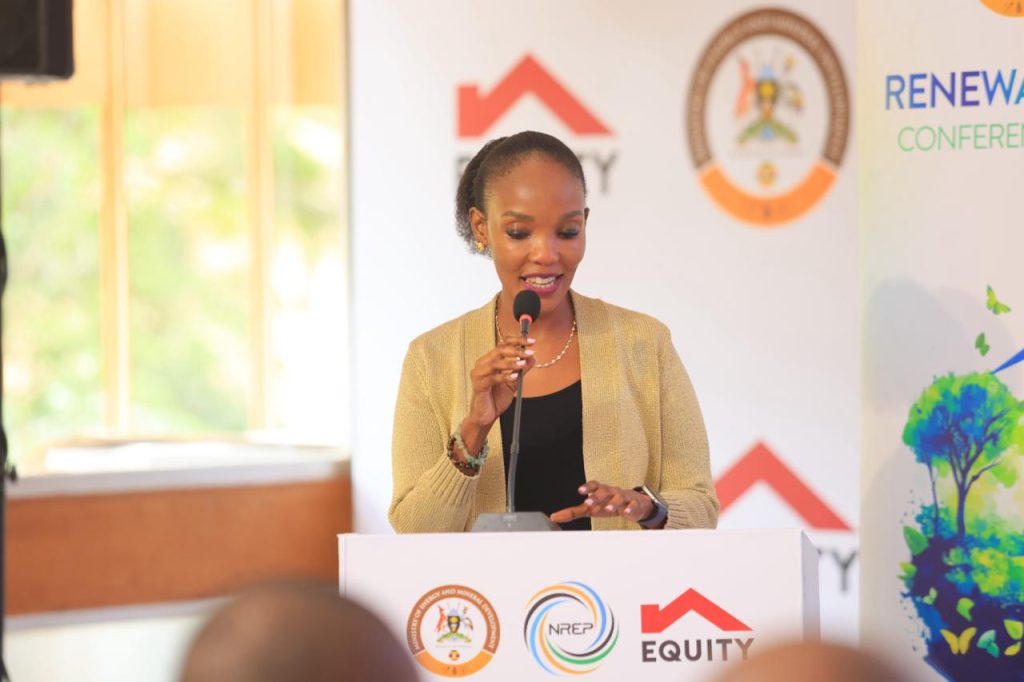 , Uganda Hotel Owners Association chairman Jean Byamugisha speaking during the Conference
Uganda’s Energy Ministry and Equity Bank have launched a green hospitality initiative to cut hotel energy costs, with industry leaders calling for loan repayments that reflect seasonal tourism revenues.
Uganda is seeking to make clean-energy investments more accessible to hotels and other tourism businesses, with the Ministry of Energy and Mineral Development and Equity Bank Uganda launching an initiative that links energy efficiency to lower operating costs and improved competitiveness.
The National Green Hospitality Initiative, launched in Kampala on October 20, puts financing, technology adoption and policy support at the centre of efforts to reduce the hospitality industry’s exposure to high and unpredictable energy costs.
Minister of State for Energy and Mineral Development Phiona Nyamutoro said investments in solar power, battery storage, efficient equipment, clean cooking and electric mobility could help hotels improve service reliability while freeing up resources for business expansion and service improvements.
The initiative comes as Uganda seeks to strengthen tourism’s contribution to economic growth while promoting more efficient use of energy across commercial sectors.
Hotels, lodges, resorts and conference facilities depend on energy for lighting, cooking, water heating, air conditioning, laundry and transport. These requirements make energy efficiency a potential source of recurring savings, but the initial cost of installing new systems can be a barrier, particularly for smaller operators.
“Renewable energy and efficiency should not be viewed simply as environmental expenses, but as investments,” said Catherine Psomgen, Equity Bank Uganda’s director of public sector and social investments.
Equity Bank is positioning itself to support the transition through green loans, equipment financing, leasing, blended finance and other arrangements intended to help businesses acquire solar photovoltaic systems, battery storage, efficient cooling and clean-cooking technologies.
The bank and other participating institutions are also expected to use a Green Tourism Business Clinic to help hospitality operators assess their cash flows, identify suitable energy investments and explore financing options.
Jean Byamugisha, chairperson of the Uganda Hotel Owners Association, said conventional loan repayment schedules could undermine investment by failing to account for fluctuations in occupancy and income.
“One shoe does not fit all. Banks need to restructure their loans to reflect the seasonal nature of the hospitality industry,” she said.
Hotels typically generate stronger revenues during peak tourism periods, while quieter months can leave operators with less cash available to service debt. Repayment arrangements that do not reflect these cycles could discourage businesses from taking on loans, even where energy-saving investments promise long-term returns.
Flexible repayment schedules would allow operators to service loans in line with their revenue patterns while preserving cash for wages, supplies and other operating expenses during low-demand periods.
The financing question is central to the initiative’s ambition to move green hospitality beyond policy commitments into commercially viable projects.
Nyamutoro said the programme would identify hospitality facilities for energy assessments and potential retrofits, develop Uganda Green Hotel Standards and establish a framework to address barriers to investment.
The government also plans to establish a specialised financing window for green hospitality projects, potentially combining green loans, concessional credit and Energy Service Company models that allow businesses to pay for energy improvements from the savings generated.
The initiative proposes selecting four to five hospitality facilities for detailed assessment and potential retrofit support, with demonstration projects intended to showcase the commercial case for investment ahead of the next Renewable Energy Conference.
A national green hospitality certification framework and Green Hospitality Awards are also envisaged, with the aim of recognising businesses that demonstrate measurable sustainability performance.
Nyamutoro said the initiative aligned with the Fourth National Development Plan and the Energy Policy for Uganda 2023, linking sustainable energy use with tourism development and private-sector growth.
She added that the transition could create opportunities for energy auditors, engineers, project developers, equipment suppliers, installers and maintenance firms, extending its economic benefits beyond hotels themselves.
Related Posts
 Aviation Industry Coalition Presses EU to Protect Voluntary use of Biometric Travel Technology
 Somalia Recognises IATA Safety Audits in Push for Common African Aviation Standards
 Stanbic Donates UGX40 Million in Maternal Health Equipment to Obongi Facility
 Airlink Adds Lanseria–Harare Route, Expands Regional Flights for Summer
 Uganda SGR Nears €1bn Funding Milestone as OPEC Fund Targets November Approval for €150m
 Solar Power Linked to More Births and Better Patient Access at Rural Ugandan Clinics
Get business news delivered to you everyday
Latest News

Energy Ministry and Equity Bank target lower hotel energy costs through green investment initiative

FAA Certifies Boeing 737-10, Clearing Path for Deliveries of Largest 737 MAX Variant

Aviation Industry Coalition Presses EU to Protect Voluntary use of Biometric Travel Technology

Somalia Recognises IATA Safety Audits in Push for Common African Aviation Standards

Stanbic Donates UGX40 Million in Maternal Health Equipment to Obongi Facility

Airlink Adds Lanseria–Harare Route, Expands Regional Flights for Summer

Uganda SGR Nears €1bn Funding Milestone as OPEC Fund Targets November Approval for €150m

China’s GPMI Interface Leapfrogs HDMI, USB With 192Gbps Speeds and 480W Power

Stanbic Seeks Northern Uganda Business Feedback as It Marks 35 Years in Country

Uganda Emerges as Africa’s Largest Organic Farming Country as Exports Reach USD225 Million