

Agroecology Week Targets Stronger links Between Farmers, Policy and Markets
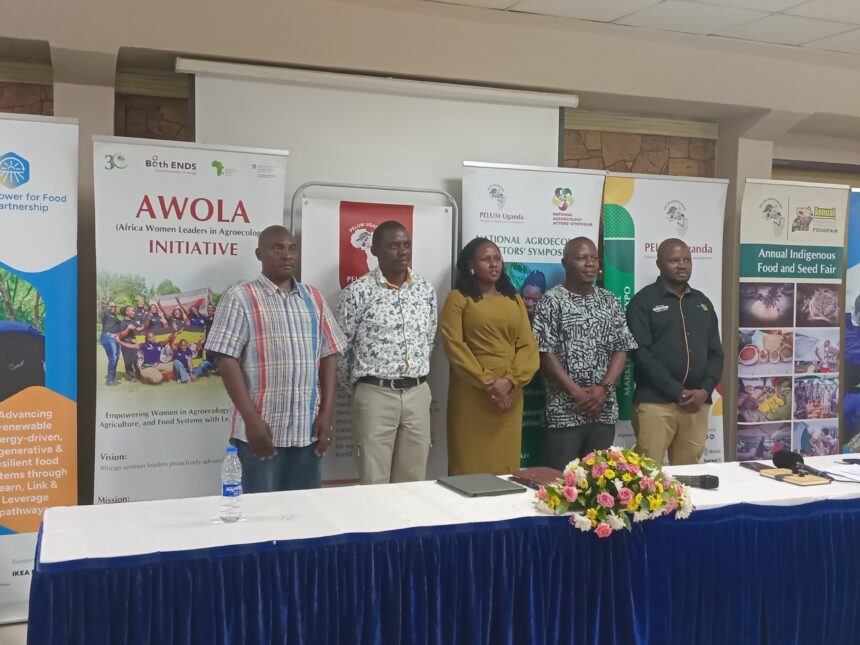
PELUM Uganda’s 2026 National Agroecology Week of Action will bring together more than 1,500 stakeholders in Kampala to strengthen links between sustainable farming, agricultural policy, market access and climate resilience.
Uganda’s agroecology movement will seek stronger links between sustainable farming, government policy and commercial markets when more than 1,500 stakeholders gather in Kampala next week for a five-day national convention focused on building resilient food systems.
The 2026 National Agroecology Week of Action, organised by Participatory Ecological Land Use Management (PELUM) Uganda in collaboration with the Ministry of Agriculture, Animal Industry and Fisheries and the Ministry of Trade, Industry and Cooperatives, will run from October 26–30 at Hotel Africana.
The gathering comes as Uganda faces the challenge of improving agricultural livelihoods while strengthening food security, protecting biodiversity and adapting to climate change. World Bank data based on International Labour Organization estimates indicate that agriculture accounted for approximately 65pc of Uganda’s employment in 2025, underlining the sector’s importance to household incomes and the wider economy.
Held under the theme “Accelerating a Just and Resilient Food Future: Connecting Agroecological Production, Policy Action, and Market Synergies,” the event will bring together smallholder farmers, policymakers, researchers, businesses, development partners and consumers.
The central issue is whether sustainable production practices can be supported by policies, financing and reliable markets that enable farmers to build viable enterprises rather than remain dependent on fragmented market channels.
Edward Mukiibi, executive director of Slow Food Uganda and chairperson of the PELUM Uganda board, said agroecology should be recognised for its contribution to livelihoods, biodiversity and the preservation of Uganda’s food heritage.
The programme features three flagship events designed to address different parts of the agricultural value chain.
The eighth National Agroecology Actors’ Symposium, scheduled for October 28, will examine how agroecology can be advanced under the Kampala Comprehensive Africa Agriculture Development Programme (CAADP) commitments. Discussions will focus on policy coordination, institutional support and implementation.
Running alongside it, the fifth Agroecological Market Systems Expo will showcase enterprises, products and innovations while creating opportunities for business partnerships. The expo will also launch an Enterprise Readiness, Partnership Facilitation and Uptake Acceleration Assessment Report and explore opportunities linking regenerative agriculture with the productive use of renewable energy.
The market focus reflects a practical constraint for farmers pursuing sustainable production. Improved soil management, biodiversity conservation and locally adapted farming methods must be accompanied by access to buyers, appropriate financing, processing and value addition if they are to generate stronger commercial returns.
The 16th Indigenous and Traditional Seed and Food Festival, scheduled for October 29–30, will highlight traditional seeds, indigenous foods and the role of agricultural biodiversity in climate resilience and nutrition. Exhibitions, cooking demonstrations and food tastings will showcase local food cultures and the knowledge used to preserve seed diversity.
Women and young people will feature prominently in discussions on production, enterprise development and market access. PELUM Uganda argues that farmers should be recognised as innovators and custodians of biodiversity, with their experience informing decisions on agricultural development.
Josephine Akia Luyimbazi, PELUM Uganda’s country coordinator, said the objective was to move beyond dialogue towards practical commitments connecting farmers’ innovations with policy action, market opportunities and partnerships.
PELUM says follow-up engagement will seek to track commitments made during the week and sustain collaboration among participating institutions.
For Uganda’s agricultural economy, the test will be whether the week’s discussions translate into stronger market access, more viable agroecological enterprises and practical support for farmers seeking to protect natural resources while earning sustainable incomes.
Related Posts
 Solar Power Linked to More Births and Better Patient Access at Rural Ugandan Clinics
 China’s GPMI Interface Leapfrogs HDMI, USB With 192Gbps Speeds and 480W Power
 Uganda Emerges as Africa’s Largest Organic Farming Country as Exports Reach USD225 Million
 SITA Acquisition of Collins Airport Solutions Signals Moves to Consolidate Aviation Technology
 Equity Bank Reports UGX37.6 Billion in Green Loans as Uganda Seeks to Scale Climate Investment
 Why Africa’s Institutions Must Turn Knowledge and Investment into Farmer Prosperity
Get business news delivered to you everyday
Latest News

Agroecology Week Targets Stronger links Between Farmers, Policy and Markets

Stanbic Commits UGX20m to Virunga Gorilla Marathon’s Conservation Drive

Energy Ministry and Equity Bank target lower hotel energy costs through green investment initiative

FAA Certifies Boeing 737-10, Clearing Path for Deliveries of Largest 737 MAX Variant

Aviation Industry Coalition Presses EU to Protect Voluntary use of Biometric Travel Technology

Somalia Recognises IATA Safety Audits in Push for Common African Aviation Standards

Stanbic Donates UGX40 Million in Maternal Health Equipment to Obongi Facility

Airlink Adds Lanseria–Harare Route, Expands Regional Flights for Summer

Uganda SGR Nears €1bn Funding Milestone as OPEC Fund Targets November Approval for €150m

Solar Power Linked to More Births and Better Patient Access at Rural Ugandan Clinics