

Shift to Value sees Equity Bank Bancassurance Premiums Rise to UGX16.13bn
 James Sserumaga
Equity Bank Uganda recorded UGX16.13 billion in bancassurance premiums in the second quarter of 2026, driven by a 105 percent increase in life assurance income as the bank shifts towards higher-value policies and digital distribution.
Equity Bank Uganda recorded UGX16.13 billion in bancassurance premiums in the second quarter of 2026, securing an 8.77 percent market share and ranking fourth among banks in Uganda’s bancassurance segment.
The performance was driven by a sharp increase in life premiums, which more than doubled over the year, offsetting a slight decline in non-life insurance and pointing to a shift towards higher-value policies.
James Sserumaga, Equity Bank Uganda’s Head of Bancassurance, attributed the growth to staff training, improved productivity and wider access to insurance through the bank’s branch network, merchant channels and digital platforms.
Life assurance premiums rose from UGX5.73 billion in the second quarter of 2025 to UGX11.72 billion in the corresponding period this year, an increase of about 105 per cent.
However, the number of life policies fell from 75,000 to 65,000 over the same period. The divergence between premium growth and policy numbers suggests that the bank generated more income from a smaller portfolio, potentially reflecting higher average premiums or a shift towards more valuable policies.
The strategy reflects a broader focus on improving the value and sustainability of insurance business rather than relying solely on increasing the number of policies sold.
Equity Bank has also prioritised policy persistency, which measures the extent to which customers maintain their insurance cover and continue paying premiums over time.
Sserumaga said dedicated customer engagement teams had been following up with policyholders to encourage premium payments and renewals, helping sustain insurance income.
Persistency is important to insurers and bancassurance distributors because policies that lapse prematurely can undermine expected premium income and weaken the long-term value of customer relationships.
The bank’s non-life insurance business, however, recorded a marginal decline in premiums, from UGX4.45 billion to Shs4.41 billion during the review period.
The bank attributed the slowdown partly to changes in its lending portfolio. Non-life products linked to secured lending, including insurance for property pledged as collateral, have traditionally provided an important source of premiums.
The growing proportion of unsecured loans has reduced demand for some of these products, weakening a conventional source of bancassurance income.
Despite the slight decline in non-life premiums, the number of policies increased from 659 to 839, suggesting wider uptake even as the segment generated slightly less premium income.
Equity Bank is seeking to improve returns from the business through stronger renewals, increased participation by corporate clients and the sale of higher-value policies.
The bank is also looking to digital distribution and microinsurance to support its next phase of growth. These channels could help it reach customers who may be underserved by conventional insurance products, particularly those with lower and irregular incomes.
Sserumaga said the bank was exploring products such as micro-medical insurance as part of efforts to expand insurance access across its customer base. The strategy comes as financial institutions seek to use their existing customer relationships, branch networks and digital platforms to widen insurance distribution in a market where penetration remains relatively low.
Related Posts
 Uganda Airlines Expands its West-African Footprint with Direct Service to Accra
 Airlines Spent USD 24.5bn Processing Payments in 2025, IATA Says
 Uganda Returnees Look to Rebuild Livelihoods as Government Pledges UGX2bn
 ERAM Award puts Uganda’s Animal-Health Manufacturing Ambitions in Focus
 Agroecology Week Targets Stronger links Between Farmers, Policy and Markets
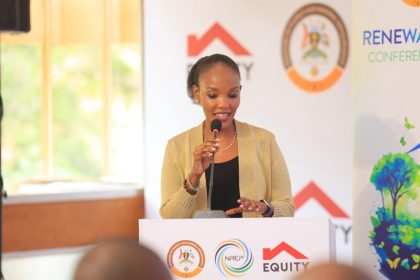 Energy Ministry and Equity Bank target lower hotel energy costs through green investment initiative
Get business news delivered to you everyday
Latest News

Shift to Value sees Equity Bank Bancassurance Premiums Rise to UGX16.13bn

Uganda Airlines Expands its West-African Footprint with Direct Service to Accra

Airlines Spent USD 24.5bn Processing Payments in 2025, IATA Says

Uganda Returnees Look to Rebuild Livelihoods as Government Pledges UGX2bn

Beyond Gold Exports, Uganda’s Next Test Is Economic Transformation

ERAM Award puts Uganda’s Animal-Health Manufacturing Ambitions in Focus

Why Community-Led Climate Action Is Essential to Building Climate Resilience

Agroecology Week Targets Stronger links Between Farmers, Policy and Markets

Stanbic Commits UGX20m to Virunga Gorilla Marathon’s Conservation Drive

FAA Certifies Boeing 737-10, Clearing Path for Deliveries of Largest 737 MAX Variant