

Africa’s Leisure Spending Projected at USD150 Billion in 2026
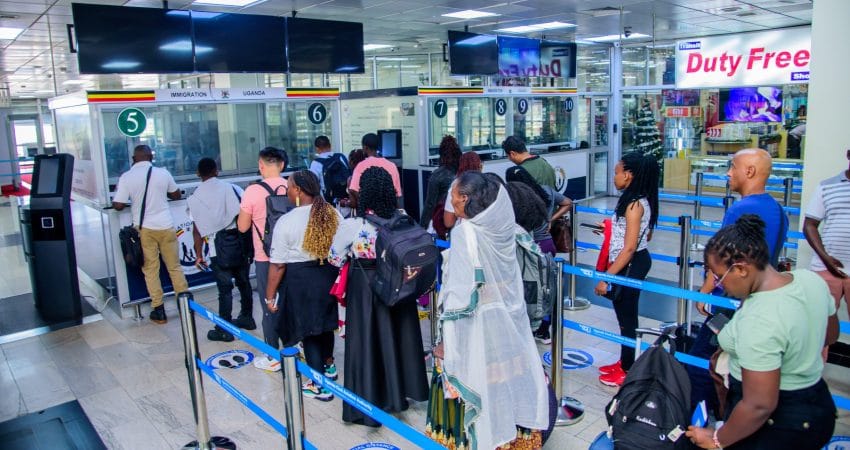
Africa’s leisure economy is projected to generate USD150 billion in 2026, with domestic and international visitor spending rising strongly despite global travel disruptions.
Michael Wakabi
Africa’s leisure travel market is projected to generate US$150 billion in spending in 2026, reflecting the continent’s growing importance in the global tourism economy even as geopolitical tensions and rising travel costs reshape international travel patterns.
According to the 2026 WTM Global Travel Report, produced by Tourism Economics, domestic leisure spending in Africa is expected to grow by 14 percent this year, while spending by international visitors rises by 16 percent, making the continent one of the stronger-performing tourism regions globally.
The growth comes, against a global backdrop of slower travel growth caused by conflict in the Middle East, higher oil prices and pressure on household budgets. Also, the continent’s reliance on long-haul travellers leaves it vulnerable to geopolitical disruptions and rising travel costs.
The report puts Africa’s combined domestic and international leisure spending at USD150 billion in 2026, with international visitors accounting for more than 40 percent. Spending is projected to grow by approximately five percent annually through 2032, suggesting that the continent’s tourism expansion is not simply a short-term recovery.
The outlook is particularly significant as global travel patterns adjust to disruption. International arrivals worldwide are expected to increase by just two percent in 2026 to a record 1.57 billion, while short- and medium-haul travel within regions grows by three percent. Inter-regional long-haul journeys, meanwhile, are forecast to decline by three percent.
Africa’s continued dependence on long-haul markets is being seen as both a vulnerability and an opportunity, particularly for destinations seeking to attract visitors from within the continent and neighbouring regions.
The report forecasts African international leisure travel growth of 11 percent in 2027, following four percent growth in 2026, before settling at an average of five percent annually through 2032.
This comes as global international travel is expected to rebound by eight percent in 2027, with long-haul journeys recovering by 11 percent as geopolitical disruption eases.
For Uganda and other African destinations, the projections highlight the importance of improving air connectivity, diversifying source markets and developing tourism products that respond to changing visitor preferences.
The report identifies four increasingly influential travel motivations: discovery, local connection, adventure and relaxation. Travellers are showing growing interest in exploring unfamiliar destinations, experiencing local cultures and food, engaging with nature and disconnecting from the pressures of everyday life.
These preferences offer opportunities for destinations such as Uganda, whose tourism proposition combines wildlife, natural landscapes, cultural experiences and adventure tourism.
The survey found that 57 percent of international travellers are very interested in visiting natural environments, while 36 percent expressed interest in nature-based tourism. A further 34 percent are interested in being active and 30 percent in adventure trips.
The changing profile of travellers also presents opportunities beyond traditional luxury tourism. The report finds that 56 percent of travellers are interested in both budget and premium experiences, indicating that consumers increasingly combine cost-conscious choices with selective spending on higher-end experiences.
This suggests that destinations and tourism operators may need to offer a broader range of accommodation and experiences rather than positioning themselves exclusively at either end of the market.
Digital technology is another emerging influence on the industry’s competitive landscape. Four in five travellers used at least one digital tool to plan or book their most recent international trip, while the proportion using artificial intelligence for travel planning rose from 10 percent in 2024 to 24 percent in 2026.
Although travellers are increasingly comfortable using AI to compare prices and recommend destinations, only 36 percent trust it to complete bookings independently. This leaves room for travel businesses to integrate digital tools while maintaining the human support and confidence required to convert interest into bookings.
The longer-term global outlook remains positive. Tourism Economics projects international overnight arrivals to reach 2.2 billion by 2032, up from 1.57 billion in 2026, while combined domestic and international visitor spending is expected to rise to USD11.3 trillion.
According to industry experts, Africa’s challenge will be how to convert its relatively strong growth prospects into a larger share of international tourism flows. That will depend not only on the continent’s natural and cultural attractions but also on reliable more diversified intra-African air links, competitive fares, reduced entry barriers and retention of a bigger share of tourism spending within regional economies.
Related Posts
 €145 Million Lake Victoria Water Project Targets Greater Kampala’s Western Supply Gap
 Uganda Cuts New HIV Infections by 64pc as Youth Remain a Prevention Priority
 Behind the Surge in Equity Bank Uganda’s Bancassurance Portfolio
 African Airlines Lead Passenger Growth but Struggle to Fill Expanding Capacity
 Uganda Airlines Expands its West-African Footprint with Direct Service to Accra
 Airlines Spent USD 24.5bn Processing Payments in 2025, IATA Says
Get business news delivered to you everyday
Latest News

Africa’s Leisure Spending Projected at USD150 Billion in 2026

€145 Million Lake Victoria Water Project Targets Greater Kampala’s Western Supply Gap

Uganda Cuts New HIV Infections by 64pc as Youth Remain a Prevention Priority

Behind the Surge in Equity Bank Uganda’s Bancassurance Portfolio

African Airlines Lead Passenger Growth but Struggle to Fill Expanding Capacity

Shift to Value sees Equity Bank Bancassurance Premiums Rise to UGX16.13bn

Uganda Airlines Expands its West-African Footprint with Direct Service to Accra

Uganda Returnees Look to Rebuild Livelihoods as Government Pledges UGX2bn

Beyond Gold Exports, Uganda’s Next Test Is Economic Transformation

ERAM Award puts Uganda’s Animal-Health Manufacturing Ambitions in Focus