

Stanbic Alerts Customers to Tighter OTC Transaction Limits Ahead of January 2027 Changes
Uganda’s cash-lite transition gathers pace as new Bank of Uganda limits on counter withdrawals and interbank cheques take effect on January 1, 2027. Stanbic is advising customers to move higher-value transactions to electronic payment channels.
Stanbic Bank Uganda has alerted customers to a further tightening of over-the-counter (OTC) banking transactions from January 1, 2027, as the Bank of Uganda advances measures to reduce reliance on physical cash and paper-based payments.
In a customer notice, the bank outlines revised limits on interbank cheque transactions as well as daily and weekly ceilings on cash withdrawals at banking counters, giving customers just under two months to adjust their payment arrangements ahead of implementation.
Under the revised thresholds, individual customers will be allowed to withdraw a maximum of UGX50 million daily and UGX250 million weekly over the counter. Corporate and business accounts will have a daily ceiling of UGX500 million and a weekly limit of UGX2.5 billion.
The changes will also halve the existing interbank cheque limits across five currencies. The Uganda shilling ceiling will fall from UGX10 million to UGX5 million, while the US dollar limit drops from USD2,750 to USD1,375. The euro threshold will decline from €2,250 to €1,125, sterling from £2,200 to £1,100 and the Kenyan shilling limit from KSh300,000 to KSh150,000.
The revised thresholds form part of the Bank of Uganda’s broader effort to shift financial transactions away from physical cash and traditional cheque clearing towards electronic payment channels.
The policy places pressure on individuals and businesses accustomed to making large payments through bank counters or using interbank cheques, requiring them to increasingly rely on electronic alternatives.
Stanbic is advising customers holding existing cheques affected by the new limits to present them for payment before January 1, 2027. For higher-value payments and transfers, it recommends the use of the Real Time Gross Settlement (RTGS) system, its mobile application, internet banking, Business Online, Enterprise Online and FlexiPay.
The transition reflects a broader change in Uganda’s payments landscape, where mobile money and electronic bank transfers are increasingly displacing cash and paper-based instruments. For the central bank, reducing the cost, risks and inefficiencies associated with handling physical money is an important part of modernising the country’s financial infrastructure.
The notice makes it clear, the pace of transition is no longer optional and businesses and individuals, particularly those whose transactions remain heavily cash-dependent or whose trading partners have limited access to digital payment facilities must adapt early or suffer inconveniences.
The January 2027 changes represent another step in the progressive tightening of traditional counter-based transactions, with banks expected to guide customers towards alternative payment channels as the cash-lite agenda gathers momentum.
Related Posts
 SITA’s New eWAS+ Electronic Flight Bag Integrates Weather and Flight Operations Data for Pilots
 United Opens new Dulles Concourse as it Expands International Network
 ICEA LION Urges Stronger Employee Protection as Insurer Backs HR Conference with UGX15m
 Nissan Patrol Marks 75 Years with Exclusive Anniversary Edition for Middle East Market
 Financing Gap Hobbles Uganda’s Shift to Mercury-Free Gold Mining
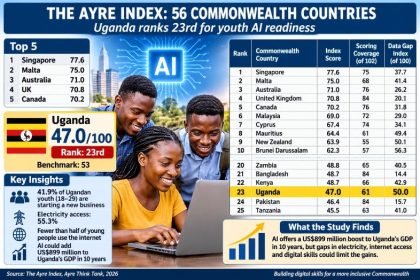 Commonwealth Study finds AI Could add USD900m to Uganda’s GDP by 2036
Get business news delivered to you everyday
Latest News

SITA’s New eWAS+ Electronic Flight Bag Integrates Weather and Flight Operations Data for Pilots

United Opens new Dulles Concourse as it Expands International Network

ICEA LION Urges Stronger Employee Protection as Insurer Backs HR Conference with UGX15m
Stanbic Alerts Customers to Tighter OTC Transaction Limits Ahead of January 2027 Changes

Nissan Patrol Marks 75 Years with Exclusive Anniversary Edition for Middle East Market

Financing Gap Hobbles Uganda’s Shift to Mercury-Free Gold Mining

Equity’s MSME Financing Helps Fill the Missing Middle in Uganda’s Economy

Equity Group Reports UGX3.1 trillion in Sustainability Investments

Tumwebaze Urges Purpose-driven Approach as Uganda Targets Organic Food Markets

Emirates Group Defies Gulf Conflict to Deliver USD1.1bn Half-year Profit