

New UGX 15.1 tn Five-year Plan puts Livestock, Peace and Markets at Centre of Karamoja transformation
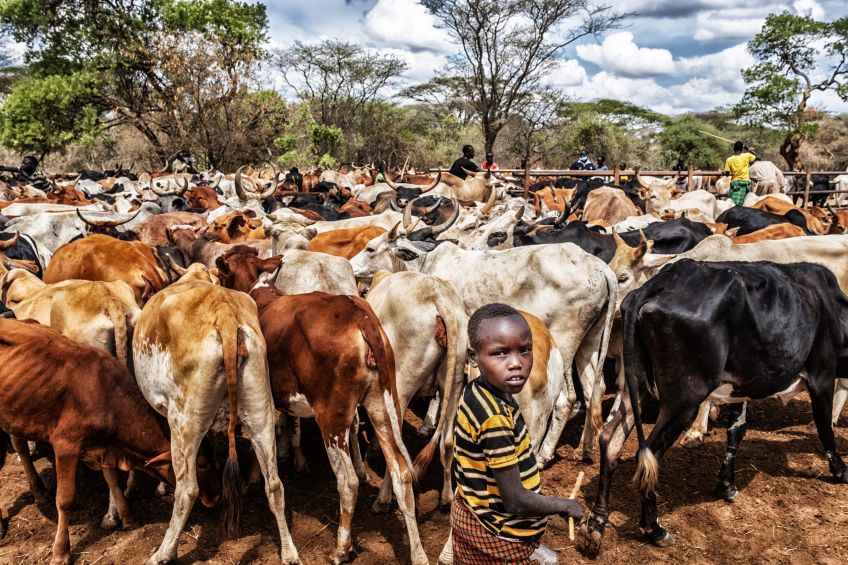 Digital livestock branding in Karamoja: a step towards sustainable development – Vétérinaires Sans Frontières Belgium asbl
Uganda and IGAD are preparing a five-year UGX15.1tn-backed transformation of Karamoja, linking livestock, peace, markets and resilience.
Uganda is preparing a new five-year intervention to turn Karamoja’s livestock economy into a stronger engine of household incomes, regional trade and resilience, as government and development partners seek to move the sub-region beyond a cycle of insecurity, poverty and dependence on humanitarian support.
The proposed Integrated Livestock Development, Peacebuilding and Resilience Enhancement for Sustainable Livelihoods in Karamoja (ILPRE-Karamoja) will run from January 2027 to December 2031 under a partnership involving the Government of Uganda, the Intergovernmental Authority on Development (IGAD) and development partners.
The programme comes as Uganda attempts to consolidate years of investment in Karamoja around fewer, higher-impact interventions that connect livestock production to peace, water, markets and land-use management.
Unveiled during a national consultative workshop in Kampala on Friday, the programme is built around five pillars: improving livestock productivity; sustainable cross-border management of grazing land and water; conflict prevention; stronger market systems; and improved land-use governance.
Livestock remains central to livelihoods in Karamoja, but its potential to generate sustained commercial income has been constrained by insecurity, weak infrastructure, limited market access, climate pressures and inadequate value addition.
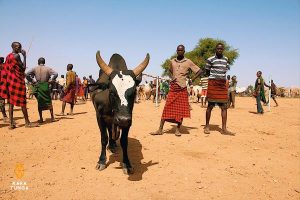
Famous cattle auction markets Karamoja – PIC Courtesy of Kara-Tunga Tours
The new approach seeks to treat these constraints as interconnected rather than as separate development problems.
“Peace and social cohesion are prerequisites for communities to access markets, education, and health services,” the Karamoja Development Partners Group said, urging donors to move beyond conventional livestock interventions and support animal health, water infrastructure, rangeland management, value addition and market access.
Joselyn Bigirwa, Head of the IGAD Mission to Uganda, said ILPRE-Karamoja is intended to consolidate gains from the IGAD Drylands Strategy and the 14-year Karamoja Integrated Development Programme.
The programme will be implemented within Uganda’s existing national planning architecture, including the Karamoja Integrated Development Programme and the Fourth National Development Plan, with IGAD coordinating with Operation Wealth Creation, the Office of the Prime Minister and the Ministry of Foreign Affairs.
For government, the bigger objective is to make economic transformation and security mutually reinforcing.
Dr Edith Namutebi Nsubuga, Head of the Peace and Security Department at the Ministry of Foreign Affairs, said durable security was critical to creating an environment in which development actors could concentrate on livelihoods and resilience.
She also acknowledged that previous interventions, despite attracting substantial investment, had produced outcomes that demanded better coordination, sharper prioritisation and stronger accountability.
That concern is particularly important given the scale of Uganda’s ambitions for the sub-region.
The Karamoja Regional Development Plan, approved by Cabinet in July 2025, is valued at UGX15.1 trillion and seeks to transform the region from a predominantly nomadic and agro-pastoral economy into a more settled and commercially viable economy by 2035.
Among the proposed flagship investments are Kidepo International Airport, an industrial park and cement plants in Moroto, meat and hides processing facilities in Kotido, and a Karamoja Peace and Technology University.
The plan also proposes expanded boarding facilities for primary and secondary education, subsidised tertiary education for Karimojong students and a dedicated water budget for the region.
The urgency is underlined by the region’s socioeconomic indicators. According to the 2023/24 National Household Survey, poverty in Karamoja stood at 74.2 percent, alongside persistent food insecurity and major infrastructure deficits.
ILPRE-Karamoja is consequently being positioned as a bridge between large-scale public investment and the productive capacity of communities themselves.
An example presented at the workshop was the Sustainable Business Development Initiative operated by AgroMax Uganda across 11 villages and 370 households in Nakapiripirit District.
The initiative demonstrated how community-owned agricultural enterprises can survive beyond donor-funded projects when communities have access to productive assets and the systems needed to maintain them.
Following the conclusion of NUSAF III, members used proceeds from agriculture to rehabilitate tractors and water infrastructure. Five years later, the enterprises remain operational, remunerate members, maintain their assets and attract new partnerships.
That experience offers an important lesson for the new Karamoja programme- long-term transformation will depend not only on how much money is invested, but on whether communities acquire productive assets, market access and institutions capable of sustaining them.
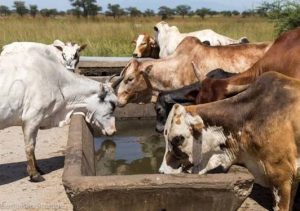
GFA – STRENGTHENING DROUGHT RESILIENCE OF PASTORALISTS IN THE KARAMOJA SUB-REGION, UGANDA
The proposed five-year programme therefore comes at a potentially important juncture for Karamoja. If its livestock, peacebuilding, climate resilience and market interventions are effectively coordinated, the region’s livestock economy could become a stronger platform for household incomes, value addition and cross-border commerce.
But officials at the consultation stressed that success will depend on disciplined implementation, community ownership and accountability—ensuring that the UGX15.1 trillion development ambition translates into productive capacity on the ground rather than another cycle of disconnected projects.
The test for the 2027–2031 programme will ultimately be whether livestock can move from being primarily a means of survival to becoming a commercially productive asset—and whether peace, infrastructure and markets can be built around that transformation.
Related Posts
 Uganda Coffee Roasters Tap Richard Rugaya as Executive Director, with Focus on Commercial Growth
 Why Africa’s Institutions Must Turn Knowledge and Investment into Farmer Prosperity
 Forbes ranks MTN Group third globally on best telecom employer list
 Stanbic experts offer investment insights to navigate current market uncertainty
 Africa Carbon Markets Urged to Turn Potential into Investment and Delivery
 Corporate Buyers Could Help Unlock SAF Market Worth Millions of Tonnes by 2030
Get business news delivered to you everyday
Latest News

Uganda Coffee Roasters Tap Richard Rugaya as Executive Director, with Focus on Commercial Growth

Equity Bank Reports UGX37.6 Billion in Green Loans as Uganda Seeks to Scale Climate Investment

Why Africa’s Institutions Must Turn Knowledge and Investment into Farmer Prosperity

Forbes ranks MTN Group third globally on best telecom employer list

Stanbic experts offer investment insights to navigate current market uncertainty

Africa Carbon Markets Urged to Turn Potential into Investment and Delivery

Bank of Uganda hikes base rate from 9.75% to 12% amidst global tensions

Airbus sees USD420bn Global Aviation Services Boom: Can Africa Capture its Share?

Nile Breweries Celebrates 75 Years of Growing with Uganda

Nawangwe Urges Architects to Document Uganda’s Built Heritage