

Corporate Buyers Could Help Unlock SAF Market Worth Millions of Tonnes by 2030
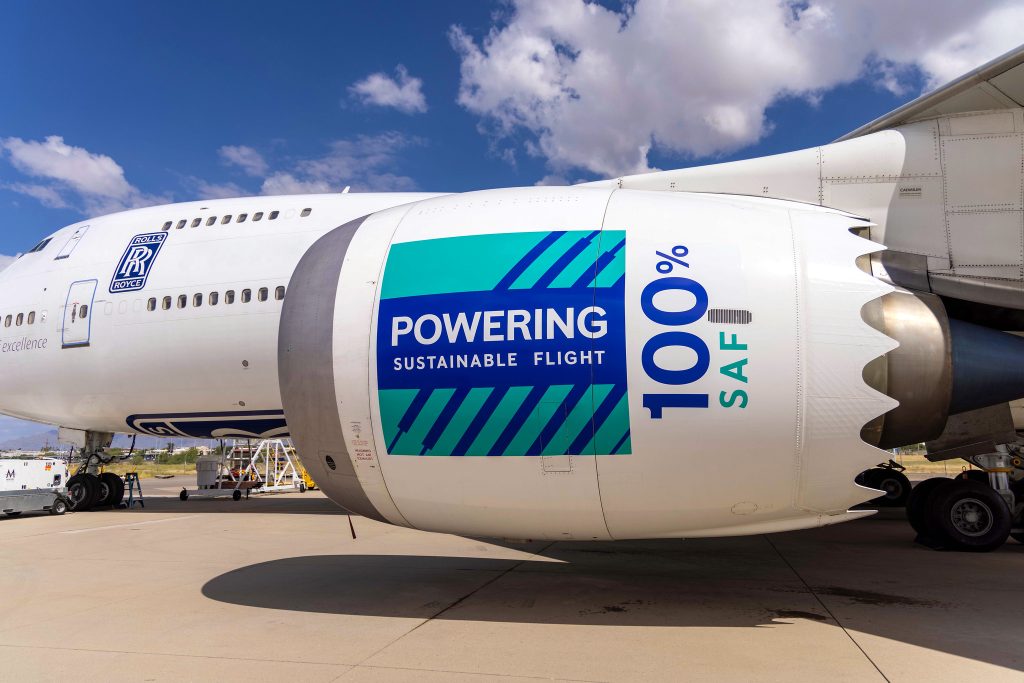
Corporate purchases of sustainable aviation fuel certificates could support up to 1.9 million tonnes of SAF by 2030, offering airlines a potential source of transition financing as high fuel costs and limited production constrain adoption.
Corporate demand for sustainable aviation fuel (SAF) could rise nearly sixfold by 2030, potentially helping airlines and fuel producers overcome the high cost of cleaner fuel – one of the biggest obstacles to aviation decarbonisation.
A new study by the International Air Transport Association (IATA), Airbus and Accenture estimates that corporate purchases of SAF environmental attribute certificates could support between 1 million and 1.9 million tonnes of the fuel annually by 2030, up from an estimated 323,000 tonnes in 2024.
The projections point to a potential new source of financing for aviation’s energy transition, allowing companies to contribute towards the cost of reducing emissions associated with business travel and air cargo without necessarily purchasing the physical fuel themselves.
The opportunity is significant because SAF remains considerably more expensive than conventional jet fuel, while production capacity is still limited. Global SAF output in 2026 is expected to reach 2.4 million tonnes, equivalent to just 0.8pc of total jet fuel consumption, according to IATA.
The fuel costs between two and three times as much as conventional jet fuel, making widespread adoption difficult for airlines already exposed to volatile fuel prices and tight operating margins.
Corporate participation could help distribute that additional cost across a wider pool of buyers, turning companies’ climate commitments into a more direct source of demand for SAF producers.
The proposed mechanism centres on environmental attribute certificates (EACs), which allow corporate buyers to pay for the emissions-reduction benefits associated with SAF without requiring the fuel to be physically delivered to the aircraft carrying their employees or cargo.
Under a book-and-claim system, the physical fuel is supplied and consumed within an aviation fuel network, while its verified environmental attributes are tracked separately and allocated to a purchaser. This allows a company to support SAF use even where the fuel is unavailable at the airport it uses.
For companies seeking to address their Scope 3 emissions (indirect emissions occurring across their value chains, including business travel and freight) the arrangement offers a way to contribute to aviation decarbonisation.
But the market remains underdeveloped with only about 15pc of corporate respondents surveyed for the study currently purchasing SAF certificates. Many others are deterred by prices, uncertainty over carbon accounting and the complexity of procurement.
The study estimates that SAF environmental attribute certificates cost between USD150 and USD500 per tonne of carbon dioxide equivalent abated, while companies indicate a willingness to pay closer to USD300.
The gap between the cost of participation and what buyers are prepared to pay presents a challenge for the market. IATA has argued that corporate enthusiasm for emissions reduction will translate into meaningful fuel demand only if the certificates are affordable, credible and straightforward to purchase.
Airlines currently account for about 53pc of corporate SAF certificate purchases, making them the largest source of certificates for companies seeking to address emissions from air travel and freight.
IATA Senior Vice-President for Sustainability and Chief Economist Marie Owens Thomsen said airlines could not bear the cost of expanding SAF production alone.
Corporate buyers, she said, could help build the market and contribute to the cost of aviation’s energy transition, provided companies have confidence that their purchases will deliver recognised emissions reductions.
The credibility test
The next stage of market development will depend on resolving three practical problems – inconsistent accounting rules, reliable tracking of environmental claims and cumbersome purchasing processes.
Without clear accounting standards, companies risk paying for emissions reductions that their reporting frameworks do not recognise. Weak tracking could also allow the same environmental benefit to be claimed more than once, undermining confidence in the market.
Simpler purchasing arrangements, including greater price transparency, smaller minimum volumes and shorter contracts, could also widen participation beyond large multinational companies with dedicated sustainability budgets.
For fuel producers, credible and predictable corporate demand could provide a stronger basis for investment decisions. Airbus Vice-President for Sustainable Aviation Fuel and Carbon Dioxide Removal Development Julien Manhes said corporate demand could become a catalyst for scaling up production by providing fuel producers with a clearer signal of future purchases.
Accenture’s Global Aviation and Travel Sustainability Lead, Jesko Neuenburg, similarly argued that airlines needed systems to recover SAF costs and make certificates easier for customers to buy as the market matures.
Implications for African aviation
For Africa, the emerging market presents both a financing opportunity and a production challenge.
African airlines face the same underlying economics as their international competitors. SAF is expensive, production remains limited and the cost of transitioning away from conventional jet fuel must be managed alongside fleet investment and other operating expenses.
Corporate certificate purchases could allow businesses with substantial air-travel or air-cargo footprints to help finance emissions reductions, including through arrangements with airlines serving African markets.
The longer-term opportunity lies in production. African countries with suitable agricultural resources and renewable energy potential could explore SAF supply chains, subject to the availability of sustainable feedstocks, viable production technology, water and land safeguards, and commercially competitive logistics.
Related Posts
 Airbus sees USD420bn Global Aviation Services Boom: Can Africa Capture its Share?
 Nile Breweries Celebrates 75 Years of Growing with Uganda
 Nawangwe Urges Architects to Document Uganda’s Built Heritage
 Stanbic installs solar power system at Mbale School for the Deaf
 NWSC Seeks Grundfos Partnership to Manufacture Pumps, Spare Parts in Uganda
 Uganda to Host 2027 Global Water Congress as NWSC Targets Better Services
Get business news delivered to you everyday
Latest News

Corporate Buyers Could Help Unlock SAF Market Worth Millions of Tonnes by 2030

Airbus sees USD420bn Global Aviation Services Boom: Can Africa Capture its Share?

Nile Breweries Celebrates 75 Years of Growing with Uganda

Nawangwe Urges Architects to Document Uganda’s Built Heritage

Stanbic installs solar power system at Mbale School for the Deaf

NWSC Seeks Grundfos Partnership to Manufacture Pumps, Spare Parts in Uganda

Airbus-Kratos Valkyrie Unmanned Combat Aircraft Completes First Flight Ahead of 2029 Combat Target

Lt Gen Frederick Alexander Okecho: The Gallant Soldier Who Knew When to be Still

Uganda’s Oil Refinery Still Makes Sense in a USD500 Billion Economy

Equity Bank Uganda Honours 80 Customers for Loyalty, Business Growth