

Uganda’s Oil Refinery Still Makes Sense in a USD500 Billion Economy
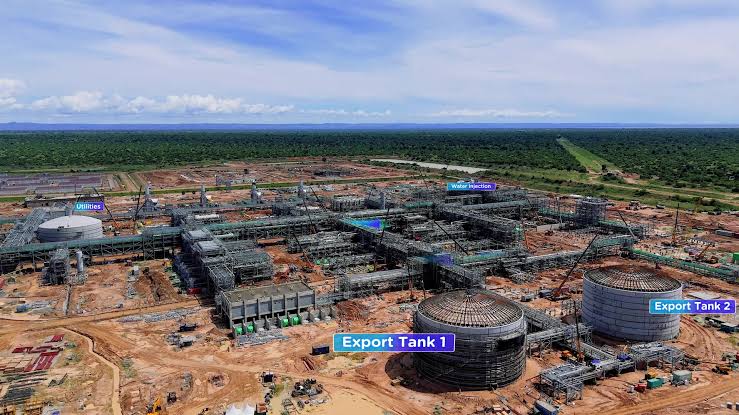
Hoima’s strongest case lies in energy security and domestic industrialisation, not an assumption that Uganda will capture a guaranteed share of East Africa’s expanding fuel market
Uganda’s planned oil refinery is entering a more demanding commercial environment. Kenya has broken ground on a proposed 700,000-barrel-per-day refinery at Lamu, backed by Aliko Dangote, while Tanzania is advancing plans for a 200,000-barrel-per-day facility at Tanga. Together with Uganda’s proposed 60,000-barrel-per-day refinery at Hoima, these projects are reshaping the outlook for petroleum refining in East Africa.
The concern is simple. If the region cannot absorb the combined output of its proposed refineries, which project will secure sufficient customers to operate profitably?
The question is legitimate, but it risks reducing a strategic investment decision to a contest for regional market share. Uganda is not planning to build a refinery simply to sell fuel to its neighbours. It is also seeking to support an economy that the government wants to grow tenfold, from approximately USD50 billion in 2023 to USD500 billion by 2040.
That ambition changes the context in which Hoima should be assessed. An economy of that scale will require substantially more productive infrastructure, industrial capacity and reliable energy supply. Petroleum will not meet all those requirements, but it will remain important to transport, aviation, construction, agriculture and parts of manufacturing for years to come.
The relevant question is therefore not whether East Africa needs three refineries of different sizes. It is whether Uganda can develop a commercially viable domestic refining industry that strengthens its economic resilience without relying on unrealistic export projections.
The domestic market is the starting point
Uganda currently consumes approximately 6.5 million litres of petroleum products a day and spends an estimated USD2 billion to USD2.5 billion annually on imports, according to the Uganda National Oil Company figures cited in recent regional reporting. That is an established market before the additional requirements of a larger economy are considered.
An expansion in manufacturing, mineral processing, commercial agriculture, tourism and construction would increase demand for freight transport, industrial machinery and other equipment that depends on liquid fuels. Growing aviation activity would create additional requirements for jet fuel, while greater urbanisation and trade would place further demands on transport and logistics.
The scale of that increase should not be assumed. Better fuel efficiency, electric mobility and the expansion of renewable electricity could moderate petroleum consumption. But neither should Uganda plan its energy infrastructure on the assumption that the transition will eliminate demand for liquid fuels before 2040.
The Tenfold Growth Strategy requires an energy system capable of supporting rapid economic expansion while accommodating technological change. Domestic refining is one possible component of that system.
The distinction is important because Uganda does not need to prove that petroleum demand will grow indefinitely. Instead, it needs to demonstrate that sufficient demand will remain, over the refinery’s economic life, to justify the investment and that locally refined products can compete with imports.
Energy security in an unstable world
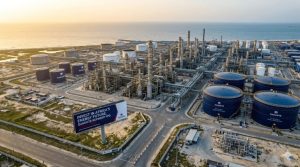
Dangote’s 700k barrels a day refinery in Nigeria has scale but scale does not necessarily undermine the case for Uganda’s domestic refinery
The case for Hoima becomes stronger when energy security is considered alongside commercial returns.
Uganda is landlocked and depends on international supply chains and regional transport corridors to obtain refined petroleum products. Even when fuel is readily available in international markets, disruptions to shipping, higher freight and insurance charges, foreign-exchange pressures or interruptions along regional routes can raise the cost of getting it to Ugandan consumers.
Recent instability in the Middle East has illustrated how geopolitical events can affect petroleum prices and supply arrangements far beyond the immediate conflict zone. A domestic refinery would moderate these vulnerabilities and diversify the country’s supply arrangements.
Instead of depending almost entirely on finished products imported from overseas refineries, Uganda would have the option of processing some of its own crude and distributing the resulting products domestically. Strategic storage and continued access to imported fuels would provide additional protection against disruption.
This is the argument for redundancy in national infrastructure. A country does not necessarily build every strategic facility because it offers the lowest cost in every conceivable circumstance. Sometimes the value lies in having an additional source of supply when the alternatives become unreliable or expensive. The question is how much Uganda should pay for that resilience and ensure the cost remains proportionate to the benefit.
Refining is part of industrialisation
The second consideration is the opportunity to develop industries around the processing of domestic crude.
Exporting crude while importing refined products leaves Uganda dependent on processing capacity elsewhere. Domestic refining would allow the country to participate in another stage of the petroleum value chain, creating opportunities for engineering, maintenance, logistics, laboratory services and other industrial suppliers.
Depending on the final configuration, the Hoima complex could also support downstream production involving liquefied petroleum gas, petrochemicals and other industrial inputs.
These possibilities matter in an economy seeking to expand manufacturing and retain more value from its natural resources.
They should not, however, be confused with guaranteed economic gains. The refinery will need to demonstrate that its output can be sold competitively and that the value generated domestically exceeds the costs and risks of the investment.
Employment, local procurement and downstream industrial development should be measured against clear targets. Otherwise, the promise of value addition can become a justification for capital expenditure without sufficient accountability for the results.
Lamu changes the export equation
The emergence of Lamu makes it harder to rely on regional exports as the principal justification for Hoima.
A 700,000-barrel-per-day refinery, if delivered and operated as envisaged, would have substantial scale advantages and the potential to pursue customers beyond East Africa. Uganda’s smaller facility cannot expect to compete on volume alone.
Tanzania’s Tanga plans add another layer of uncertainty. The region’s proposed refining capacity could exceed its projected domestic demand, meaning that some facilities would need to sell into wider African markets.
Geography could be Hoima’s competitive advantage
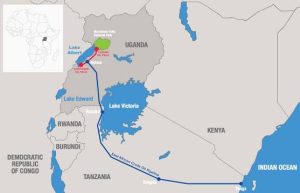 There is another factor in the regional refining contest that deserves greater attention. Logistics. While coastal refineries enjoy direct access to seaborne crude and established shipping infrastructure, Hoima is considerably closer to landlocked markets in the Great Lakes region and parts of Central Africa. For customers in eastern Democratic Republic of Congo, Rwanda, Burundi and other inland markets, sourcing petroleum products from Uganda could reduce the distance travelled compared with supplies originating from coastal refineries in Kenya or Tanzania.
In petroleum distribution, distance translates into real costs through road or rail freight, handling, transit delays and border procedures. A refinery positioned closer to its customers could therefore compete on delivered price even without matching the production scale of its coastal rivals. The advantage would be particularly relevant where dependable cross-border transport links and efficient customs arrangements make shorter supply routes commercially attractive.
This is not an automatic guarantee of competitiveness. The actual advantage will depend on the cost of moving products from Hoima, the condition of regional transport corridors, border efficiency and the prices offered by competing suppliers. But it gives Uganda a potentially important market beyond its domestic consumption. Not necessarily the entire East African coast-facing market, but the inland economies for which proximity and dependable supply could matter as much as refinery scale.
For Uganda, the implication is not necessarily to abandon refining. It is to be more realistic about the role of exports. Hoima should be designed and operated first around a credible domestic market, with regional sales treated as a potential source of additional revenue rather than an assumption on which the entire investment depends.
That requires a rigorous assessment of delivered costs. The price of crude, financing charges, processing efficiency, product yields, refinery utilisation and the cost of moving finished products to customers will determine competitiveness.
A refinery can have access to domestic crude and still struggle if its products are more expensive than imports. Conversely, a smaller plant with reliable feedstock, efficient operations and well-designed distribution infrastructure may serve a defined market successfully without matching the scale of its competitors.
Uganda’s planned 211-kilometre multiproduct pipeline from Hoima to the Namwabula storage and distribution terminal in Mpigi is therefore an important part of the project, not an incidental addition. Its cost and performance will influence the price at which refinery products reach the market.
Could modular technology change the economics?
Developments in modular construction and process engineering also warrant consideration. Standardised equipment and staged construction can offer advantages in delivery schedules, project execution and the ability to expand capacity as demand develops.
Modularity is not, however, a guarantee of lower costs. Smaller facilities can face higher unit costs and lack some of the processing efficiencies available to large, integrated refineries.
Uganda should therefore examine whether phased development or modular configurations offer a better risk-adjusted return than committing to a single configuration from the outset. That assessment must account for the characteristics of Uganda’s crude, the required product mix, environmental standards, maintenance requirements and the economics of expansion.
The objective should be neither to build the biggest possible refinery nor to pursue smaller plants simply because they appear easier to finance. It should be to establish the capacity Uganda can operate reliably and profitably under realistic demand scenarios.
The refinery must complement the energy transition
A USD500 billion economy will also require more electricity, greater energy efficiency and a progressive shift towards lower-carbon technologies.
Uganda should pursue those priorities alongside its petroleum investments. A refinery expected to operate for decades must be tested against scenarios involving slower fuel-demand growth, increasing vehicle electrification and changing international fuel standards.
This is not an argument for choosing between oil and renewable energy but a case for planning the two together.
Liquid fuels will remain important to several sectors during the transition, while electricity will become increasingly important to industry, households and transport. A balanced energy strategy must recognise both trajectories and avoid locking public resources into infrastructure whose economic assumptions cannot withstand technological change.
A strategic asset must pass the commercial test
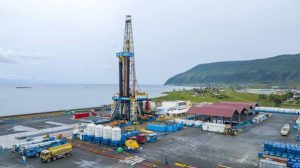
The Kingfisher Development Area in Kikuube District
Uganda’s refinery has a credible strategic rationale. It could diversify fuel supply, reduce dependence on imported finished products and create opportunities for domestic industrial development.
But strategic rationale is not a substitute for commercial viability. The project must have transparent financing, dependable crude supply, competitive production costs and realistic projections of domestic demand. Government should also disclose the assumptions underpinning the investment and subject them to independent scrutiny.
The USD500 billion ambition makes the energy question more urgent, not less. An economy of that scale cannot afford to overlook the resilience of its fuel supply. Equally, it cannot afford a refinery whose costs undermine the investment needed for roads, electricity, health, education and other productive infrastructure.
Therefore, Hoima does not need to win a regional contest for refinery size to justify its place in Uganda’s development strategy. It needs to supply a meaningful share of the domestic market at a competitive cost, strengthen resilience against external shocks and support industries that create lasting economic value.
The arrival of Lamu and the prospect of Tanga should force Uganda to sharpen its commercial assumptions, not abandon the broader question of why it wants to refine its own oil.
In a world where geopolitical disruptions can rapidly alter energy costs and supply routes, resilience has economic value. The task is to build that resilience without paying more for it than the country can sustain.
Related Posts
 Equity Bank Uganda Honours 80 Customers for Loyalty, Business Growth
 African Leopards Have Lost 41pc of Their Historical Range as New Study Finds Population May be as Low as 80,000
 African Aviation Leaders Demand Action on Costs, Safety and Connectivity
 Stanbic Business Forum told Uganda’s Schools Need to Outlive Their Founders
 URC Moves to Clear Railway Reserves as Uganda tightens Grip on Encroachment
 COMESA Competition Watchdog Calls for Stronger Skills-Sets to Police Complex Regional Markets
Get business news delivered to you everyday
Latest News

Uganda’s Oil Refinery Still Makes Sense in a USD500 Billion Economy

Equity Bank Uganda Honours 80 Customers for Loyalty, Business Growth

African Leopards Have Lost 41pc of Their Historical Range as New Study Finds Population May be as Low as 80,000

African Aviation Leaders Demand Action on Costs, Safety and Connectivity

Stanbic Business Forum told Uganda’s Schools Need to Outlive Their Founders

URC Moves to Clear Railway Reserves as Uganda tightens Grip on Encroachment

CMA Opens Dangote Refinery IPO to Uganda’s Wealthy investors as SBG Securities Uganda Limited Becomes Sole Intermediary

South Africa Makes Entry Faster with ETA but Cost of Entry More Than Doubles for Ugandans

Beyond the Classroom: A Ugandan Student Inside China’s Manufacturing World

Hon. John Musila and the Duty of MPs to Respect Institutional Accountability