

South Africa Makes Entry Faster with ETA but Cost of Entry More Than Doubles for Ugandans
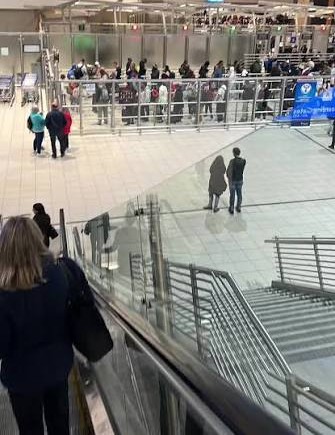
South Africa’s new ETA promises faster, simpler and more secure entry, but Ugandans face a 117.6pcincrease in the upfront cost of travel authorisation, from R425 to R925.
South Africa’s new Electronic Travel Authorisation (ETA) is designed to make entry into the country faster, more convenient and more secure, but for Ugandan travellers the digital overhaul comes with a significant increase in the upfront cost of entry.
For Ugandans, the effective cost rises from R425(UGX 103,700) to R925 (UGX 225,800), an increase of R500 (about UGX122,100) or 117.6pc
The change means that while the administrative process is becoming easier, the financial barrier to travel is moving in the opposite direction.
Uganda was among the countries brought into the expanded eTA system in late September, with the South African High Commission in Kampala communicating the decision to Uganda’s Ministry of Foreign Affairs in a diplomatic note dated 29 September 2026. The arrangement allows holders of valid Ugandan passports to apply for an eTA before travelling to South Africa for eligible ordinary visits, including tourism, holidays and short-term business.
Crucially, the eTA does not mean Ugandans have become visa-exempt. Rather, it digitalises and relocates the visa process. Instead of applying for a conventional visa through the traditional system before travelling, the eligible traveller applies online through the eTA platform and, once approved, receives the relevant visa authorisation digitally.
South Africa’s own Home Affairs documentation describes the system as allowing port-of-entry and visitor visas to be processed online, with the visa issued in digital form and linked to the traveller’s passport. At the South African border, biometric and passport checks are then used to verify the traveller and complete the immigration process.
The South African government’s case for the ETA rests largely on speed and efficiency. Travellers can apply online rather than going through the conventional visa process, with the application incorporating passport information, personal questions, a photograph or selfie, biometric information and online payment.
South Africa says approved ETAs can be issued within 24 hours, with the digital system designed to deliver decisions considerably faster in straightforward cases.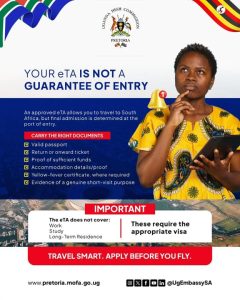
For business travellers, tourists and people making short-notice trips, that could remove the need to assemble paperwork and, where applicable, make physical visits to visa centres; one of the more cumbersome elements of international travel.
The system is also intended to improve border security. The ETA links the traveller to their passport and biometric information, allowing immigration authorities to verify the identity of the person arriving in South Africa. The country is integrating the system with its upgraded Electronic Movement Control System (EMCS 2.0), which is expected to support biometric verification and more efficient immigration processing at ports of entry.
In practical terms, the objective is to shift part of immigration control away from lengthy manual processing and towards digital pre-clearance.
For frequent travellers, another attraction is that an ETA can permit multiple journeys during its validity period, subject to the applicable conditions.
The system also provides for eligible visitors who enter South Africa for up to 90 days to apply electronically for a further 90-day extension, subject to the country’s immigration laws.
These features give the ETA some clear advantages over a purely paper-based visa regime. But they do not change the underlying economics of travelling to South Africa.
For Ugandans, the increase from R425 to R925 means the cost of obtaining entry authorisation has more than doubled. In percentage terms, the increase is 117.6pc
That distinction matters because a cheaper or more convenient immigration process are not necessarily the same thing.
For a business traveller, the ability to obtain authorisation online within a day could be valuable if it allows a meeting or transaction to go ahead without a lengthy visa process. For a family or leisure traveller, however, the additional R500 is a direct increase in the cost of making the journey.
The change therefore creates a familiar policy trade-off. While South Africa is reducing the friction of travelling. It is increasing the price of crossing the administrative threshold.
For South Africa, the benefits extend beyond convenience for visitors. A digital pre-authorisation system gives immigration authorities more information before a traveller arrives, potentially strengthening screening while allowing legitimate passengers to move through borders more efficiently.
For Ugandans, the question is whether the efficiency gains will be sufficient to offset the higher cost for travellers.
The answer will depend partly on how well the system works in practice. If applications are genuinely processed quickly, biometric verification reduces queues and repeat travellers can use the authorisation without repeated administrative hurdles, the additional cost may be easier for some travellers to justify. But for price-sensitive travellers, particularly those travelling for family visits or leisure, the 117.6pc increase remains significant.
Related Posts
 Hon. John Musila and the Duty of MPs to Respect Institutional Accountability
 IATA says Aviation Safety’s Next Gains Will Depend on People, Technology and Standards
 Equity Bank Targets Uganda’s Artisanal Miners as Financing Gap Limits Mining Growth
 Airlink Expands Cape Town Network with New Lanseria and Mauritius Links
 Africa Faces Gunboat Diplomacy Without the Gunboats
 United’s Johannesburg-New York Nonstop Service Hits Five-Year Milestone
Get business news delivered to you everyday
Latest News

South Africa Makes Entry Faster with ETA but Cost of Entry More Than Doubles for Ugandans

Beyond the Classroom: A Ugandan Student Inside China’s Manufacturing World

Hon. John Musila and the Duty of MPs to Respect Institutional Accountability

UDB Commissions Titivated Headquarter Tower as Development Lender Scales up Transformation Role

Equity Bank Urges Diaspora Ugandans to Turn Remittances into Investments

Uganda Private Sector Sustains Demand Despite Rising Costs

IATA says Aviation Safety’s Next Gains Will Depend on People, Technology and Standards

Equity Bank Targets Uganda’s Artisanal Miners as Financing Gap Limits Mining Growth

Airlink Expands Cape Town Network with New Lanseria and Mauritius Links

Africa Faces Gunboat Diplomacy Without the Gunboats