

Uganda Private Sector Sustains Demand Despite Rising Costs
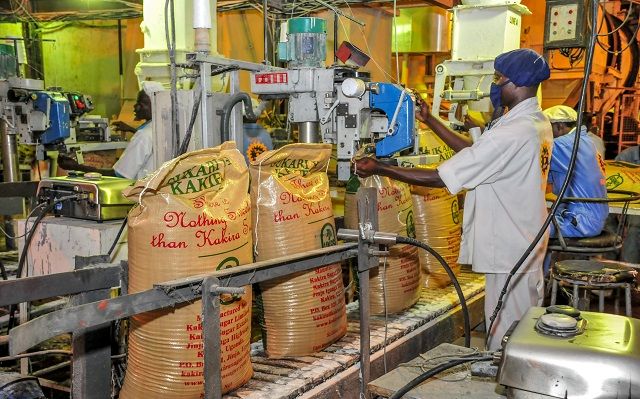
Uganda’s private sector maintained its expansion in September as resilient demand supported new orders, but rising transport, fuel and operating costs increasingly squeezed businesses.
Uganda’s private sector maintained its expansion in September as sustained consumer demand supported new orders and business activity, although rising input costs, transport pressures and payment delays increasingly constrained companies.
The latest Stanbic Bank Uganda Purchasing Managers’ Index (PMI), compiled by S&P Global, stood at 53.0 in September, down from 55.0 in August but remaining above the 50.0 threshold that separates expansion from contraction.
The September reading marked continued improvement in overall private-sector business conditions, extending a run of expansion that began in February 2025.
New orders and output remained resilient during the month, with businesses reporting that sustained customer demand, promotional campaigns and increased advertising helped generate new sales.
“New orders and output remained resilient, consistent with favourable demand conditions,” said Christopher Legilisho, an economist at Stanbic Bank.
The survey, which covers agriculture, mining, manufacturing, construction, wholesale, retail and services, found that expansion in new orders was broad-based during September. However, agriculture and wholesale and retail firms recorded contractions in output.
Legilisho said the softer headline PMI masked growing pressures on businesses as stronger demand collided with supply and working-capital constraints.
“Rising backlogs driven by stronger demand and payment delays suggest that firms are facing growing capacity and working capital constraints,” he said.
The pressure was particularly evident in supply chains. Firms reported higher transport and logistics costs, international transportation delays and rising fuel costs, which contributed to a fresh deterioration in supplier performance.
Businesses responded by increasing purchasing activity and building inventories in anticipation of continued demand and possible supply disruptions.
Inventories increased for the 19th consecutive month, according to the survey, suggesting that companies are continuing to build buffers even as the cost of doing business rises.
Operating expenses also increased across all five monitored sectors, with companies citing higher utility, fuel and transport costs as well as rising wage bills.
The increase in input costs prompted businesses to raise selling prices in an effort to protect margins. Output charges increased across all sectors except construction, where prices declined.
Employment nevertheless continued to grow as companies responded to higher new orders and mounting workloads. Firms reported hiring both temporary and permanent workers, although services was the exception to the broader increase in employment.
At the same time, backlogs of unfinished work increased for a fourth consecutive month. Some companies attributed the accumulation to delayed customer payments, which slowed their ability to process incoming orders.
The combination of stronger demand and rising backlogs points to an increasingly important constraint on the private sector where businesses are finding customers, but their ability to convert demand into completed output is being tested by financing, staffing and supply-chain pressures.
“The supply-side pressures nevertheless intensified as higher transport and logistics costs strained supply chains,” Legilisho said. “Firms responded by increasing purchasing activity and building inventories in anticipation of sustained demand.”
The PMI is based on monthly responses from purchasing managers and measures changes in business activity across the Ugandan private sector. A reading above 50 indicates an improvement in business conditions from the previous month, while a reading below 50 indicates deterioration.
The index combines five components: new orders, weighted at 30pc; output, 25pc; employment, 20pc; suppliers’ delivery times, 15pc; and stocks of purchases, 10pc.
September’s data presents a mixed picture as the economy enters the final quarter of the year. Consumer and business demand remain supportive of expansion, but higher costs, delayed payments and supply-chain friction are making that growth more expensive to sustain.
Related Posts
 UDB Commissions Titivated Headquarter Tower as Development Lender Scales up Transformation Role
 Equity Bank Urges Diaspora Ugandans to Turn Remittances into Investments
 Aviation says Safety’s Next Gains Will Depend on People, Technology and Standards
 Equity Bank Targets Uganda’s Artisanal Miners as Financing Gap Limits Mining Growth
 Airlink Expands Cape Town Network with New Lanseria and Mauritius Links
 Africa Faces Gunboat Diplomacy Without the Gunboats
Get business news delivered to you everyday
Latest News

UDB Commissions Titivated Headquarter Tower as Development Lender Scales up Transformation Role

Equity Bank Urges Diaspora Ugandans to Turn Remittances into Investments

Uganda Private Sector Sustains Demand Despite Rising Costs

Aviation says Safety’s Next Gains Will Depend on People, Technology and Standards

Equity Bank Targets Uganda’s Artisanal Miners as Financing Gap Limits Mining Growth

Airlink Expands Cape Town Network with New Lanseria and Mauritius Links

Exim Bank Uganda Backs Yangtze Industry Expansion into Manufacturing

United’s Johannesburg-New York Nonstop Service Hits Five-Year Milestone

African Airlines Outpace Global Market as August Passenger Demand Rises 6.7pc

Uganda Parliament Calls for Faster Social Protection Reforms for Older Persons