

Hon. John Musila and the Duty of MPs to Respect Institutional Accountability
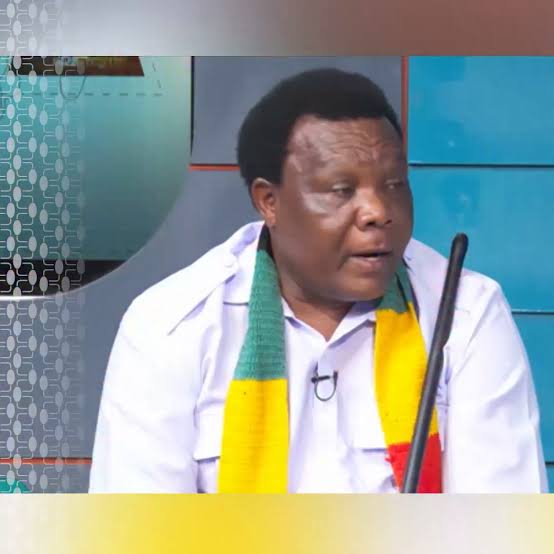
Parliamentarians must defend accountability, not undermine institutions. Hon. John Musila’s conduct raises serious questions about respect for due process, institutional integrity and the responsibilities of public office.
There is a troubling lesson in the dispute between Lubega Institute of Nursing and Health Professionals and Hon. John Musila, the Member of Parliament for Bubulo East.
It is not a lesson about the rights of a parent to defend a child. Nor is it about whether a student accused of wrongdoing should ultimately be found guilty or innocent.
It is about something more fundamental: whether political office should confer the power to override institutional processes when those processes become inconvenient.
According to a statement issued by Lubega Institute on October 6, the institution became aware of allegations involving the alleged forgery of banking slips in the names of a Stanbic Bank agent. The institute says its investigations implicated 90 students, including the daughter of Hon. Musila, and that, after obtaining legal and professional advice, it reported the matter to police because forgery, uttering forged documents and impersonation are criminal matters.
The institution further says that police subsequently apprehended the alleged principal originator of the forgeries after a period on the run.
These are serious allegations and they should be treated as such until tested through the proper legal process. But that cuts both ways.
The appropriate response to an allegation of criminal conduct is investigation, evidence and due process—not political pressure, public mobilisation or the invocation of parliamentary privilege as an alternative court of law.
Lubega says Hon. Musila was invited, together with other parents and students, to meet the institution’s Board over the matter. It says a meeting involving parents, students and police was held and resolutions reached.
The institute further claims that the MP subsequently insisted that his daughter be allowed back into the institution despite the police and State position, and that when management declined, the matter was taken to Parliament.
The central question is not whether Hon. Musila has the right to speak on the floor of Parliament. He plainly does. Parliament is precisely where elected representatives should raise matters of public interest. The question is what Parliament should be used for.
Parliament is not a substitute for a police investigation. It is not a disciplinary board for a private educational institution. And it certainly should not become an avenue through which the relative of an elected official receives treatment unavailable to other students facing the same allegations.
There is also an important distinction between parliamentary oversight and parliamentary intervention in an individual disciplinary dispute. The former strengthens democracy. The latter can weaken institutions if it is perceived as an attempt to bring political authority to bear on an institution that has followed an established process.
This is particularly important in health education. A nursing or medical qualification is not simply another academic certificate. It is a licence, in practical terms, to enter a profession in which patients entrust their lives to people who must demonstrate honesty, competence, discipline and ethical judgment.
That is why Lubega’s insistence that professional ethics matter deserves serious consideration.
The institute’s position is that a student accused of forging financial documents for personal gain cannot simply be allowed to proceed into a profession where graduates may eventually handle medicines, public resources and, most importantly, people’s lives.
While that does not mean the students should be presumed guilty, it demands that the allegations should be properly investigated and determined by the competent authorities.
Indeed, that is the protection both sides need. If the students are innocent, due process should clear their names. If wrongdoing is established, the consequences should follow.
What should not happen is for either political influence or institutional power to determine the outcome before the evidence has been tested.
There is also a wider issue here for Uganda’s Parliament. Members of Parliament are powerful public figures. Their words carry considerably more weight than those of the average citizen. When an MP raises a matter on the parliamentary floor involving a private institution, there is inevitably a risk that the institution will be placed under public pressure before the underlying facts have been fully established.
That makes restraint especially important. The proper role of an MP is not to guarantee a particular outcome for a constituent or family member. It is to ensure that the law and public institutions work fairly for everyone—including those with no political connections.
Lubega Institute therefore deserves to be heard on its own evidence and processes, just as Hon. Musila deserves the opportunity to present his side and seek lawful redress.
But neither side should be allowed to turn the dispute into a contest of political influence.
For Uganda’s institutions to mature, Parliament must remain Parliament, the police must remain the police, educational institutions must retain legitimate disciplinary authority, and courts must remain the ultimate arbiters of criminal guilt.
That separation is not an inconvenience buts the architecture of the rule of law.
And when the allegations involve the integrity of future health professionals, defending that principle is not defending one school against one MP. It is defending the standards that Uganda’s health system ultimately depends upon.
Related Posts
 IATA says Aviation Safety’s Next Gains Will Depend on People, Technology and Standards
 Equity Bank Targets Uganda’s Artisanal Miners as Financing Gap Limits Mining Growth
 Airlink Expands Cape Town Network with New Lanseria and Mauritius Links
 Africa Faces Gunboat Diplomacy Without the Gunboats
 United’s Johannesburg-New York Nonstop Service Hits Five-Year Milestone
 Uganda Parliament Calls for Faster Social Protection Reforms for Older Persons
Get business news delivered to you everyday
Latest News

Beyond the Classroom: A Ugandan Student Inside China’s Manufacturing World

Hon. John Musila and the Duty of MPs to Respect Institutional Accountability

UDB Commissions Titivated Headquarter Tower as Development Lender Scales up Transformation Role

Equity Bank Urges Diaspora Ugandans to Turn Remittances into Investments

Uganda Private Sector Sustains Demand Despite Rising Costs

IATA says Aviation Safety’s Next Gains Will Depend on People, Technology and Standards

Equity Bank Targets Uganda’s Artisanal Miners as Financing Gap Limits Mining Growth

Airlink Expands Cape Town Network with New Lanseria and Mauritius Links

Africa Faces Gunboat Diplomacy Without the Gunboats

Exim Bank Uganda Backs Yangtze Industry Expansion into Manufacturing