

URC Moves to Clear Railway Reserves as Uganda tightens Grip on Encroachment
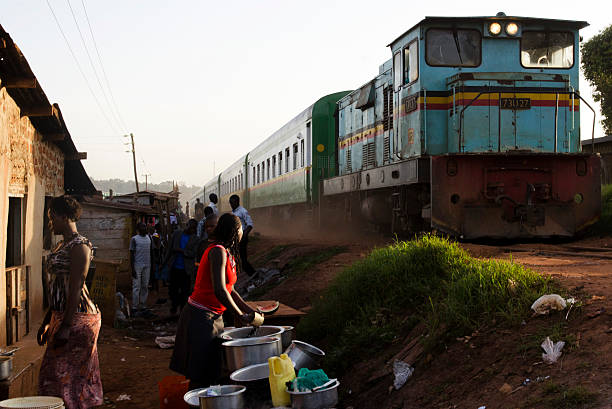
Uganda Railways will begin a nationwide crackdown on railway reserve encroachment on 12 October, targeting structures and activities occupying land needed for railway works and expansion.
Uganda Railways Corporation (URC) is set to begin a nationwide operation to remove illegal structures and other forms of encroachment from railway reserve land, in a move aimed at protecting existing infrastructure and creating room for rehabilitation and expansion of the network.
URC said the exercise will begin on 12 October 2026 and cover several sections of the country’s railway network, including corridors from Kampala through Ndeeba, Natete, Kyengera and Bujuuko towards Kasese; Kampala-Kireka-Namboole-Namanve-Mukono-Jinja-Malaba; Tororo-Gulu-Pakwach; Masindi; Arua; and the Busoga line.
While URC does not currently have railway lines running through Masindi and Arua, the corporation said its land holdings in the two areas form part of its historical railway infrastructure reserves. URC spokesperson John Linnon Ssengendo told 256BN that the land in Masindi includes reserves associated with Masindi Port on Lake Kyoga, as well as substantial parcels within Masindi Municipality that previously housed railway staff quarters and offices.
“We also have a lot of land in Arua which accommodated our operational base for activities related to the section of the Northern line which terminated in Pakwach,” Ssengendo said.
The corporation said the operation follows years of encroachment along railway corridors, with residential and commercial structures increasingly occupying land reserved for railway infrastructure.
The problem has become particularly visible in urban and peri-urban areas, where settlements have grown alongside railway lines and, in some cases, into the railway reserve itself.
URC said every illegal structure occupying its land is liable to removal. It also warned that structures belonging to people holding titles over land that falls within the railway reserve will be removed, with the corporation saying it will work with the Ministry of Lands to cancel such titles.
According to URC, its railway reserve extends 100 feet on either side of the railway line, while at level crossings the reserve extends 70 metres. Railway stations have larger reserves depending on their requirements.
The corporation has called on residents occupying the affected sections to vacate, while warning that resistance to the operation could result in arrest and prosecution.
Structures that only partly encroach on railway land will also be affected, with URC saying the portions falling within the reserve will be demolished.
The corporation says the immediate objective is to reclaim space for planned railway works and future expansion, while also allowing sections of the reserve to be landscaped and greened.
But the enforcement exercise also highlights a longer-standing challenge of protecting infrastructure corridors before they become more expensive and difficult to recover.
Railway infrastructure requires continuous and relatively unobstructed corridors for tracks, stations, signalling, drainage and other supporting facilities. Encroachment can therefore limit not only current operations but also the ability to expand or modernise the network.
URC also raised safety concerns over people using railway corridors as pedestrian routes. The corporation said it would begin arresting people walking along the railway corridor, arguing that the practice exposes pedestrians to trains and can also displace ballast supporting the track, potentially weakening the railway line.
The warning comes against a backdrop of Uganda’s efforts to revive rail transport as part of a broader strategy to reduce pressure on roads, lower transport costs and improve the movement of passengers and freight.
The Standard Gauge Railway project, rehabilitation of the existing metre-gauge network and planned improvements to railway links to neighbouring countries all require protected corridors.
URC’s latest operation goes beyond clearing individual structures. It is also an attempt to reassert control over land whose value lies not only in its present use but in its strategic importance to Uganda’s future transport network.
Related Posts
 Stanbic Business Forum told Uganda’s Schools Need to Outlive Their Founders
 CMA Opens Dangote Refinery IPO to Uganda’s Wealthy investors as SBG Securities Uganda Limited Becomes Sole Intermediary
 UDB Commissions Titivated Headquarter Tower as Development Lender Scales up Transformation Role
 Equity Bank Urges Diaspora Ugandans to Turn Remittances into Investments
 Equity Bank Targets Uganda’s Artisanal Miners as Financing Gap Limits Mining Growth
 Exim Bank Uganda Backs Yangtze Industry Expansion into Manufacturing
Get business news delivered to you everyday
Latest News

Stanbic Business Forum told Uganda’s Schools Need to Outlive Their Founders

URC Moves to Clear Railway Reserves as Uganda tightens Grip on Encroachment

COMESA Competition Watchdog Calls for Stronger Skills-Sets to Police Complex Regional Markets

CMA Opens Dangote Refinery IPO to Uganda’s Wealthy investors as SBG Securities Uganda Limited Becomes Sole Intermediary

South Africa Makes Entry Faster with ETA but Cost of Entry More Than Doubles for Ugandans

Beyond the Classroom: A Ugandan Student Inside China’s Manufacturing World

Hon. John Musila and the Duty of MPs to Respect Institutional Accountability

UDB Commissions Titivated Headquarter Tower as Development Lender Scales up Transformation Role

Equity Bank Urges Diaspora Ugandans to Turn Remittances into Investments

Uganda Private Sector Sustains Demand Despite Rising Costs