

African Aviation Leaders Demand Action on Costs, Safety and Connectivity
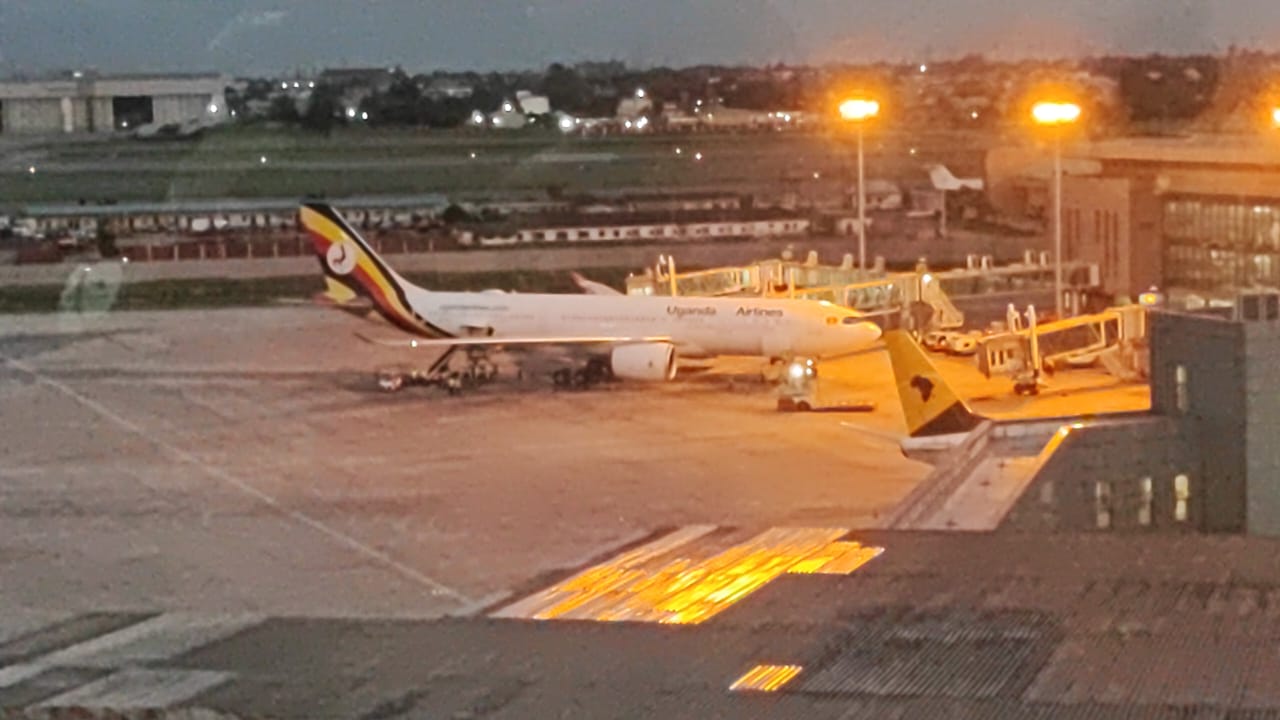 Elgon, the Uganda Airlines A330-800 at the gate at Lagos Murtala Muhammad, on October 19, 2023
African aviation leaders Aaron Munetsi and Kamil Alawadhi are urging governments to cut operating costs, improve safety and implement open-skies reforms to turn rising passenger demand into sustainable connectivity.

Aaron Munetsi
Africa’s aviation industry must move from policy declarations to practical reforms if the continent is to translate rising passenger demand into affordable, financially sustainable air connectivity, industry leaders have warned.
Speaking at the Airlines Association of Southern Africa’s (AASA) 56th Annual General Assembly in Mauritius, AASA chief executive Aaron Munetsi and Kamil Alawadhi, the International Air Transport Association’s (IATA) regional vice-president for Africa and the Middle East, called for urgent action on operating costs, taxation, safety oversight, infrastructure and regulatory fragmentation.
Their message was that Africa’s aviation problem is not a shortage of potential passengers, but the persistent failure to address the structural constraints that make flying expensive and many routes difficult to sustain commercially.
“Strategies don’t move people. Now it is time to make the difficult decisions and execute them,” Munetsi said, criticising decades of discussions and commissioned studies that have failed to produce commensurate improvements in the operating environment.
Africa’s young and expanding population presents a substantial opportunity for airlines, with World Bank and OECD studies cited by AASA projecting that the continent’s middle class could reach around 300 million people by 2030.
But converting that demographic potential into passenger traffic requires more than opening routes or announcing liberalisation programmes. Munetsi said travellers need reasonably priced flights, reliable schedules, convenient digital payments compatible with mobile money, efficient airports and border procedures, and services designed for both business and tourism.
Alawadhi’s assessment of the market illustrates the gap between that opportunity and the industry’s current performance.
African passenger demand, measured in revenue passenger kilometres, is projected to grow by around 10pc in 2026. Over the longer term, demand is expected to expand by an annual average of 3.6% between 2024 and 2050, making Africa the second-fastest-growing aviation region after Asia-Pacific.
Yet African airline traffic grew by only 3.4pc in the second quarter of 2026, while the passenger load factor stood at 75.2pc, compared with 83.5pc globally.
The gap with the global average highlights the difficulty African airlines face in filling capacity sufficiently to support profitable operations, although individual airlines and routes will perform differently.
At the same time, jet fuel prices averaged USD158 per barrel in the second quarter, 27pc above the first-quarter average. African carriers already contend with fuel prices around 17pc above the global average, taxes and charges 12pc to 15pc higher, and air navigation charges about 10pc higher.
Even before the latest fuel-price pressures, African airlines were forecast to earn a combined net profit of only about USD200 million in 2026, equivalent to approximately USD1.30 per passenger, according to Alawadhi.
These pressures reinforce Munetsi’s call for governments to contain aviation-related costs rather than add new financial burdens to an industry operating on narrow margins.
Governments must stop taxing connectivity
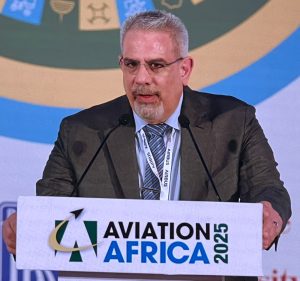
Kamil Alawadhi
One increasingly contentious issue is the proliferation of Advance Passenger Information and Passenger Name Record (API-PNR) charges. These systems allow governments to collect passenger information for border management and security purposes, but their implementation can impose additional costs on airlines and travellers.
Alawadhi said such programmes have a legitimate role in border security but should comply with international standards, operate under clear legal frameworks and include appropriate safeguards. The costs of government border-security functions, he argued, should not simply be transferred to airlines and their passengers.
Tanzania’s charge ofUSD$45 per passenger per sector illustrates the scale of some of the levies being imposed in African markets.
In July, AASA, the African Airlines Association (AFRAA) and IATA jointly called on governments to address the growing burden of API-PNR charges, arguing that security measures should not become another tax on connectivity.
The concern extends beyond individual fees. When levies accumulate alongside expensive fuel, airport charges and navigation costs, airlines have less room to absorb shocks or offer affordable fares. Routes with limited demand can become harder to sustain, while expansion into underserved markets becomes less attractive.
Munetsi said governments should also modernise and maintain airport infrastructure while ensuring that user charges remain affordable and reducing costs must go hand in hand with investments that improve operational efficiency.
Open skies need practical implementation
The two industry leaders also pointed to the need for a more integrated African aviation market.
AASA called for the removal of anti-competitive and protectionist restrictions on market access and the practical implementation of the Single African Air Transport Market (SAATM), the African Union initiative intended to liberalise air transport between participating countries.
Munetsi said liberalisation must move beyond declarations. Regulatory harmonisation, mutual recognition of licences and more consistent cross-border procedures are necessary to make regional operations simpler and more predictable.
The issue is central to the continent’s wider economic ambitions. More efficient air links can support tourism, facilitate business travel and improve the movement of high-value and time-sensitive cargo between African markets.
Alawadhi, however, warned that policy changes at the international level could undermine these ambitions if they add further costs.
He urged African governments participating in negotiations for the United Nations Framework Convention on International Tax Cooperation to preserve the established residence-based approach to taxing profits from international airline operations.
Under the traditional framework, such profits are generally taxed in the jurisdiction where the airline is resident. A shift towards source-based taxation could create competing taxing rights, additional administrative burdens and the risk of double taxation, Alawadhi said.
For African airlines, where many routes operate on thin margins, the cumulative effect could be to make services less viable, reduce frequencies or discourage new routes. Any additional tax revenue collected by an individual jurisdiction would need to be weighed against the wider economic costs if connectivity were weakened.
Safety remains non-negotiable
Cost reduction and market liberalisation, both leaders stressed in different ways, cannot come at the expense of safety.
Alawadhi reported that Africa’s all-accident rate improved to 7.86 accidents per million sectors in 2025, from 12.13 in 2024 and a five-year average of 9.37. Despite the improvement, the rate remained several times higher than the global average.
A further concern is the completion and publication of accident investigations. Between 2020 and 2025, only 16pc of accident reports in Africa were completed and published in accordance with International Civil Aviation Organization (ICAO) requirements.
Alawadhi called on governments to strengthen compliance with Annex 13 of the Chicago Convention, which sets international standards for aircraft accident and incident investigations, and to ensure findings are made public in a timely manner.
Investigations are essential not simply for assigning responsibility but for identifying failures and preventing similar accidents. Delayed or unpublished findings deprive airlines, regulators and other operators of lessons that could improve safety across the industry.
Through its Focus Africa initiative, IATA is working with partners under the Collaborative Aviation Safety Improvement Program (CASIP) on runway safety and safety management systems. Further projects address ramp safety and the harmonisation of safety programmes.
AASA’s five priorities for sustainable aviation growth similarly place safety first, alongside cost containment, infrastructure development, liberalisation and regulatory harmonisation.
The convergence of the two organisations’ positions points to a common need for a coordinated programme of implementation rather than isolated policy announcements.
Demand projections suggest that the market has considerable room to grow. But unless governments and regulators address the costs and operational barriers confronting airlines, a growing population and expanding travel demand will not automatically produce affordable fares, profitable routes or stronger regional integration.
As Munetsi argued at the assembly, the time for another round of strategies has passed. The test now is whether governments and industry can turn long-standing commitments into measurable improvements in how people and goods move across Africa.
Related Posts
 Equity Bank Uganda Honours 80 Customers for Loyalty, Business Growth
 African Leopards Have Lost 41pc of Their Historical Range as New Study Finds Population May be as Low as 80,000
 Stanbic Business Forum told Uganda’s Schools Need to Outlive Their Founders
 URC Moves to Clear Railway Reserves as Uganda tightens Grip on Encroachment
 COMESA Competition Watchdog Calls for Stronger Skills-Sets to Police Complex Regional Markets
 CMA Opens Dangote Refinery IPO to Uganda’s Wealthy investors as SBG Securities Uganda Limited Becomes Sole Intermediary
Get business news delivered to you everyday
Latest News

Equity Bank Uganda Honours 80 Customers for Loyalty, Business Growth

African Leopards Have Lost 41pc of Their Historical Range as New Study Finds Population May be as Low as 80,000

African Aviation Leaders Demand Action on Costs, Safety and Connectivity

Stanbic Business Forum told Uganda’s Schools Need to Outlive Their Founders

URC Moves to Clear Railway Reserves as Uganda tightens Grip on Encroachment

COMESA Competition Watchdog Calls for Stronger Skills-Sets to Police Complex Regional Markets

South Africa Makes Entry Faster with ETA but Cost of Entry More Than Doubles for Ugandans

Beyond the Classroom: A Ugandan Student Inside China’s Manufacturing World

Hon. John Musila and the Duty of MPs to Respect Institutional Accountability

UDB Commissions Titivated Headquarter Tower as Development Lender Scales up Transformation Role