

African Leopards Have Lost 41pc of Their Historical Range as New Study Finds Population May be as Low as 80,000
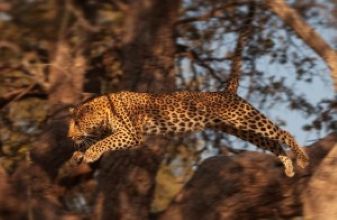
African leopards have lost 41pc of their historical range, new study finds population may be as low as 80,000 animals, highlighting the scale of the decline.
African leopards have disappeared from about 41pc of their historical range in sub-Saharan Africa, according to a new study that also suggests the continent’s leopard population may be far smaller than previously estimated. The study by the Matto Barfuss Foundation, published in July 2026, estimates that between 44,800 and 142,600 leopards remain across Africa, with a median estimate of about 80,300 animals.
Earlier estimates had placed Africa’s leopard population at between 600,000 and 900,000 animals. The new modelling therefore points to a potentially dramatic difference between previous assumptions and current estimates. However, the researchers stress the considerable uncertainty involved in counting a species that is solitary, wide-ranging and predominantly nocturnal.
The findings are raising concern among conservation organizations, including the Matto Barfuss Foundation. The loss and fragmentation of habitat could make it increasingly difficult for leopard populations to remain connected and viable.
The scale of the challenge is illustrated by an extensive leopard monitoring project in Botswana. Since 2022, researchers have deployed more than 1,000 camera-trap stations at 20 locations across the country.
The cameras have enabled researchers to identify 434 individual adult leopards by their unique coat patterns. The spots and rosettes of each leopard form a distinctive pattern that can be used to recognize individual animals and track them over time.
Monitoring leopards in the Okavango Delta is particularly difficult. The animals generally live alone, can cover large territories and are most active at night, meaning that many individuals can remain undetected even during intensive surveys.
Scientists are also testing a new approach: identifying individual leopards through their vocalisations.
Researchers in Tanzania have already tested acoustic identification and were able to distinguish individual leopards with an accuracy of 93.1pc, according to the study. The technique has not yet been deployed in Botswana.
For conservationists, improved monitoring could provide a more accurate picture of remaining leopard populations and help determine whether individual habitats are large and connected enough to support them over the long term.
“The leopard is a master of concealment. That is precisely why we cannot afford to wait until its disappearance becomes obvious,” the Matto Barfuss Foundation said.
The new research underscores a growing challenge for leopard conservation: determining not only where the animals still occur, but how many individuals remain, how populations are connected and whether their remaining habitats can sustain them.
Once considered a widespread and characteristic part of Africa’s wilderness, the leopard has already disappeared from a substantial portion of its historical range. Conservationists warn that its decline could continue largely unnoticed because of the species’ elusive nature.
The Matto Barfuss Foundation supports conservation and research focused on African wildlife and operates the Matto Barfuss Conservation Trust in Botswana.
Related Posts
 Equity Bank Uganda Honours 80 Customers for Loyalty, Business Growth
 African Aviation Leaders Demand Action on Costs, Safety and Connectivity
 Stanbic Business Forum told Uganda’s Schools Need to Outlive Their Founders
 URC Moves to Clear Railway Reserves as Uganda tightens Grip on Encroachment
 COMESA Competition Watchdog Calls for Stronger Skills-Sets to Police Complex Regional Markets
 CMA Opens Dangote Refinery IPO to Uganda’s Wealthy investors as SBG Securities Uganda Limited Becomes Sole Intermediary
Get business news delivered to you everyday
Latest News

Equity Bank Uganda Honours 80 Customers for Loyalty, Business Growth

African Leopards Have Lost 41pc of Their Historical Range as New Study Finds Population May be as Low as 80,000

African Aviation Leaders Demand Action on Costs, Safety and Connectivity

Stanbic Business Forum told Uganda’s Schools Need to Outlive Their Founders

URC Moves to Clear Railway Reserves as Uganda tightens Grip on Encroachment

COMESA Competition Watchdog Calls for Stronger Skills-Sets to Police Complex Regional Markets

South Africa Makes Entry Faster with ETA but Cost of Entry More Than Doubles for Ugandans

Beyond the Classroom: A Ugandan Student Inside China’s Manufacturing World

Hon. John Musila and the Duty of MPs to Respect Institutional Accountability

UDB Commissions Titivated Headquarter Tower as Development Lender Scales up Transformation Role