

Airbus sees USD420bn Global Aviation Services Boom: Can Africa Capture its Share?

Airbus forecasts a global aviation services market worth more than USD420 billion by 2045, creating potential opportunities for African countries to expand aircraft maintenance, technical training and digital aviation services.
The next major growth opportunity in global aviation may lie not only in selling aircraft but also in maintaining, upgrading and supporting them, with Airbus forecasting that the aviation services market will more than double to over USD420 billion by 2045.
The European planemaker’s latest Global Services Forecast projects annual growth of 3.8pc over the next two decades, driven by an expanding global fleet, rising passenger numbers, demand for maintenance and repairs, and the growing use of digital technology to improve airline operations.
Airbus expects the global fleet to reach 45,550 aircraft by 2045, while annual passenger numbers double to 10 billion. The expansion will increase demand for spare parts, engineering, maintenance facilities, technical support, digital connectivity and skilled personnel.
The forecast highlights a structural shift in aviation economics. As fleets grow and aircraft remain in service for longer, keeping them airworthy and operationally available will become an increasingly valuable business in its own right.
Maintenance and repair services will account for the largest share of the projected market. Airbus values off-wing maintenance — work carried out away from the aircraft, typically in specialised workshops — at USD217 billion by 2045, with annual growth of 3.7pc.
A further USD104 billion will come from maintenance operations support, a category covering areas such as inventory management, engineering and the provision of technical support needed to maintain aircraft reliability and continued airworthiness.
On-wing maintenance, which includes inspections and checks performed on aircraft, is forecast to reach USD36 billion. Together, the three categories illustrate how much of the industry’s future expenditure will be directed towards keeping aircraft serviceable rather than simply adding capacity.
The projections also point to the commercial importance of digitalisation. Airbus expects digital and connectivity services to grow at an annual rate of 5.3pc, the fastest among the six segments identified in its forecast, reaching USD27 billion by 2045.
These services are increasingly central to airline efficiency, from predictive maintenance and real-time aircraft monitoring to managing disruptions, reducing delays and improving the passenger experience. Their value lies in helping airlines identify problems earlier, use aircraft and crews more efficiently, and reduce the operational costs associated with unplanned downtime.
Aircraft modifications and upgrades are projected to generate USd21 billion, while training services will account for another USD17 billion by 2045.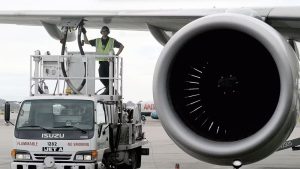
Airbus also estimates that the industry will need an additional 730,000 maintenance technicians, 660,000 pilots and 1.05 million cabin crew over the next 20 years — a combined requirement of 2.44 million people.
Meeting that demand will require investment in training institutions, technical infrastructure and workforce development, alongside efforts to attract new entrants into aviation. The shortage of suitably qualified personnel could become a constraint on fleet growth if training capacity fails to keep pace.
“As the global fleet doubles to more than 45,550 aircraft by 2045, we need to get ready,” said Cristina Aguilar Grieder, Airbus senior vice-president for customer services in commercial aircraft.
She said Airbus was expanding its role as a services partner through predictive operations, fleet modernisation and digital solutions intended to improve aircraft availability, reliability and safety.
The opportunity for Africa
For Africa, the forecast raises a key question of how much of this expanding services market the continent can capture.
Airlines operating in markets with limited maintenance, repair and overhaul (MRO) capacity often depend on facilities outside their home countries for specialised work, component repairs and technical support. This can increase costs and turnaround times while sending expenditure that could support local engineering skills and industrial capacity abroad.
A larger global services market could create opportunities for African operators to develop maintenance facilities, component-repair capabilities, technical training and digital aviation services. But growth in demand alone will not guarantee that investment follows.
MRO development requires substantial capital, skilled engineers, regulatory approvals, reliable supply chains and sufficient aircraft volumes to make specialised facilities commercially viable. Regional cooperation could help overcome some of these constraints by pooling demand across airlines and countries rather than requiring each market to build a complete maintenance ecosystem independently.
For Uganda and its neighbours, the implications extend to aviation training, engineering and the economics of regional air transport. A stronger local services base could reduce reliance on overseas providers, retain more technical expenditure within the region and create skilled employment beyond airline operations.
However, capturing that value would require a deliberate strategy linking airlines, aviation regulators, training institutions and investors. Facilities must be supported by sustainable demand, internationally recognised standards and the ability to compete on cost, quality and turnaround time.
Airbus expects Europe and the Commonwealth of Independent States, North America and China to remain the largest services markets by total demand through 2045. Asia-Pacific, China and South Asia collectively are projected to be the fastest-growing regional markets.
The forecast covers passenger aircraft with more than 100 seats and freighters with payload capacity above 10 tonnes, and is not limited to Airbus aircraft.
Its broader message is that the economics of aviation are extending beyond aircraft orders and passenger growth. As fleets expand, maintenance, technical support, digital systems and workforce development will become more important to airline performance.
For emerging aviation markets, the challenge will be to build the skills, infrastructure and commercial partnerships needed to participate in that growth, rather than remain primarily consumers of services developed elsewhere.
Related Posts
 Corporate Buyers Could Help Unlock SAF Market Worth Millions of Tonnes by 2030
 Nile Breweries Celebrates 75 Years of Growing with Uganda
 Nawangwe Urges Architects to Document Uganda’s Built Heritage
 Stanbic installs solar power system at Mbale School for the Deaf
 NWSC Seeks Grundfos Partnership to Manufacture Pumps, Spare Parts in Uganda
 Uganda to Host 2027 Global Water Congress as NWSC Targets Better Services
Get business news delivered to you everyday
Latest News

Corporate Buyers Could Help Unlock SAF Market Worth Millions of Tonnes by 2030

Airbus sees USD420bn Global Aviation Services Boom: Can Africa Capture its Share?

Nile Breweries Celebrates 75 Years of Growing with Uganda

Nawangwe Urges Architects to Document Uganda’s Built Heritage

Stanbic installs solar power system at Mbale School for the Deaf

NWSC Seeks Grundfos Partnership to Manufacture Pumps, Spare Parts in Uganda

Airbus-Kratos Valkyrie Unmanned Combat Aircraft Completes First Flight Ahead of 2029 Combat Target

Lt Gen Frederick Alexander Okecho: The Gallant Soldier Who Knew When to be Still

Uganda’s Oil Refinery Still Makes Sense in a USD500 Billion Economy

Equity Bank Uganda Honours 80 Customers for Loyalty, Business Growth