

Bank of Uganda hikes base rate from 9.75% to 12% amidst global tensions
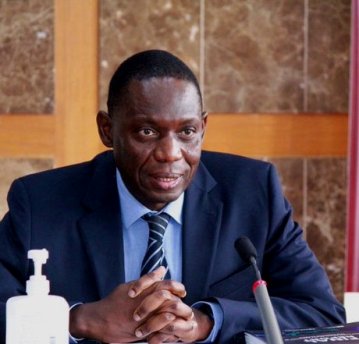 Atingi-Ego said headline inflation rose to 4.6 percent in September 2026 from 4.1 percent in August 2026, driven by higher food crop prices, and higher fuel prices due to the onset of the pass-through of the weaker shilling.
Bank of Uganda (BoU) has hiked the Central Bank Rate (CBR) by 225 basis points from 9.75 pc to 12 pc following a special emergency Monetary Policy Committee (MPC) meeting on Wednesday.
BoU Governor Michael Atingi-Ego said a combination of global and domestic pressures forced the central bank’s hand and the decision was made in order to counter the rapid depreciation of the shilling and rising inflation risks. The last time the CBR was above 10 pc was during the first half of 2024 when it peaked at 10.25 pc.
He said, “The MPC assessed that the global economic environment has changed significantly since its August 2026 meeting, mainly owing to the escalation of the conflict in the Middle East and the resulting global uncertainty.”
“These developments have adversely affected the current account deficit and increased exchange rate volatility, intensified depreciation pressures which could amplify inflation, necessitating a tight monetary policy stance,” he said.
Significant global risk aversion due to heightened uncertainty and rising interest rates in advanced economies have increased attractiveness of investing abroad relative to investing in Ugandan financial assets. This has limited capital inflows there by contributing to the exchange rate depreciation. The resulting depreciation, together with elevated international oil prices, has raised domestic fuel pump prices, further adding to inflationary pressures.
Early this week, the IMF said current global economic uncertainty and especially conflict in the Middle East, means low-income countries and households remain vulnerable to higher food prices from transport disruptions, higher fertilizer costs, export restrictions, and extreme weather events.
According to Atingi-Ego who chairs the MPC, the current account deficit has deteriorated by $1.4 billion to $4.6 billion because of lower agricultural commodity prices especially coffee and cocoa, lower tourism receipts due to temporary travel restrictions amidst rising oil prices.
“Specifically, in the 12 months to August 2026, the goods deficit worsened to $2.8 billion from $2.4 billion in August 2025.Headline inflation rose to 4.6 pc in September 2026 from 4.1 pc in August 2026, driven by higher food crop prices, and higher fuel prices due to the onset of the pass-through of the weaker shilling,” he said.
Core inflation, though still modest, has risen gradually from three percent in May 2026 to 3.5 pc in August 2026 and 3.7 pc in September 2026. This steady rise indicates that cost pressures are beginning to spread more broadly.
Furthermore, significant global risk aversion due to heightened uncertainty and rising interest rates in advanced economies have increased attractiveness of investing abroad relative to investing in Ugandan financial assets.
This has limited capital inflows there by contributing to the exchange rate depreciation. The resulting depreciation, together with elevated international oil prices, has raised domestic fuel pump prices, further adding to inflationary pressures.
He said the global economic environment remains highly uncertain, characterised by heightened geopolitical tensions, elevated international crude oil prices, and tighter global financial conditions. These developments have intensified depreciation pressures on the shilling and increased the risk of exchange rate pass-through to domestic prices. Although core inflation remains below the medium-term target, projections suggest that inflation may rise fairly rapidly in the near term following the sharp exchange rate depreciation.
However, considerable uncertainty surrounds this outlook, particularly with respect to developments in the global economy. The fuel shock seems persistent, and this, combined with exchange rate depreciation and effects of El Nino weather could cause inflation to be entrenched if monetary policy does not contain these price pressures now.
Atingi-Ego said, “In this regard, the BoU raised the Cash Reserve Requirement (CRR) to 13.5 pc from 11 pc, effective 24 September 2026 to prevent excess liquidity from becoming a destabilising factor and to strengthen monetary policy transmission.”
“The MPC will continue to assess domestic and global economic developments and stand ready to take additional measures, as warranted, to preserve price and financial stability,” he said.
Related Posts
 COMESA Competition Watchdog Calls for Stronger Skills-Sets to Police Complex Regional Markets
 PPDA Roots for Procurement as Driver of Local Wealth Creation
 BoU plans Diaspora Bond, National Switch to unlock UGX9.3 trillion Diaspora Wealth
 Making Smallholder Agriculture Visible to Finance
 Uganda joins continental push for debt justice as public debt soars to UGX130 trillion
 Bank of Uganda slashes cheque limits, caps cash withdrawals in push for digital payments
Get business news delivered to you everyday
Latest News

Bank of Uganda hikes base rate from 9.75% to 12% amidst global tensions

Corporate Buyers Could Help Unlock SAF Market Worth Millions of Tonnes by 2030

Airbus sees USD420bn Global Aviation Services Boom: Can Africa Capture its Share?

Nile Breweries Celebrates 75 Years of Growing with Uganda

Nawangwe Urges Architects to Document Uganda’s Built Heritage

Stanbic installs solar power system at Mbale School for the Deaf

NWSC Seeks Grundfos Partnership to Manufacture Pumps, Spare Parts in Uganda

Airbus-Kratos Valkyrie Unmanned Combat Aircraft Completes First Flight Ahead of 2029 Combat Target

Uganda to Host 2027 Global Water Congress as NWSC Targets Better Services

Lt Gen Frederick Alexander Okecho: The Gallant Soldier Who Knew When to be Still