

Making Smallholder Agriculture Visible to Finance
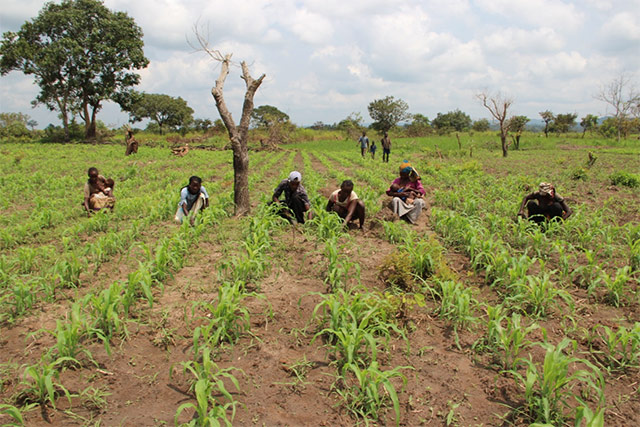 By September 2020, the ACF had advanced UGX 2.8 billion (nearly $760,000) to 187 small and micro borrowers.
Uganda has made progress in reducing the cost of agricultural finance, but millions of smallholder farmers remain locked out because they are invisible to formal lenders. Christopher Burke argues that the missing link is not more capital, but a trusted farm-credit profile that enables banks, cooperatives, insurers and agribusinesses to assess risk, lower transaction costs and extend affordable finance to viable farmers.
Christopher Burke

Burke says that while Uganda has made progress in reducing the cost of agricultural finance, millions of smallholder farmers remain locked out because they are invisible to formal lenders.
Agriculture contributes about 24 per cent of Uganda’s GDP, 35 per cent of export earnings and employs 68 per cent of the labour force, according to the World Bank’s latest Economic Update. However, many productive farmers remain almost invisible to formal finance.
A coffee farmer may have years of cooperative deliveries, a known plot, established trees and a credible production plan. The cooperative may know the farmer’s history, a buyer may hold payment records and an agricultural company may understand seasonal requirements. This information is often fragmented or unavailable to banks. The issue is not only whether information exists, but who verifies and standardises what determines access to capital.
This gap has a price. Bank of Uganda reports that the average agricultural lending rate reached 20.7 per cent in the three months to March 2026, above the overall average of 18.65 per cent. At those rates, seasonal borrowing is difficult even where an investment is commercially sound.
Government recognises the problem. The Agricultural Credit Facility (ACF), administered through participating financial institutions, financed 11,358 loans worth UGX1.35 trillion (US$366 million) by December 2025. Government has also established a UGX176 billion (US$48 million) scheme for large commercial farmers, while the national budget prioritises commercial agriculture and digital transformation.
The challenge is not only cheaper capital, but efficient delivery to farmers whose loans are small, seasonal and costly to assess. Public policy can reduce funding costs, but access depends on how market actors translate policy into workable lending standards.
The ACF figures illustrate the imbalance. Micro-enterprises represented 76 per cent of beneficiaries but received only 3 per cent of disbursed value. Large projects represented 6 per cent and received 90 per cent. This reflects the transaction costs of identifying farmers, verifying production, assessing cash flow and monitoring many small accounts.
A practical response is a proportionate farm-credit profile containing information needed for a lending decision: verified identity, farm location, cultivated area, production history, cooperative or buyer records, financing needs, insurance status and the expected source and timing of repayment.
These profiles do not replace appraisal or automatically substitute for collateral. They give banks a consistent reference point, reduce repeated data collection and help distinguish a functioning enterprise from an applicant about whom little can be verified. The profile represents a common interface through which stakeholders including institutions assess and manage risk.
Cooperatives are essential, but their responsibilities must be defined. They can confirm membership, aggregate applications, validate production and delivery records, support financial literacy and, where legally agreed, facilitate deductions from crop proceeds. Membership should not amount to an automatic guarantee, and cooperatives should not be expected to absorb losses arising from weak appraisal or inadequate monitoring.
Agricultural companies can support farm mapping, production information, input verification and agronomic advice, while insurers cover defined risks. Banks retain responsibility for due diligence, affordability assessment, pricing, disbursement, monitoring and recovery. This distributes governance functions among public, private and cooperative actors without removing accountability.
Bank of Uganda’s block allocation model demonstrates aggregation. During the final quarter of 2025, UGX5.04 billion (US$1.37 million) was disbursed to 1,156 micro-borrowers through loans not exceeding UGX20 million. The model allows lenders to assess clusters and use cash flow, movable assets, credit history and group guarantees rather than relying on titled land.
Women remain underrepresented in the ACF. In December 2025, they accounted for 23 per cent of beneficiaries and received only 3 per cent of disbursed value. Bank of Uganda reports stronger participation under block allocation, which permits consideration of cash flow, movable assets, credit history and group guarantees. This is important for women operating productive farms without formal land ownership.

Picture courtsey of OXFAM GB
Bank of Uganda estimates that at least 80 per cent of farmers lack conventionally bankable collateral. Regulators and banks should develop proportionate approaches to alternative security, seasonal cash-flow lending and cooperative verification while maintaining prudential standards.
Insurance is best integrated when a loan is designed. Under the Uganda Agriculture Insurance Scheme, government subsidises 50 per cent of premiums for small-scale farmers, 30 per cent for large farmers and 80 per cent in disaster-prone areas. The Ministry of Finance reported the annual UGX5 billion (US$1.36 million) allocation was inadequate and recommended UGX10 billion (US$2.72 million).
Insurance does not guarantee repayment, but it can prevent a defined weather event from causing an immediate default. Linking insurance, verified production information and seasonal repayment schedules makes risk more measurable and gives banks a stronger basis for pricing loans. Premium pricing and lending terms can therefore reward risk reduction without requiring a new legal mandate.
Digital technology can lower transaction costs, but more data is not automatically better. A farm profile is not neutral if it determines who becomes visible, insurable or creditworthy. Farmers must know what is collected, why, who can access it and how errors can be corrected. Any system must comply with Uganda’s data-protection framework, apply informed consent and restrict information sharing to legitimate purposes.
Uganda’s Fourth National Development Plan links agro-industrialisation with science, technology and innovation. Agricultural finance is an obvious place to apply this direction. The priority should not be another stand-alone application or pilot database, but trusted arrangements through which banks, cooperatives, insurers and agricultural businesses use verified information responsibly. The state sets policy and prudential boundaries, while market actors operationalise them through lending, insurance and data standards.
The case is strengthened by the ACF’s reported non-performing asset ratio of 0.57 per cent at December 2025, compared with 3.7 per cent across commercial banks. Agricultural lending is not inherently unmanageable. It performs better when capital, information, technical support, insurance and repayment structures are aligned.
Uganda has begun lowering agricultural capital costs. The next priority is to reduce the cost of identifying, evaluating and financing credible farmers. This missing infrastructure may determine whether affordable finance reaches viable enterprises at scale or remains concentrated among borrowers already visible to banks. It also shows how public objectives can be implemented through market-based systems that coordinate behaviour, allocate responsibility and shape access to essential resources.
Christopher Burke is a senior advisor at WMC Africa, a communications and advisory agency located in Kampala, Uganda. With over 30 years of experience, he has worked extensively on social, political and economic development issues focused on governance, agriculture, environment, extractives, policy formulation, communications, advocacy, conflict transformation, international relations and peace-building in Asia and Africa.
Related Posts
 Uganda Coffee Roasters Tap Richard Rugaya as Executive Director, with Focus on Commercial Growth
 Why Africa’s Institutions Must Turn Knowledge and Investment into Farmer Prosperity
 Forbes ranks MTN Group third globally on best telecom employer list
 Stanbic experts offer investment insights to navigate current market uncertainty
 Africa Carbon Markets Urged to Turn Potential into Investment and Delivery
 Corporate Buyers Could Help Unlock SAF Market Worth Millions of Tonnes by 2030
Get business news delivered to you everyday
Latest News

SITA Acquisition of Collins Airport Solutions Signals Moves to Consolidate Aviation Technology

Uganda Coffee Roasters Tap Richard Rugaya as Executive Director, with Focus on Commercial Growth

Equity Bank Reports UGX37.6 Billion in Green Loans as Uganda Seeks to Scale Climate Investment

Why Africa’s Institutions Must Turn Knowledge and Investment into Farmer Prosperity

Forbes ranks MTN Group third globally on best telecom employer list

Stanbic experts offer investment insights to navigate current market uncertainty

Africa Carbon Markets Urged to Turn Potential into Investment and Delivery

Bank of Uganda hikes base rate from 9.75% to 12% amidst global tensions

Airbus sees USD420bn Global Aviation Services Boom: Can Africa Capture its Share?

Nile Breweries Celebrates 75 Years of Growing with Uganda