

Uganda Begins Critical 42-Day Countdown to Ebola-Free Status as Economy Eyes Full Recovery
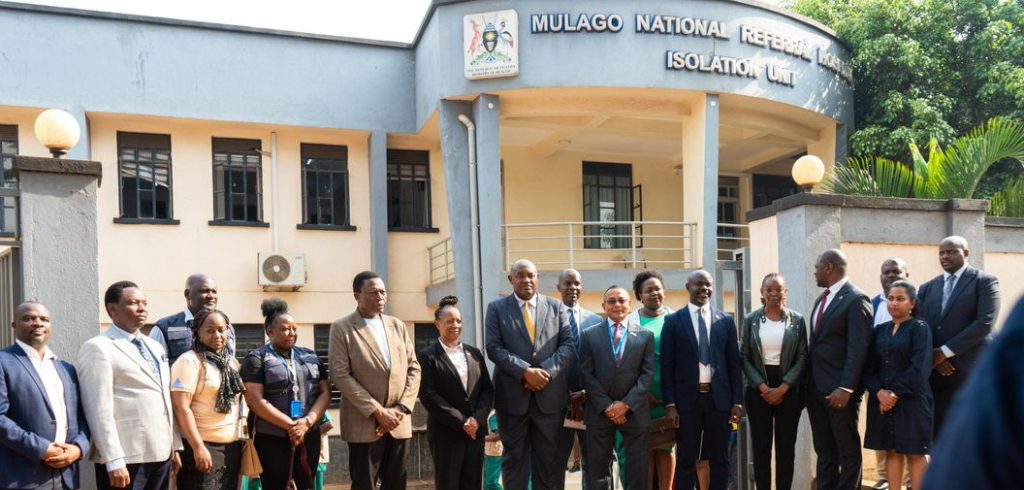 Health Minister Dr Chris Baryomunsi poses with Ministry of Health officials, WHO representatives and health workers at Mulago Ebola Treatment Unit as the last Ebola patient was discharged on July 16, 2025
Uganda has discharged its last Ebola patient and begun the critical 42-day countdown required before being declared Ebola-free. The milestone also signals the start of recovery for sectors hit by the outbreak, including aviation, tourism and cross-border trade, after travel advisories and flight disruptions dented economic activity.
Uganda has entered the decisive final phase of its latest Ebola response after discharging the last patient from treatment, triggering the internationally recognised 42-day countdown that must elapse before the country can be declared free of the outbreak.
The milestone marks a significant public health achievement. It also offers hope for sectors of the economy that have borne the cost of the outbreak, particularly aviation, tourism, cross-border trade and international travel.
Health Minister Dr Chris Baryomunsi announced that the last patient had been discharged exactly two months after Uganda declared an outbreak of the Bundibugyo strain of Ebola on May 15.
Of the 20 confirmed cases recorded during the outbreak, 18 patients recovered while two died. However, the Minister cautioned that Uganda has not yet reached Ebola-free status.
“Discharging the last patient does not mean Uganda is now Ebola-free. According to international guidelines, once the last patient is discharged, we begin the countdown,” he said.
If no new infections are detected over the next 42 days—equivalent to two Ebola incubation periods—Uganda will officially be declared free of the disease.
Although the outbreak remained relatively contained, its economic impact extended well beyond the health sector.
Several countries issued travel advisories warning their citizens about travel to Uganda, affecting tourism, business travel and investor confidence during the outbreak.
The United States was among the countries that advised travellers to exercise heightened caution, reflecting the broader reputational risks that accompany Ebola outbreaks regardless of their actual scale.
Uganda’s aviation sector also absorbed significant disruption.
Authorities effectively suspended cross-border movement with the Democratic Republic of Congo, the source of most confirmed infections, forcing Uganda Airlines to suspend its Entebbe-Kinshasa service.
The national carrier also experienced reduced traffic on its Dubai route after visas previously issued to travellers from Uganda were cancelled by authorities in the United Arab Emirates, disrupting passenger demand on one of the airline’s key international services.
For airlines, tourism operators and exporters, the start of the 42-day countdown provides the first realistic timeline for restoring normal travel patterns.
Imported outbreak, limited transmission
According to the Ministry of Health, the outbreak remained largely an imported event.
Dr Baryomunsi said 15 of the 20 confirmed cases involved Congolese nationals who were not resident in Uganda. The remaining infections included four health workers who contracted the virus while treating the index patient before Ebola had been confirmed, and a driver who transported one of the patients.
Importantly, health authorities succeeded in preventing widespread community transmission.
After the initial infections, no further transmission occurred within healthcare facilities, a development officials attribute to rapid case identification, isolation and strengthened infection prevention measures.
Officials say Uganda’s response demonstrates the value of sustained investment in epidemic preparedness.
The Ebola Treatment Unit at Mulago National Referral Hospital managed 18 patients during the outbreak, with 17 surviving.
Dr David Kaggwa, who heads the Emergency Medical Team, credited multidisciplinary care involving clinicians, nurses, nutritionists, psychosocial specialists and other healthcare professionals for the high recovery rate.
The World Health Organization described the outcome as evidence that preparedness saves lives.
WHO Country Representative Dr Kasonde Mwinga said Uganda’s pre-positioned medical supplies, trained emergency teams and specialised treatment facilities enabled a rapid response that limited fatalities and interrupted transmission.
The outbreak recorded a case fatality rate of below 10 percent—one of the lowest documented in Ebola response efforts.
Final hurdle
While the discharge of the last patient marks a major milestone, health officials warn that vigilance remains critical throughout the 42-day observation period.
Any confirmed case would restart the countdown.
For Uganda, therefore, the coming six weeks represent more than a public health benchmark. They are the final step towards restoring international confidence, normalising regional travel and allowing sectors affected by the outbreak—from aviation and tourism to trade and investment—to resume full operations.
If the country successfully completes the countdown without another infection, Uganda will not only close another Ebola chapter but reinforce its growing reputation as one of Africa’s most experienced responders to infectious disease outbreaks.
Related Posts
 Uganda Coffee Roasters Tap Richard Rugaya as Executive Director, with Focus on Commercial Growth
 Why Africa’s Institutions Must Turn Knowledge and Investment into Farmer Prosperity
 Forbes ranks MTN Group third globally on best telecom employer list
 Stanbic experts offer investment insights to navigate current market uncertainty
 Africa Carbon Markets Urged to Turn Potential into Investment and Delivery
 Corporate Buyers Could Help Unlock SAF Market Worth Millions of Tonnes by 2030
Get business news delivered to you everyday
Latest News

SITA Acquisition of Collins Airport Solutions Signals Moves to Consolidate Aviation Technology

Uganda Coffee Roasters Tap Richard Rugaya as Executive Director, with Focus on Commercial Growth

Equity Bank Reports UGX37.6 Billion in Green Loans as Uganda Seeks to Scale Climate Investment

Why Africa’s Institutions Must Turn Knowledge and Investment into Farmer Prosperity

Forbes ranks MTN Group third globally on best telecom employer list

Stanbic experts offer investment insights to navigate current market uncertainty

Africa Carbon Markets Urged to Turn Potential into Investment and Delivery

Bank of Uganda hikes base rate from 9.75% to 12% amidst global tensions

Airbus sees USD420bn Global Aviation Services Boom: Can Africa Capture its Share?

Nile Breweries Celebrates 75 Years of Growing with Uganda