

NEC Canned Meat and Beans Factory Tests Uganda’s Agro-Industrialisation Ambition
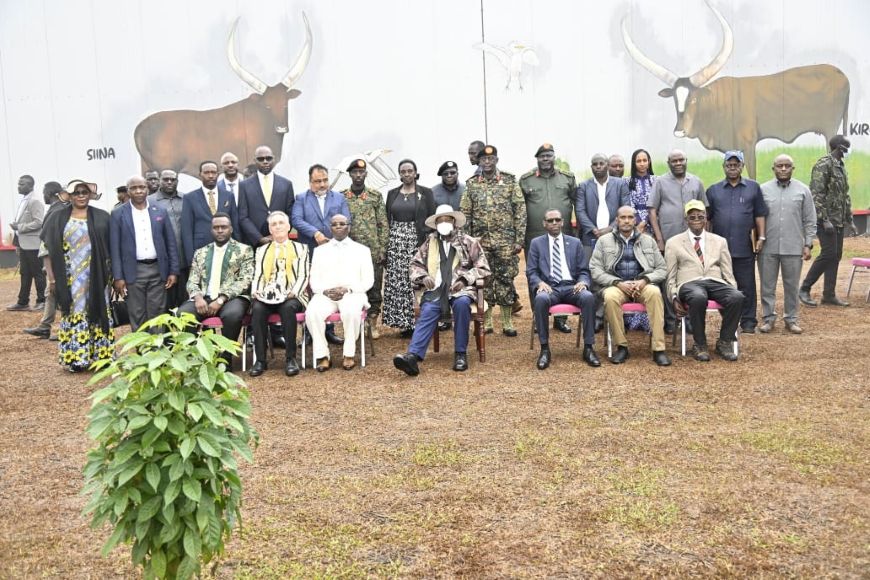
The factory, a joint venture between NEC, the commercial arm of the Uganda People’s Defence Forces (UPDF), and Kenyan investor Francis Ragwa, represents another attempt to bridge one of Uganda’s longstanding economic challenges: moving from production of raw agricultural commodities to higher-value processing and manufacturing.
Commissioning the facility on July 15, President Yoweri Kaguta Museveni said the major challenge facing Uganda’s agricultural transformation was no longer production capacity but organising farmers and creating reliable markets for their output.
“The issue of the supply of the required raw materials is just organisational,” President Museveni said, pointing to the expansion of Uganda’s coffee and dairy sectors as examples of how farmer mobilisation and market certainty can transform production.
The President said Uganda’s coffee production had grown from about three million bags to approximately nine million bags, with ambitions to reach 12 million and eventually 20 million bags. He similarly highlighted growth in dairy production, which has increased from 200 million litres annually in 1986 to about 5.4 billion litres today.
The same logic, he argued, should now be applied to livestock and food processing.
The commissioning of the Katonga plant highlights the economic opportunity around Uganda’s livestock sector, where the country has an estimated 16 million cattle, up from about three million in 1986.
However, despite its large livestock base and favourable climate, Uganda has struggled to convert cattle numbers into significant export earnings due to challenges around disease control, certification standards, processing capacity and market access.
NEC Managing Director Lt. Gen. James Mugira said the factory is designed to address some of these gaps by creating demand for locally produced beef and beans while reducing government expenditure on imported canned foods.
For years, Uganda has relied on imported canned beef and beans for military operations, including canned beans sourced from Brazil. The new facility is expected to provide a local alternative while creating opportunities for farmers and food processors.
“The real stimulus is the market,” President Museveni said, arguing that farmers are more likely to invest in commercial production when they have confidence that their produce will be purchased.
That market certainty will be central to the success of the factory. The government is expected to determine whether supplies will come through large-scale commercial farmers or organised smallholder producers.
The investment also reflects a broader regional trend of private capital participating in Africa’s food processing opportunities. Mr Ragwa, who serves as Managing Director of NEC Meat and Beans Processing Plant, said the project demonstrates the potential of African investors to build industries on the continent.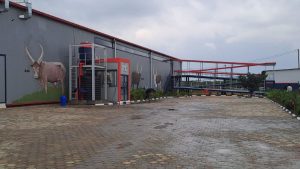
The factory currently employs about 100 workers, including engineers, food scientists and technicians, with further growth expected as production expands.
Lt. Gen. Mugira said Uganda could become a significant global beef exporter if it strengthens veterinary systems, disease control and export certification. He cited Botswana’s beef industry as an example of how targeted investment in quality standards and market access can transform livestock into a major export sector.
For Uganda, the challenge now is scaling the model. The country produces significant volumes of agricultural commodities but continues to export many products in raw form, capturing only a fraction of their final market value. Agro-processing is therefore viewed as a pathway to increase farmer incomes, create industrial jobs and retain more value within the economy.
The NEC Meat and Beans Processing Factory arrives at a time when Uganda is seeking to accelerate industrialisation through agro-processing, one of the key pillars of its long-term economic transformation strategy.
The test, however, will not only be whether the factory can process meat and beans. Its bigger measure of success will be whether it can create a sustainable commercial ecosystem linking farmers, processors, government buyers and export markets.
Related Posts
 Stanbic Seeks Northern Uganda Business Feedback as It Marks 35 Years in Country
 Uganda Emerges as Africa’s Largest Organic Farming Country as Exports Reach USD225 Million
 SITA Acquisition of Collins Airport Solutions Signals Moves to Consolidate Aviation Technology
 Uganda Coffee Roasters Tap Richard Rugaya as Executive Director, with Focus on Commercial Growth
 Equity Bank Reports UGX37.6 Billion in Green Loans as Uganda Seeks to Scale Climate Investment
 Why Africa’s Institutions Must Turn Knowledge and Investment into Farmer Prosperity
Get business news delivered to you everyday
Latest News

Stanbic Seeks Northern Uganda Business Feedback as It Marks 35 Years in Country

Uganda Emerges as Africa’s Largest Organic Farming Country as Exports Reach USD225 Million

SITA Acquisition of Collins Airport Solutions Signals Moves to Consolidate Aviation Technology

Uganda Coffee Roasters Tap Richard Rugaya as Executive Director, with Focus on Commercial Growth

Equity Bank Reports UGX37.6 Billion in Green Loans as Uganda Seeks to Scale Climate Investment

Forbes ranks MTN Group third globally on best telecom employer list

Stanbic experts offer investment insights to navigate current market uncertainty

Africa Carbon Markets Urged to Turn Potential into Investment and Delivery

Bank of Uganda hikes base rate from 9.75% to 12% amidst global tensions

Corporate Buyers Could Help Unlock SAF Market Worth Millions of Tonnes by 2030