

Uganda’s young innovators face final test as Stanbic Schools Championship enters appraisal stage
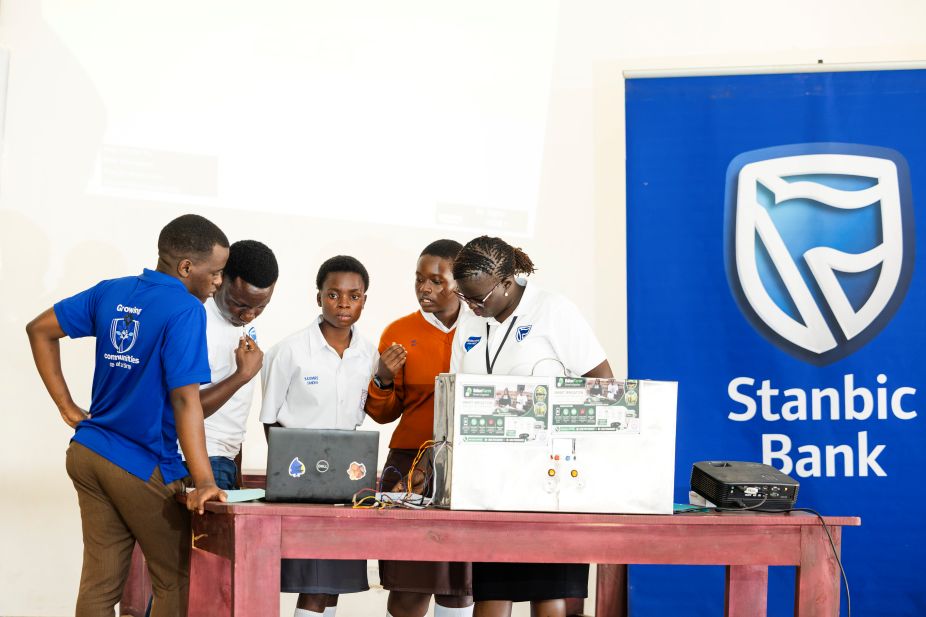
Judges have begun nationwide assessments of student innovations in the Stanbic National Schools Championship, as Uganda’s most promising young entrepreneurs compete for places in the August grand finale with solutions ranging from AI-powered agriculture to circular economy technologies.
Uganda’s next generation of innovators is entering the decisive phase of the Stanbic National Schools Championship, with judges beginning nationwide appraisal visits to assess whether student-led innovations can move beyond classroom concepts into commercially viable solutions.
The assessments, which began this week, will evaluate projects developed by 12 regional finalist schools and six student-led enterprises ahead of the Championship’s grand finale scheduled for August.
Unlike traditional academic competitions, the Stanbic National Schools Championship measures how effectively students identify real-world challenges and develop practical, market-oriented solutions, reflecting Uganda’s growing emphasis on innovation-led entrepreneurship under the competence-based curriculum.
This year’s appraisal process follows an intensive entrepreneurship bootcamp hosted at Gayaza High School in May, where hundreds of student innovators refined their business ideas before the field evaluation phase.
According to Stanbic Bank, the judges are now assessing not only the technical quality of each innovation but also its potential social and commercial impact.
“We see this programme as our contribution to building Uganda’s next entrepreneurs, employees and leaders,” said Diana Ondoga, Manager Corporate Social Investment at Stanbic Bank.
She said the appraisal visits are designed to determine whether students are applying creativity, critical thinking and technology to solve genuine community problems rather than merely producing exhibition projects.
One of the first innovations to be evaluated came from Kyebambe Girls’ Secondary School in western Uganda, where students developed an automated smart irrigation system capable of monitoring irrigation needs and sending alerts to farmers. The project demonstrates how emerging technologies, including artificial intelligence, are increasingly finding their way into student-led agricultural solutions.
“This is exactly the kind of innovation we want to see. Young people are developing practical solutions using technology to address challenges within their communities,” Ondoga said.
The Championship has evolved significantly since its launch in 2016.
In a major shift this year, Stanbic Bank replaced its previous teacher-training model with a nationwide innovation challenge that engaged 913 schools directly. Schools were required to work with learners to develop solutions to practical community problems before the selection process for the bootcamp.
The new approach dramatically expanded the programme’s reach, with Stanbic estimating that up to 95 percent of participating schools benefited from entrepreneurship and innovation learning, regardless of whether they progressed to the regional finals.
Education stakeholders increasingly view such competitions as complementing Uganda’s competence-based curriculum, which prioritises Science, Technology, Engineering and Mathematics (STEM), innovation, collaboration and problem-solving over rote learning.
Kyebambe Girls’ Secondary School Headteacher Ruth Kwesiga said participation in the Championship has transformed the way students approach learning and innovation.
She noted that the school’s automated irrigation system had demonstrated sufficient practical value that she hopes to adopt it for her own farming activities.
The finalists reflect a broad cross-section of innovations targeting some of Uganda’s most pressing development challenges.
Projects under consideration include converting plastic waste into construction materials, AI-powered livestock disease detection, affordable poultry feed production, smart recycling technologies, post-harvest storage systems, conservation technologies, wearable healthcare devices for women and low-cost agricultural equipment designed for smallholder farmers.
The diversity of the innovations illustrates a growing shift in secondary education from theoretical science projects towards solutions with commercial potential and measurable social impact.
As appraisal teams continue visiting schools across the country, the competition is increasingly serving as a platform for identifying innovations that could eventually progress beyond the classroom and contribute to Uganda’s broader industrialisation and entrepreneurship agenda.
The winning projects will be unveiled during the Stanbic National Schools Championship grand finale in August.
Related Posts
 Uganda Coffee Roasters Tap Richard Rugaya as Executive Director, with Focus on Commercial Growth
 Why Africa’s Institutions Must Turn Knowledge and Investment into Farmer Prosperity
 Forbes ranks MTN Group third globally on best telecom employer list
 Stanbic experts offer investment insights to navigate current market uncertainty
 Africa Carbon Markets Urged to Turn Potential into Investment and Delivery
 Corporate Buyers Could Help Unlock SAF Market Worth Millions of Tonnes by 2030
Get business news delivered to you everyday
Latest News

Uganda Coffee Roasters Tap Richard Rugaya as Executive Director, with Focus on Commercial Growth

Equity Bank Reports UGX37.6 Billion in Green Loans as Uganda Seeks to Scale Climate Investment

Why Africa’s Institutions Must Turn Knowledge and Investment into Farmer Prosperity

Forbes ranks MTN Group third globally on best telecom employer list

Stanbic experts offer investment insights to navigate current market uncertainty

Africa Carbon Markets Urged to Turn Potential into Investment and Delivery

Bank of Uganda hikes base rate from 9.75% to 12% amidst global tensions

Airbus sees USD420bn Global Aviation Services Boom: Can Africa Capture its Share?

Nile Breweries Celebrates 75 Years of Growing with Uganda

Nawangwe Urges Architects to Document Uganda’s Built Heritage