

BoU plans Diaspora Bond, National Switch to unlock UGX9.3 trillion Diaspora Wealth
The Bank of Uganda plans to introduce a Diaspora Bond and a National Switch for payments as part of a strategy to lower remittance costs and channel an estimated UGX9.3 trillion sent home annually by Ugandans abroad into long-term investment and national development.
The Bank of Uganda has unveiled plans to introduce a Diaspora Bond and a National Switch for payments as part of a broader strategy to transform billions of shillings sent home annually by Ugandans abroad into long-term investment capital for national development.
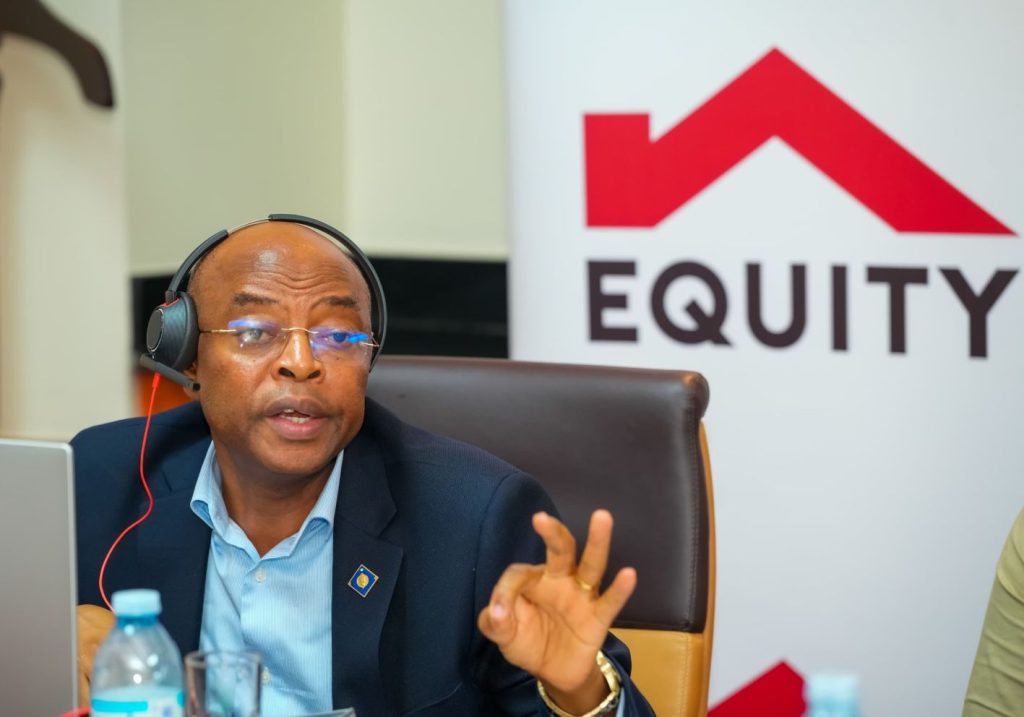
Speaking during Equity Bank Uganda’s 2026 Diaspora Webinar on Saturday, Bank of Uganda Deputy Governor Prof. Augustus Nuwagaba said the central bank is developing a suite of investment and payments initiatives aimed at reducing the cost of remittances while creating secure opportunities for Ugandans abroad to invest directly in the country’s economy.
The proposals come as Uganda seeks to channel record diaspora remittances—estimated at about USD2.5 billion (approximately IUGX9.3 trillion) annually—from largely supporting household consumption towards financing infrastructure, enterprise development and other productive investments.
“Our objective is to move from remittances to investment capital,” Nuwagaba said during the webinar, which was hosted by Equity Bank Uganda under the theme, “From Remittances to Investment Capital: Unlocking Diaspora Wealth for Uganda’s Economic Transformation.”
The Deputy Governor disclosed that the proposed Diaspora Bond would allow Ugandans living abroad to invest safely in government-backed securities while contributing to national development.
He also revealed that the central bank is preparing a Sukuk Bond, structured in accordance with Islamic finance principles, alongside a Uganda Savings Bond that would lower the entry threshold for ordinary Ugandans seeking to invest in government securities.
Beyond investment products, Nuwagaba said the Bank of Uganda is strengthening the National Payments System through the planned introduction of a National Switch that will enable faster, more efficient and seamless movement of money across financial institutions.
The initiative is expected to reduce friction in domestic payments and contribute to lowering the cost of transferring money into Uganda—a longstanding concern among members of the diaspora.
Nuwagaba encouraged Ugandans abroad to invest in sectors that can be managed efficiently from overseas, including selected real estate projects, financial technology, digital infrastructure and payment systems, rather than relying solely on remittances to support household consumption.
Drawing lessons from countries such as Singapore, South Korea, Nigeria, Ethiopia and the Philippines, he said Uganda could similarly harness diaspora savings to finance economic transformation through disciplined investment and appropriate financial instruments.
He also proposed the establishment of a national Diaspora Day to recognise the contribution Ugandans abroad continue to make to the country’s economy.
Opening the webinar, Equity Bank Uganda Managing Director Gift Shoko said the bank was repositioning itself from being merely a remittance partner to becoming an investment partner for Ugandans living abroad.
“Our goal is to support you not only to send money home, but to invest in Uganda and contribute to the country’s long-term transformation,” Shoko said.

EBUL Ceo Gift Shoko
He said Equity Bank Uganda now serves more than 2.1 million customers through 50 branches, nearly 10,000 banking agents and thousands of merchants nationwide.
Shoko also highlighted progress made since the bank’s previous diaspora engagement in March 2025, including collaboration with the National Identification and Registration Authority (NIRA) to improve access to National Identity Cards for Ugandans abroad, expansion of financial inclusion services in the Middle East and a reduction in remittance costs from about 13 per cent to approximately 9 per cent.
Also addressing the webinar, Joseph Enyimu, Commissioner for Economic Development Policy and Research at the Ministry of Finance, Planning and Economic Development, said the diaspora would play a critical role in Uganda’s ambition to build a USD500 billion economy.
He identified investment opportunities under the government’s ATMS framework covering agro-industrialisation, tourism, minerals, oil and gas, as well as science, technology, innovation, ICT and the creative industries.
Enyimu urged Ugandans abroad to channel more of their savings into businesses, agriculture, real estate, government securities, small and medium enterprises and collective investment schemes instead of limiting remittances to household support.
The webinar attracted Ugandans living across Europe, North America, the Middle East, Asia, Australia and East Africa, underscoring the growing importance of the diaspora as one of Uganda’s largest sources of foreign exchange and an increasingly strategic source of investment capital.
The engagement formed part of Equity Bank’s, wider strategy of connecting Ugandans abroad with investment opportunities at home through dedicated banking products, financing solutions and advisory services. For policymakers, however, the discussions signalled a broader ambition to convert diaspora remittances, which now account for 2.8pc of Uganda’s GDP, into a pillar of Uganda’s long-term economic development.
Related Posts
 Independence Marathon Turns to Blood Storage Gap in Maternal Health Drive
 Fine Spinners Injects Fresh USD5m Into Technology as Uganda Textile Maker Targets African, European Markets
 Equity Trade Mission Puts Uganda’s Manufacturing Capacity to Regional Test
 Uganda Seeks to Calm Coffee, Cocoa Markets as Global Prices Fluctuate on Positive Sentiment
 Uganda Green Entrepreneurs Set for Paris Visit as Stanbic-France Partnership Graduates 106
 Entebbe Airport Passenger Traffic Recovers in August but Remains Below 2025 Levels
Get business news delivered to you everyday
Latest News

Independence Marathon Turns to Blood Storage Gap in Maternal Health Drive

Fine Spinners Injects Fresh USD5m Into Technology as Uganda Textile Maker Targets African, European Markets

Equity Trade Mission Puts Uganda’s Manufacturing Capacity to Regional Test

Uganda Seeks to Calm Coffee, Cocoa Markets as Global Prices Fluctuate on Positive Sentiment

Uganda Green Entrepreneurs Set for Paris Visit as Stanbic-France Partnership Graduates 106

Nile Breweries, Next Media Renew Road Safety Push with Focus on Boda Boda Riders

Equity Bank Explores Value-Chain Financing to Support Zigoti Coffee Expansion

Uganda Breaks Ground on USD310m Kampala Fuel Terminal, Targets September 2028 Completion

Uganda Will Not Close Its 2.4-Million-Unit Housing Deficit with Ribbon-Cuttings in Kira

Nairobi’s 2029 World Athletics Win Draws Doping Scrutiny in UK Media