

Equity Bank Explores Value-Chain Financing to Support Zigoti Coffee Expansion
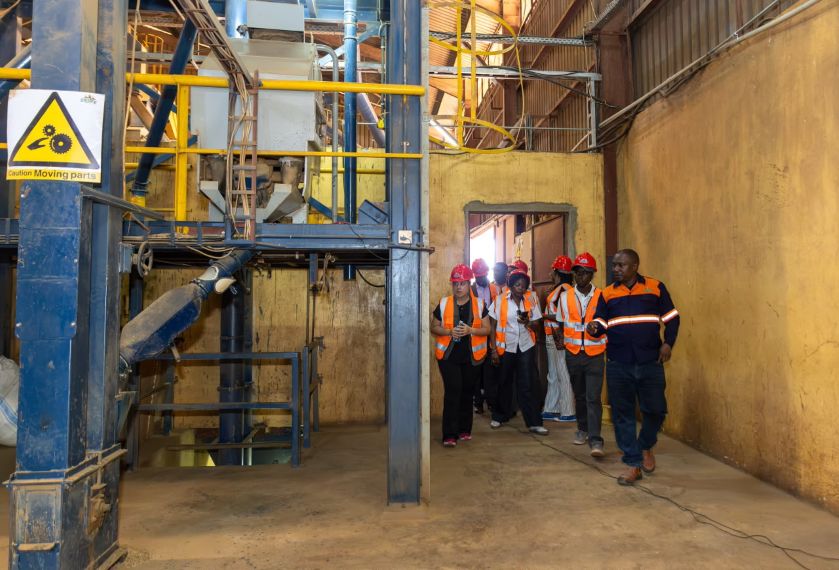 A delegation of Equity Members touring the Coffee Processin plant at Zigoti Coffee Works Limited
Equity Bank Uganda is exploring value-chain financing with Zigoti Coffee Works to support processing expansion, farmer credit and regional coffee markets.
Equity Bank Uganda is exploring a financing partnership with Zigoti Coffee Works Limited that could extend beyond commercial lending to include smallholder farmer support, processing equipment and market development as the family-owned coffee business seeks to expand value addition and strengthen its position in international markets.
The discussions followed a visit by Equity Bank representatives to Zigoti’s farm and coffee-processing facilities on September 15, 2026, building on engagements initiated during the lender’s 2026 Trade and Investment Roadshow in Kampala.
The proposed financing framework would cover equipment acquisition, working capital and farmer-level input financing, alongside financial literacy and other services intended to strengthen the coffee value chain.
The discussions come as Zigoti pursues a shift from bulk commercial trading towards higher-value quality and specialty coffee, a transition that requires investment in processing capacity, quality control and relationships with producers.
Charles Roscoe Nsubuga, Chairman of Zigoti Coffee Works, said the company’s expansion strategy required a financing model that addressed the needs of the wider coffee ecosystem rather than focusing exclusively on the exporter’s assets.
“We are looking beyond one-off asset financing. We want to see how the wider value chain can be financed, including farmers who need inputs to produce quality coffee,” Nsubuga said.
Under the proposed approach, farmers could access financing of approximately UGX1 million to 2 million for agricultural inputs, with repayment linked to proceeds from coffee sales.
The model would connect credit to production and quality outcomes while potentially helping farmers manage input costs. Its effectiveness, however, would depend on appropriate lending terms, reliable market access and the ability of farmers to generate sufficient returns to service the loans.
Zigoti works with farmer groups, women and youth, providing extension services, financial literacy and training in good agricultural practices. The company also operates a 100-acre model farm used for farmer training and demonstration.
Nsubuga described the business as a multigenerational enterprise whose future depends on deepening its coffee identity.
“If you cut our blood, the DNA is coffee. This is a third-generation coffee business. Our grandparents started with coffee, our parents continued, and now we are taking it to another level,” he said.
Established in 1984, Zigoti has developed an integrated operation spanning coffee sourcing, processing, grading, warehousing and exports. The company was incorporated between 1991 and 1992 and became Uganda’s first coffee export company to receive an export licence following the liberalisation of the coffee sector. It exports both Robusta and Arabica to markets in Europe, Asia, North America and Africa.
Zigoti’s growth strategy is increasingly centred on quality differentiation. The company won the Best Pearl Robusta Award four consecutive times between 2021 and 2024, with its coffee recording cupping scores above 85.
It is expanding wet-processing capacity and experimenting with fermentation methods and different coffee profiles to attract higher premiums from international buyers.
The strategy places greater emphasis on the processing and post-harvest stages, where decisions on fermentation, drying and traceability can influence the quality and market positioning of the final product.
Zigoti expects volumes from its wet-processing operations to increase as new drying equipment is installed. Financing for such equipment and working capital would support the company’s ability to manage coffee stocks and expand its processing activities.
Nsubuga said access to finance for coffee stocks and hedging remained a challenge for local exporters competing with multinational traders.
“We need financial institutions to understand the coffee business and support local exporters. If we can stabilise the business, we can create better returns for farmers and contribute more to the economy,” he said.
The financing discussions therefore extend beyond the acquisition of machinery to the capital requirements associated with purchasing coffee, maintaining inventories and managing exposure to market fluctuations.
The engagement also explored opportunities to develop Zigoti’s business in South Sudan, where the company already has buyers and market connections.
Thomas Muto Lo’Buda, Equity Bank’s delegate from South Sudan, said the bank could explore linking Zigoti to regional markets and potential commercial partners.
“There is an opportunity to connect this business with markets and partners in South Sudan. We can look at the product, the financing required and how to build a sustainable partnership,” he said.
Much of the coffee trade to South Sudan currently moves by road through informal channels, according to the company. Zigoti sees potential to establish more formal distribution and dealership arrangements, including roasting, packaging and private-label coffee.
Such arrangements could allow the company to participate in more stages of the coffee trade while developing market-specific products. They would also require commercially viable distribution systems, suitable financing and sustained demand.
Zigoti’s processing facilities support quality control and traceability, while the company has been working to meet growing international traceability requirements and provide information required by European buyers.
Alongside its core coffee operations, Zigoti is pursuing initiatives to convert production waste into additional commercial and environmental value.
These include a women-led briquette project and a planned black soldier fly initiative intended to process coffee waste into animal feed and organic fertiliser.
Nsubuga said bringing financial institutions directly to agricultural enterprises is helping to bridge the gap between lending decisions and the realities of production.
“When financial institutions come to the farm, they see the farmers, the gardens and the processing. It gives them a better understanding of the business and the challenges we face,” he said.
The discussions do not yet establish a final financing commitment, but they point to a potential partnership in which the competitiveness of Uganda’s coffee exports is considered alongside the financing needs of the producers and businesses supporting them.
Related Posts
 Uganda Breaks Ground on USD310m Kampala Fuel Terminal, Targets September 2028 Completion
 Airbus Moves to Close Africa’s Aircraft Maintenance Skills Gap
 COMESA Flags WBeauty Shampoo Recall in Three Member States
 Kalangala’s Oil Palm Economy Expands as Lenders Deepen Farmers’ Access to Finance
 AFRAA sees Government Action, Partnerships as Key to Unlocking African Airlines’ Potential amid Surging Demand
 COMESA Competition Agency reopens Tender for Lilongwe HQ Complex
Get business news delivered to you everyday
Latest News

Equity Bank Explores Value-Chain Financing to Support Zigoti Coffee Expansion

Uganda Breaks Ground on USD310m Kampala Fuel Terminal, Targets September 2028 Completion

Uganda Will Not Close Its 2.4-Million-Unit Housing Deficit with Ribbon-Cuttings in Kira

Nairobi’s 2029 World Athletics Win Draws Doping Scrutiny in UK Media

Airbus Moves to Close Africa’s Aircraft Maintenance Skills Gap

Africa’s Electric Mobility Opportunity Will be Built Beyond the Vehicle

Equity Trade Mission Targets Capital, Markets to Unlock Uganda’s Investment Potential

COMESA Flags WBeauty Shampoo Recall in Three Member States

Kalangala’s Oil Palm Economy Expands as Lenders Deepen Farmers’ Access to Finance

AFRAA sees Government Action, Partnerships as Key to Unlocking African Airlines’ Potential amid Surging Demand