

Fine Spinners Injects Fresh USD5m Into Technology as Uganda Textile Maker Targets African, European Markets
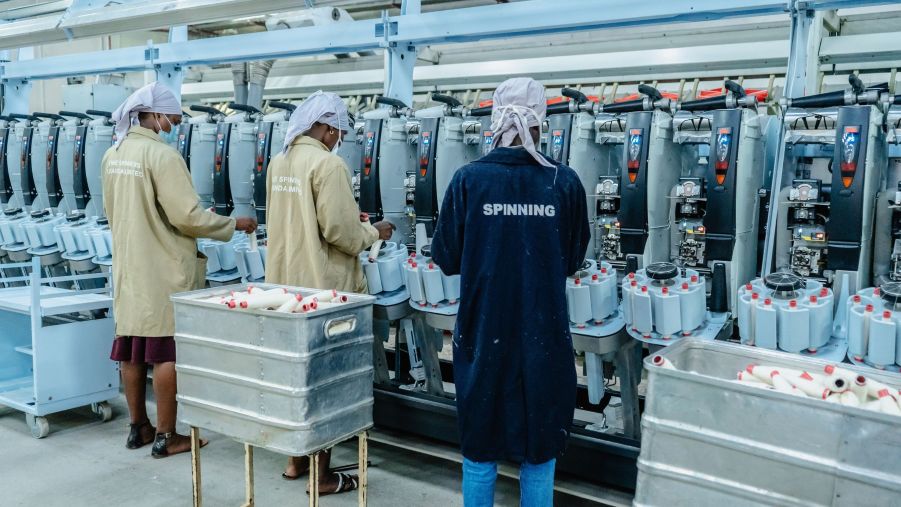
Fine Spinners is investing an additional US$5 million in advanced machinery to expand production, improve efficiency and target textile export markets in Africa and Europe.
Ugandan textiles and apparels maker, Fine Spinners, is investing an additional USD5 million in advanced textile machinery as the integrated manufacturer seeks to improve efficiency, broaden its product range and win more customers in African and European markets.
The investment takes Fine Spinners’ total investment in its Ugandan mill to USD35 million since inception and comes as the company seeks to use its integrated production base to compete for a larger share of regional and international textile business.
Fine Spinners said the new equipment will add production capacity while introducing more advanced machines across its operations. Rather than being confined to either spinning or apparel production, the investment is intended to improve the efficiency and flexibility of the wider manufacturing process.
The company currently produces more than 500,000 garments a month, alongside 120 tonnes of yarn, 100,000 metres of woven fabric and 120 tonnes of knitted fabric per month.
The scale of the operation gives Fine Spinners an integrated platform stretching from cotton and yarn to fabric and finished garments, a model the company sees as increasingly important as manufacturers seek to reduce dependence on imported intermediate products.
The investment is also expected to allow Fine Spinners to handle a wider range of customer requirements and increase its ability to serve export markets.
Chairman Jaswinder Bedi said the new technology would strengthen the company’s manufacturing capabilities while supporting its ambition to build a larger Pan-African business.

Fine Spinners Chairman Jaswinder Bedi
“This investment demonstrates our confidence in the future of textile manufacturing in Africa and our commitment to building a world-class manufacturing operation,” Bedi said.
He said the company was looking beyond production volumes to strengthening the entire textile value chain, from cotton and yarn through to fabric and finished garments.
Fine Spinners sources cotton from a supply base of about 16,000 smallholder farmers, giving the investment a direct link to Uganda’s agricultural production as well as the country’s industrialisation ambitions.
The company’s integrated model means that additional investment in manufacturing capacity can potentially increase the value extracted from locally produced cotton before the material leaves the country, rather than exporting agricultural fibre while importing higher-value textile products.
The company said the new machinery will enable it to serve more export clients across Africa and Europe, with greater flexibility to manufacture products according to different customer requirements.
That expansion comes against a backdrop of rising demand for locally and regionally manufactured goods in Africa, driven by population growth, urbanisation and efforts by governments and businesses to develop domestic and regional manufacturing capacity.
Fine Spinners is positioning Uganda’s location and its existing integrated manufacturing infrastructure as a base from which to access those markets.
“Our ambition is to build a manufacturing platform that is firmly rooted in Africa but capable of competing globally,” Bedi said.
The latest investment also highlights the technological demands facing African textile manufacturers seeking to move beyond low-value production.
Increasing output alone does not necessarily translate into greater competitiveness if factories cannot meet the quality, consistency, speed and product specifications required by international buyers. Fine Spinners said the new machinery is therefore intended to deliver both additional capacity and improved production efficiency.
The company is also looking to strengthen relationships with customers, suppliers and other industry stakeholders as it expands its market reach.
Beyond the commercial objectives, Fine Spinners expects the investment to support employment and technical skills development while strengthening the wider textile value chain.
The company’s expansion comes at a time when Uganda is seeking to increase value addition in agriculture and develop manufacturing industries capable of supplying both the domestic market and regional export destinations.
Related Posts
 Independence Marathon Turns to Blood Storage Gap in Maternal Health Drive
 Equity Trade Mission Puts Uganda’s Manufacturing Capacity to Regional Test
 Uganda Seeks to Calm Coffee, Cocoa Markets as Global Prices Fluctuate on Positive Sentiment
 Uganda Green Entrepreneurs Set for Paris Visit as Stanbic-France Partnership Graduates 106
 Entebbe Airport Passenger Traffic Recovers in August but Remains Below 2025 Levels
 Equity Bank Explores Value-Chain Financing to Support Zigoti Coffee Expansion
Get business news delivered to you everyday
Latest News

Independence Marathon Turns to Blood Storage Gap in Maternal Health Drive

Fine Spinners Injects Fresh USD5m Into Technology as Uganda Textile Maker Targets African, European Markets

Equity Trade Mission Puts Uganda’s Manufacturing Capacity to Regional Test

Uganda Seeks to Calm Coffee, Cocoa Markets as Global Prices Fluctuate on Positive Sentiment

Uganda Green Entrepreneurs Set for Paris Visit as Stanbic-France Partnership Graduates 106

Entebbe Airport Passenger Traffic Recovers in August but Remains Below 2025 Levels

Nile Breweries, Next Media Renew Road Safety Push with Focus on Boda Boda Riders

Uganda Breaks Ground on USD310m Kampala Fuel Terminal, Targets September 2028 Completion

Uganda Will Not Close Its 2.4-Million-Unit Housing Deficit with Ribbon-Cuttings in Kira

Nairobi’s 2029 World Athletics Win Draws Doping Scrutiny in UK Media