

PPDA Roots for Procurement as Driver of Local Wealth Creation
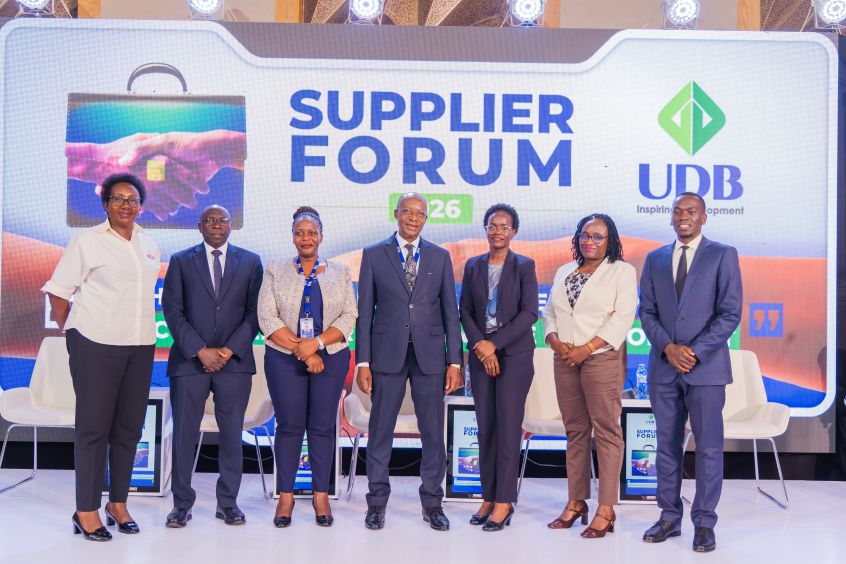 Left to Right_ Doreen Tiberonda, John Saturday, Catherine Natukunda, Benson Turamye, Dr. Patricia Ojangole, Gloria Tuhaise Wakooba, and Ronald Tumuhairwe during the Forum (2)
PPDA is urging government entities and suppliers to treat public procurement as a tool for local wealth creation, enterprise development and sustainable economic growth.
Uganda’s public procurement system must move beyond compliance with tendering rules and become a deliberate instrument for creating local wealth, developing domestic businesses and advancing sustainable economic growth, Benson Turamye, the Executive Director of the Public Procurement and Disposal of Public Assets Authority (PPDA) has said.
Turamye argues that the scale of public spending alone will not deliver Uganda’s ambition of growing the economy tenfold to USD500 billion by 2040 unless procurement creates meaningful opportunities for Ugandan businesses, workers and communities.
Turamye was speaking at a Suppliers’ Forum organised by Uganda Development Bank (UDB) in Kampala under the theme “Enhancing Supplier Engagement in Public Procurement for Sustainable Development.”
He argued that procurement should be viewed as an economic development tool rather than an administrative process centred on tender notices, bid documents and compliance.
“Sustainable development is the destination, supplier engagement is the bridge, and procurement is the vehicle that gets you there,” Turamye said.
His argument places local content at the centre of the procurement-to-development chain, particularly as Government increases investment in infrastructure and productive sectors.
Turamye pointed to infrastructure projects that can undermine their own development objectives when social and environmental considerations are overlooked. Roads, for example, may be constructed without adequate consideration for surrounding communities, while poorly designed drainage can flood gardens and abandoned borrow pits can become health hazards.
The implication, he said, is that the quality of procurement must ultimately be judged by the development outcomes it produces, not simply by whether a contract was awarded in accordance with regulations.
Procurement as an economic multiplier
The scale of public procurement gives the sector considerable influence over Uganda’s domestic economy.
According to PPDA, at least 65pc of Uganda’s national budget is spent through procurement, equivalent to an estimated 15–20pc of GDP. This makes public purchasing one of the country’s largest potential channels for stimulating local enterprise, employment and value creation.
For UDB, strengthening this link is particularly important because the bank finances businesses and productive sectors that depend on functioning domestic supply chains.
UDB Managing Director Patricia Ojangole said the bank views its suppliers as strategic partners rather than simply contractors or vendors.
“Every project delivered, every system implemented, every facility maintained, every service rendered contributes to the bank’s ability to finance enterprise growth, strengthen the productive sectors that we support and improve livelihoods across Uganda,” she said.
Ojangole said effective procurement can help build resilient value chains, support local enterprises and encourage responsible private-sector participation in Uganda’s economic transformation.
That, however, requires a supplier base that is capable of competing on quality, integrity and performance.
The forum comes as procurement systems across Africa are being reshaped by several trends, including open contracting to improve transparency, professionalisation through training and certification, deliberate promotion of local content and the growing adoption of green and sustainable procurement.
For Ugandan suppliers, the changing environment means that winning public contracts increasingly requires more than submitting a bid.
Participants at the UDB forum were taken through the procurement regulatory framework, proactive engagement during the bidding process, self-assessment, compliance and submission discipline, as well as the rights and obligations of both bidders and procuring entities.
The discussions also brought together procurement professionals from institutions including Kampala Capital City Authority, Bank of Uganda, Electricity Regulatory Authority and PPDA.
The broader message from the forum was that Uganda’s procurement system sits at a critical intersection between public expenditure and economic transformation.
With a substantial share of national resources flowing through procurement, ensuring that more of that spending generates domestic enterprise, skills, jobs and sustainable value chains could make procurement an important multiplier of the country’s Tenfold Growth Strategy.
Related Posts
 Hon. John Musila and the Duty of MPs to Respect Institutional Accountability
 IATA says Aviation Safety’s Next Gains Will Depend on People, Technology and Standards
 Equity Bank Targets Uganda’s Artisanal Miners as Financing Gap Limits Mining Growth
 Airlink Expands Cape Town Network with New Lanseria and Mauritius Links
 Africa Faces Gunboat Diplomacy Without the Gunboats
 United’s Johannesburg-New York Nonstop Service Hits Five-Year Milestone
Get business news delivered to you everyday
Latest News

Beyond the Classroom: A Ugandan Student Inside China’s Manufacturing World

Hon. John Musila and the Duty of MPs to Respect Institutional Accountability

UDB Commissions Titivated Headquarter Tower as Development Lender Scales up Transformation Role

Equity Bank Urges Diaspora Ugandans to Turn Remittances into Investments

Uganda Private Sector Sustains Demand Despite Rising Costs

IATA says Aviation Safety’s Next Gains Will Depend on People, Technology and Standards

Equity Bank Targets Uganda’s Artisanal Miners as Financing Gap Limits Mining Growth

Airlink Expands Cape Town Network with New Lanseria and Mauritius Links

Africa Faces Gunboat Diplomacy Without the Gunboats

Exim Bank Uganda Backs Yangtze Industry Expansion into Manufacturing