

Uganda joins continental push for debt justice as public debt soars to UGX130 trillion
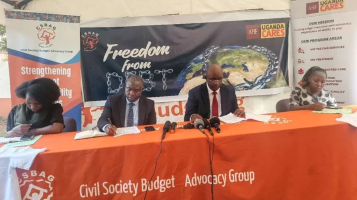
Ugandan civil society groups have joined a growing continental campaign demanding debt justice, arguing that rising public debt and mounting repayment obligations are increasingly crowding out spending on healthcare, education and economic transformation. The Freedom from Debt Campaign seeks reforms both at home and in the global financial system.
A coalition of Ugandan civil society organisations has launched a new campaign calling for debt justice, arguing that rising debt obligations are increasingly squeezing public spending on healthcare, education, agriculture and social protection while exposing deeper inequalities in the global financial system.
The Freedom from Debt Campaign, launched by the Civil Society Budget Advocacy Group (CSBAG) in partnership with AHF Uganda Cares, SEATINI Uganda and the Uganda Debt Network, brings Uganda into a broader African movement seeking reforms in both domestic debt management and the international lending architecture.
Campaigners say the initiative comes at a critical moment for Uganda, whose public debt is projected to reach approximately UGX130 trillion in the 2026/27 financial year, while debt servicing obligations are expected to exceed UGX33.6 trillion or 40pc of budget allocations.
According to the coalition, debt servicing is increasingly competing with investments in sectors that directly affect citizens’ welfare.
“This is not merely a debt crisis; it is a development crisis,” CSBAG says. “Every dollar spent servicing unsustainable debt is a dollar unavailable for medicines in hospitals, classrooms for children, agricultural support for farmers, climate adaptation, infrastructure development, social protection, and job creation for young people.”
The campaign is being launched against the backdrop of what activists describe as an unprecedented global debt burden.
According to figures cited by CSBAG, global public debt reached USD102 trillion in 2024, while developing countries spent more than USD1.4 trillion servicing external debt during the same period.
Africa has been particularly affected. The continent’s external debt now exceeds USD650 billion, with annual debt servicing costs estimated at nearly USD90 billion.
More than 25 African countries spend more on debt repayments than on healthcare according to CSBAG.
For Uganda, campaigners argue that while the country is not yet classified as being in debt distress, the rapid growth in debt obligations raises serious concerns about fiscal sustainability and the state’s ability to finance essential services.
Debt servicing is projected to consume nearly 40 percent of domestic revenue collections in the coming financial year.
Campaign leaders were careful to stress that they are not opposed to borrowing itself.
“The campaign is not against borrowing. It is a call for social justice, equity, responsible borrowing, transparency, accountability and prudent debt management,” said Henry Magala, Country Director of AHF Uganda Cares.
Magala noted that debt can remain an important development tool if managed properly and directed toward productive investments that generate measurable returns for citizens.
He argued that borrowed resources must translate into tangible improvements in healthcare, education, agriculture, social protection and employment creation.
CSBAG Executive Director Julius Mukunda echoed the same position but questioned the fairness of current lending arrangements facing developing countries.
“If you are borrowing externally at 8pc, and the same market is providing loans to other countries at less than 3pc, that is already unfair for a country like Uganda,” Mukunda said.
“We want a better market where if Uganda goes to borrow, it can borrow under almost the same terms as other countries. That is very critical.”
Mukunda added that debt should be directed toward productive investments that improve living standards.
“We can reduce debt dependence by ensuring that the current debt we have acquired delivers the things we want,” he said.
Beyond the size of Uganda’s debt burden, the campaign highlights concerns over how borrowed funds are utilised.
Campaigners point to repeated findings by the Auditor General showing project delays, low loan absorption rates, cost overruns and weak implementation of debt-financed projects.
According to the coalition, Uganda paid approximately UGX73.9 billion in commitment fees on undisbursed external loans during the 2023/24 financial year.
The campaign argues that the challenge is therefore not simply how much government borrows, but whether borrowed resources generate sufficient economic and social returns.
“Debt should finance roads, hospitals, schools, irrigation systems, energy infrastructure, and productive investments that transform livelihoods,” CSBAG says. “It should not finance inefficiencies, avoidable delays, and poor project management.”
The coalition is also calling for greater transparency around borrowing decisions, including public access to loan agreements, debt sustainability assessments and project performance reports.
A central pillar of the campaign is the concept of “debt justice” — the idea that responsibility for the debt crisis does not rest solely with borrowing governments.
Campaigners argue that developing countries face disproportionately high borrowing costs, limited access to concessional financing and debt restructuring mechanisms that are often heavily influenced by creditor interests.
“Debt Justice requires accountability from both borrowers and lenders,” the campaign argues.
The coalition says African countries frequently borrow to respond to climate-related disasters, food insecurity and public health emergencies despite contributing little to the causes of those crises.
“Africa should not have to choose between paying creditors and achieving development,” the campaign declares. “Development must come before debt.”
Among the reforms being advocated are the establishment of a Borrowers’ Forum to strengthen collective bargaining power among debtor nations, automatic debt-service pauses during public health emergencies and climate disasters, and expanded debt-for-development swaps that redirect repayment resources into healthcare, education and infrastructure.
The campaign is also supporting proposals for a one percent global artificial intelligence capital levy dedicated to debt relief and financing essential public goods.
At its core, organisers say, the Freedom from Debt Campaign seeks to place citizens at the centre of debt governance.
Public debt, they argue, ultimately creates obligations that are borne by taxpayers and future generations, making transparency and public participation essential.
The coalition plans to conduct debt sustainability research, monitor debt-financed projects, produce citizen-friendly debt information and engage Parliament on debt oversight.
“We believe that debt should be a tool for development rather than a barrier to development,” the campaign states.
As Uganda’s debt trajectory continues to climb, campaigners hope the initiative will shift public debate away from abstract fiscal statistics and toward the real-world consequences of borrowing decisions.
Related Posts
 Air Tanzania Moscow Suspension Highlights rising Geopolitical Risks for African Airlines
 Uganda Airlines Separates CEO and Accountable Manager Roles in Major Leadership Reset
 Boeing Holds Bullish Africa Aviation Outlook as Fleet Set to More than Double by 2045
 Inside Dr Silver Mugisha and NWSC’s Long Game to Keep Kampala’s Taps Running into the Future
 Oil Money’s First Test Will be Uganda’s Ability to Stop it Leaking Through Flawed Procurement
 Uber exits Uganda after a decade in Kampala
Get business news delivered to you everyday
Latest News

TAAG Joins Westbrook Racing as Race Partner for Luanda E1 Grand Prix

IFAD, Equity Launch USD200m Mechanism to Take Climate Finance to East Africa’s Farmers

Air Tanzania Moscow Suspension Highlights rising Geopolitical Risks for African Airlines

Uganda Airlines Separates CEO and Accountable Manager Roles in Major Leadership Reset

Boeing Holds Bullish Africa Aviation Outlook as Fleet Set to More than Double by 2045

Inside Dr Silver Mugisha and NWSC’s Long Game to Keep Kampala’s Taps Running into the Future

Oil Money’s First Test Will be Uganda’s Ability to Stop it Leaking Through Flawed Procurement

Appellation: Uganda Gives its Crude a Brand as ‘Pearl Sweet’ Ahead of November First Oil

Equity Financing Helps Vurra Secondary School turn Enrolment Pressure into Growth Opportunity

El Niño Puts More Than 162 Million Children at Risk Across Africa as UNICEF warns of worsening drought, flooding and extreme heat hazard