

Uganda, South Sudan Kick Off Border Talks as They Seek to Unlock Trade, Improve Security
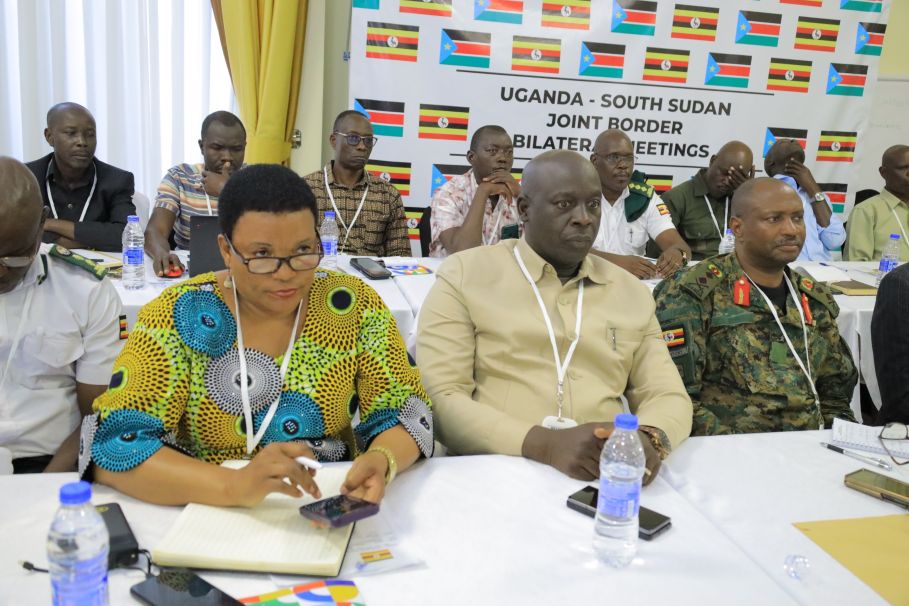
Uganda and South Sudan have launched high-level border talks in Arua aimed at easing trade bottlenecks, improving security cooperation and streamlining customs procedures. The meetings seek to strengthen one of Uganda’s most important export corridors, through which more than 600 cargo trucks pass daily during peak trading periods.
Uganda and South Sudan have begun two days of high-level border talks aimed at removing longstanding barriers to trade, strengthening security cooperation and improving the movement of people and goods across one of East Africa’s busiest trade corridors.
The Uganda–South Sudan Joint Border Bilateral Meetings, which opened in Arua on Thursday, bring together senior government officials, security agencies, customs authorities, local leaders and private sector representatives to develop a roadmap for resolving persistent bottlenecks affecting cross-border commerce.
The meetings operationalise a July 2025 directive by Presidents Yoweri Museveni and Salva Kiir Mayardit calling for regular joint border engagements to institutionalise cooperation between the neighbouring countries.
The discussions are of considerable economic significance for Uganda, with South Sudan ranking as the country’s third-largest export market. Ugandan exports to its northern neighbour are dominated by manufactured goods, processed food products and construction materials, while imports from South Sudan include livestock, hides and skins, gum arabic, sesame, metals and petroleum products.
According to officials, more than 600 cargo trucks pass through the Elegu-Nimule and Oraba-Kaya border crossings daily during peak trading periods, supporting the livelihoods of more than four million people living in border communities.
The talks seek to convert political commitments into practical measures by addressing tariff and non-tariff barriers that slow trade, harmonising customs and immigration procedures, improving border security and promoting peaceful coexistence among communities straddling the frontier.
Uganda’s Ambassador to South Sudan, Brig. Gen. Ronnie Balya, who is leading the Ugandan delegation, said the meetings provide an opportunity to tackle obstacles that continue to constrain bilateral trade and investment.
He outlined four priority areas for discussion – expanding trade and economic cooperation through improved market access and product standards; strengthening customs and revenue administration to speed up cargo clearance; enhancing security through joint patrols and intelligence sharing; and improving migration management, including lawful cross-border movement, public health surveillance and refugee coordination.
Balya also highlighted the need to resolve recurring border disputes that have occasionally resulted in deadly confrontations between Ugandan and South Sudanese security personnel.
He said a joint technical committee established to demarcate and address outstanding border issues is expected to complete its work by 2027, although progress has been slowed by inadequate funding.
Balya observed that “beyond security, clearly defined borders are increasingly important for trade facilitation, investment planning and infrastructure development along the frontier.”
Central Equatoria State Governor Anthony Emmanuel Adil, who is heading his country’s delegation, urged both governments to accelerate implementation of the presidential directives.
He said “resolving outstanding issues would deepen bilateral cooperation and produce tangible benefits for citizens,” while emphasising the importance of sustained engagement between national governments and local authorities to address the everyday challenges facing border communities.
The meeting is expected to produce a set of resolutions and an implementation roadmap focused on easing the movement of goods along the Central and West Nile transport corridors, reducing delays at border posts and strengthening institutional cooperation between the two countries.
The delegations include officials from the ministries responsible for foreign affairs, trade, defence, internal affairs, justice, lands and revenue administration, alongside district and county leaders, intelligence agencies and private sector representatives.
Related Posts
 Uganda Returnees Look to Rebuild Livelihoods as Government Pledges UGX2bn
 ERAM Award puts Uganda’s Animal-Health Manufacturing Ambitions in Focus
 Agroecology Week Targets Stronger links Between Farmers, Policy and Markets
 Energy Ministry and Equity Bank target lower hotel energy costs through green investment initiative
 FAA Certifies Boeing 737-10, Clearing Path for Deliveries of Largest 737 MAX Variant
 Aviation Industry Coalition Presses EU to Protect Voluntary use of Biometric Travel Technology
Get business news delivered to you everyday
Latest News

Uganda Returnees Look to Rebuild Livelihoods as Government Pledges UGX2bn

Beyond Gold Exports, Uganda’s Next Test Is Economic Transformation

ERAM Award puts Uganda’s Animal-Health Manufacturing Ambitions in Focus

Why Community-Led Climate Action Is Essential to Building Climate Resilience

Agroecology Week Targets Stronger links Between Farmers, Policy and Markets

Stanbic Commits UGX20m to Virunga Gorilla Marathon’s Conservation Drive

Energy Ministry and Equity Bank target lower hotel energy costs through green investment initiative

FAA Certifies Boeing 737-10, Clearing Path for Deliveries of Largest 737 MAX Variant

Somalia Recognises IATA Safety Audits in Push for Common African Aviation Standards

Stanbic Donates UGX40 Million in Maternal Health Equipment to Obongi Facility