

Uganda’s Quality Chemicals Joins Merck’s Landmark HIV Drug Manufacturing Initiative
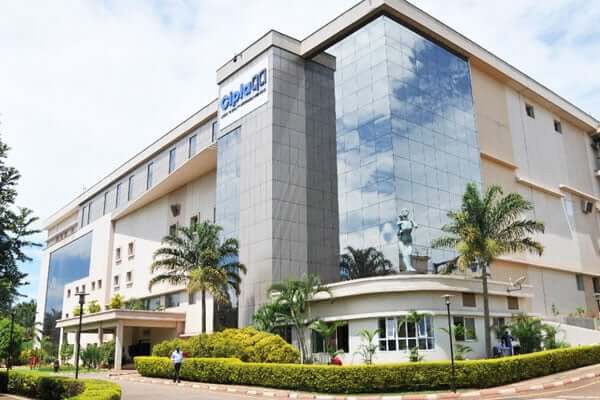
Uganda’s Quality Chemical Industries has become one of the first African pharmaceutical manufacturers selected to produce an investigational once-monthly HIV prevention pill should it win regulatory approval. The move strengthens Uganda’s position as a regional pharmaceutical manufacturing hub while expanding Africa’s role in developing and supplying future HIV medicines.
Uganda’s pharmaceutical manufacturing ambitions have received a major boost after Quality Chemical Industries Limited (Qcil) was selected among the first African companies to help produce a promising new HIV prevention medicine, should it successfully complete clinical trials and receive regulatory approval.
The royalty-free voluntary licensing agreement announced by MSD—known as Merck in the United States and Canada—positions the Kampala-based manufacturer among just seven generic pharmaceutical companies worldwide selected to prepare for the future production of alimatravir (MK-8527), an investigational once-monthly oral pill designed to prevent HIV infection.
While the medicine remains under development and has not yet been approved for use, the early licensing strategy represents a significant shift in how new medicines could reach low- and middle-income countries by allowing manufacturers to begin preparing years before commercial approval.
For Uganda, the agreement is significant not only from a public health perspective but also as a vote of confidence in the country’s growing pharmaceutical manufacturing capacity.
Qcil is one of only three manufacturers from sub-Saharan Africa selected under the initial licensing programme, alongside Aspen Pharmacare of South Africa and UCL Kenya. The remaining four licensees are based in India.
According to MSD, this is the first time manufacturers in sub-Saharan Africa have been included in the initial voluntary licensing process for an HIV prevention medicine.
The licences cover potential supply to both public and private markets across 129 low- and middle-income countries, representing regions that account for the overwhelming majority of new HIV infections globally.
The move aligns with growing continental efforts to reduce Africa’s dependence on imported medicines by strengthening local manufacturing capacity and building more resilient pharmaceutical supply chains.
The announcement comes as the world continues to struggle to curb new HIV infections despite major advances in prevention.
An estimated 1.2 million people acquired HIV globally in 2025—equivalent to approximately 3,300 new infections every day.
Although several HIV prevention options already exist, including daily oral pre-exposure prophylaxis (PrEP) and long-acting injectable medicines, uptake remains well below global targets.
According to UNAIDS, only 3.5 million people were using oral PrEP in 2023 against a target of 20 million users by 2030.
Health experts believe a once-monthly pill could improve adherence by reducing the burden of taking daily medication, although its effectiveness will only be confirmed after ongoing Phase 3 clinical trials are completed.
Uganda’s dual role
Uganda is not only preparing to manufacture the medicine if approved but is also helping evaluate whether it works.
The country is participating in the EXPrESSIVE-10 Phase 3 clinical trial, which is assessing the safety and efficacy of alimatravir among adolescent girls and young women in Uganda, Kenya and South Africa.
A second Phase 3 study, EXPrESSIVE-11, is enrolling participants in 16 countries among populations at greater risk of HIV exposure.
Earlier Phase 2 studies involving 350 participants found that the investigational medicine demonstrated a favourable safety profile comparable to placebo while supporting its continued development as a once-monthly oral HIV prevention option.
MSD said it deliberately launched licensing discussions before completion of the Phase 3 programme to shorten the time between regulatory approval and availability in countries with the highest HIV burden.
The company also plans to manufacture initial supplies itself while licensed generic manufacturers complete product development and secure regulatory approvals.
Merck Chairman and Chief Executive Officer Robert M. Davis said the company was acting early to enable rapid, broad and sustainable access should the medicine ultimately receive approval.
Africa CDC Director-General Jean Kaseya welcomed the decision to include African manufacturers from the outset, saying the continent must continue expanding its role across the health innovation value chain—from research and clinical trials to manufacturing and access.
For Uganda, the agreement represents another milestone in the country’s ambition to become a regional pharmaceutical manufacturing hub, while reinforcing its contribution to global efforts to end the HIV epidemic through both scientific research and local production.
Health experts caution, however, that alimatravir remains an investigational medicine and will only become available if ongoing clinical trials confirm its safety and effectiveness and regulators approve its use.
Related Posts
 Uganda Coffee Roasters Tap Richard Rugaya as Executive Director, with Focus on Commercial Growth
 Why Africa’s Institutions Must Turn Knowledge and Investment into Farmer Prosperity
 Forbes ranks MTN Group third globally on best telecom employer list
 Stanbic experts offer investment insights to navigate current market uncertainty
 Africa Carbon Markets Urged to Turn Potential into Investment and Delivery
 Corporate Buyers Could Help Unlock SAF Market Worth Millions of Tonnes by 2030
Get business news delivered to you everyday
Latest News

SITA Acquisition of Collins Airport Solutions Signals Moves to Consolidate Aviation Technology

Uganda Coffee Roasters Tap Richard Rugaya as Executive Director, with Focus on Commercial Growth

Equity Bank Reports UGX37.6 Billion in Green Loans as Uganda Seeks to Scale Climate Investment

Why Africa’s Institutions Must Turn Knowledge and Investment into Farmer Prosperity

Forbes ranks MTN Group third globally on best telecom employer list

Stanbic experts offer investment insights to navigate current market uncertainty

Africa Carbon Markets Urged to Turn Potential into Investment and Delivery

Bank of Uganda hikes base rate from 9.75% to 12% amidst global tensions

Airbus sees USD420bn Global Aviation Services Boom: Can Africa Capture its Share?

Nile Breweries Celebrates 75 Years of Growing with Uganda