

Uganda’s Investment Case Gains Momentum as Oil, Coffee and Industry Drive Growth
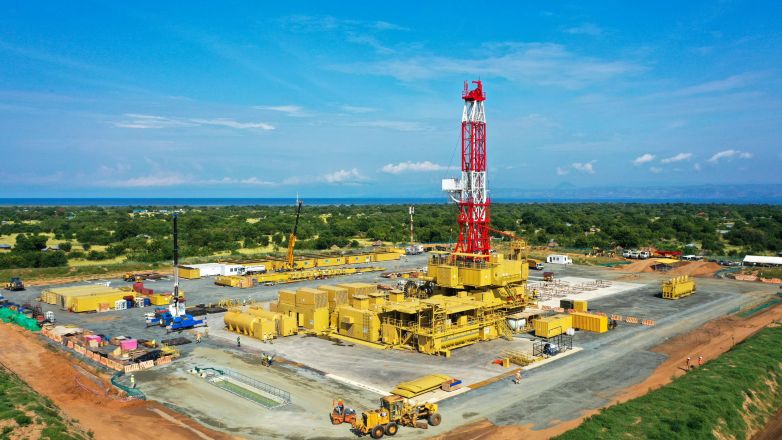
Uganda’s investment case is gaining momentum as oil, coffee, industrialisation and stronger macroeconomic stability open new opportunities for investors.
Uganda’s investment proposition is strengthening as improving macroeconomic stability, rising foreign exchange reserves and the prospect of commercial oil production combine to create new opportunities across the economy.
Economist Stella Otieno told an Equity Bank Uganda trade and investment webinar on August 13 that Uganda had sustained economic growth of more than six per cent over the past three financial years, while inflation remained within the Central Bank’s target range.
“Growth has been above six per cent for the previous three years. Inflation has been stable and under four per cent within the target, and we also have stable policy rates,” Otieno said.
The webinar was held ahead of Equity Bank’s third Trade Mission in Uganda, scheduled for September 13–16 in Kampala, which will bring together international, regional and local investors to explore opportunities and partnerships.
This year’s mission will focus on agriculture, particularly coffee, extractives, manufacturing, services and tourism.
Oil could lift growth into fifth gear
Otieno said real GDP growth in the 2025/26 financial year was about six per cent, while inflation stood at four per cent in July, below the medium-term target of five per cent.
The Central Bank Rate has remained at 9.75 per cent since October 2024, offering businesses greater predictability when making investment and financing decisions.
Foreign exchange reserves have also strengthened, rising from about USD3.3 billion in January 2025 to USD6.7 billion by June 2026.
For investors, Otieno said, the stronger reserve position and relative exchange-rate stability reduced some of the external-sector risks associated with investing in an emerging market.
“The macroeconomic environment is favourable,” she said, adding that Uganda’s current challenges should be viewed against an economy preparing for a significant transformation, particularly with oil production approaching.
Commercial oil production is expected to become a major growth catalyst. Otieno projected that economic growth could accelerate to between eight and 10 per cent in 2026/27 as oil production begins, potentially taking Uganda into double-digit growth.
Oil revenues could also strengthen the country’s fiscal and external positions.
However, Otieno cautioned that investors would still need to watch Uganda’s fiscal position. The fiscal deficit was estimated at 7.1 per cent at the end of 2025/26, while the current account deficit stood at about 6.5 per cent of GDP.
She said much of the pressure on the current account was linked to private-sector imports associated with oil and infrastructure investments, with higher export earnings expected to help narrow the deficit once oil production starts.
Coffee adds another export engine
While oil is expected to reshape Uganda’s growth outlook, agriculture remains at the heart of the investment opportunity.
Coffee, in particular, is emerging as a major source of export earnings. Otieno said coffee and gold were among Uganda’s largest foreign exchange earners, with the country becoming Africa’s largest coffee exporter in 2025.
Coffee export earnings reached USD2.2 billion in the 12 months to June 2026, highlighting opportunities extending well beyond primary production.
The larger investment opportunity lies in building capacity for processing, logistics, agro-processing and other forms of value addition so that Uganda captures a greater share of the value generated from its agricultural commodities.
Investors looking beyond the numbers
Catherine Psomgen, Director of Public Sector and Social Investments at Equity Bank, said investors required reliable information, supportive policies, access to finance, credible local partners and financial institutions capable of understanding their ambitions.
“At Equity Bank, we see our role as extending beyond traditional banking,” Psomgen said.
She said the bank sought to act as a financial and business-enablement partner by connecting investors to finance, markets, information, technology and strategic relationships.
With Equity Group’s presence across several African markets, she said the bank could also support investors using Uganda as a gateway to the wider East and Central African markets.
Uganda Investment Authority Deputy Director for Investment Promotion Rita Nabateregga said Uganda was entering an important phase of industrialisation, with government seeking to use the country’s natural resources to create jobs and promote local value addition.
Agriculture and minerals, she said, offered opportunities to shift Uganda away from exporting raw materials towards greater processing and industrial production.
That shift could broaden the investment opportunity across agro-processing, manufacturing, logistics, energy, minerals, infrastructure, tourism, services and technology.
For Uganda, the investment story is increasingly moving beyond the promise of resources. The central question, however, is whether rising investment can be converted into productive enterprises, jobs, local value addition and sustained economic transformation.
Experts say the next phase will depend on how effectively capital, technology, expertise and partnerships are deployed to build competitive businesses around those resources.
Related Posts
 SITA Acquisition of Collins Airport Solutions Signals Moves to Consolidate Aviation Technology
 Uganda Coffee Roasters Tap Richard Rugaya as Executive Director, with Focus on Commercial Growth
 Equity Bank Reports UGX37.6 Billion in Green Loans as Uganda Seeks to Scale Climate Investment
 Nile Breweries Celebrates 75 Years of Growing with Uganda
 Stanbic installs solar power system at Mbale School for the Deaf
 Airbus-Kratos Valkyrie Unmanned Combat Aircraft Completes First Flight Ahead of 2029 Combat Target
Get business news delivered to you everyday
Latest News

SITA Acquisition of Collins Airport Solutions Signals Moves to Consolidate Aviation Technology

Uganda Coffee Roasters Tap Richard Rugaya as Executive Director, with Focus on Commercial Growth

Equity Bank Reports UGX37.6 Billion in Green Loans as Uganda Seeks to Scale Climate Investment

Why Africa’s Institutions Must Turn Knowledge and Investment into Farmer Prosperity

Forbes ranks MTN Group third globally on best telecom employer list

Stanbic experts offer investment insights to navigate current market uncertainty

Africa Carbon Markets Urged to Turn Potential into Investment and Delivery

Bank of Uganda hikes base rate from 9.75% to 12% amidst global tensions

Corporate Buyers Could Help Unlock SAF Market Worth Millions of Tonnes by 2030

Airbus sees USD420bn Global Aviation Services Boom: Can Africa Capture its Share?