

54 years after the Asian expulsion, Uganda needs a new economic narrative
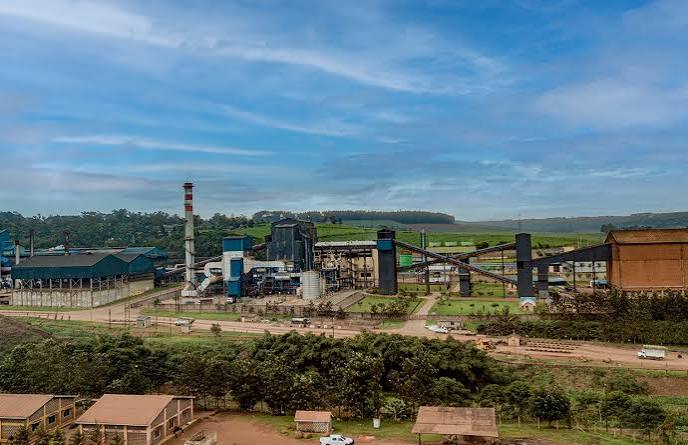
54 years after Uganda’s Asian expulsion, the lesson is not race but the need to build a more inclusive economy that gives talent and enterprise a fair chance.
Fifty-four years after President Idi Amin ordered the expulsion of Asians from Uganda, the episode remains largely trapped in an argument about right and wrong.
It was wrong. It was a traumatic act of dispossession that tore families and businesses from a country many considered home. It also inflicted enormous damage on Uganda’s economy.
The fortunes of many of those expelled, particularly those who rebuilt their lives in Britain, Canada and elsewhere, have since become part of the evidence of what Uganda lost.
But there is a more useful question to ask in 2026: what did Uganda learn?
That question matters because history becomes useful only when it changes the choices a society makes.
The temptation is to reduce the Asian expulsion to a story about race. That interpretation is too narrow. Beneath the racial language of the time was a much deeper problem: Uganda had inherited an economy structured around unequal access to opportunity.
Colonial economic policy had encouraged Asians into commerce and intermediary roles while systematically excluding the African majority from many of the opportunities required to build wealth and productive enterprises.
The Asians did not create that system. Nor can they be blamed for the resentment it eventually produced.
But neither should Uganda romanticise what happened by pretending that entrepreneurial talent alone explains the dramatically different outcomes experienced by many of those expelled.
Talent matters. Enterprise matters. Hard work matters. But institutions matter just as much.
The Asians who rebuilt their lives abroad did so in economies where capital markets, property rights, education, professional networks and relatively open opportunities allowed enterprise to flourish. Their success tells us something not only about them, but also about the environments in which talent is given room to work.
That is perhaps the most important lesson for Uganda today.
Social inequality is no longer primarily a question of Asians versus Africans, or Ugandans versus foreigners. It is increasingly a question of social class and access to economic opportunity.
The next rupture, if Uganda fails to address these inequalities, may therefore look very different. It may not discriminate by the colour of one’s skin. It could be directed at whoever is perceived to have accumulated wealth while others remain excluded from meaningful economic participation.
That is why building an inclusive economy is not simply a matter of social justice but an insurance policy against future instability.
Uganda may indeed have lost a significant development opportunity in 1972. But the country also witnessed the emergence of an indigenous entrepreneurial class that the colonial economy had denied sufficient space to develop.
The problem is that this class still has some distance to travel.
Too much indigenous enterprise remains concentrated in merchandise trading, importation and low-value commerce. The next transition must be towards industry, agro-processing, technology, digital innovation and productive investment.
That transition will not happen through rhetoric. It requires access to affordable capital, reliable infrastructure, skills, markets and predictable rules.
It also requires Uganda to confront an uncomfortable reality: some of the country’s worst exploitation of workers and producers today is perpetrated by fellow Ugandans.
In agriculture, ruthless middlemen can squeeze farmers while retaining disproportionate margins. Poor wages and weak bargaining power can transfer value from those who produce to those who control markets.
An inclusive economy must therefore reward contribution more fairly — whether the contributor is a farmer, factory worker, entrepreneur, professional or investor.
The lesson of 1972 should not be that one community prospered while another lost.
It should be that no society can afford an economic system in which large sections of its people feel permanently locked out of opportunity.
Uganda cannot undo 1972. But it can ensure that the next generation inherits an economy in which prosperity is broad enough, opportunity is open enough and institutions are fair enough that nobody has to be defined as an outsider before they can be treated as a citizen.
That would be a far more meaningful way to remember the expulsion than endlessly revisiting the wound, without building a country that has learned from it.
Related Posts
 United’s Johannesburg-New York Nonstop Service Hits Five-Year Milestone
 African Airlines Outpace Global Market as August Passenger Demand Rises 6.7pc
 Uganda Parliament Calls for Faster Social Protection Reforms for Older Persons
 Uganda Targets Higher Milk Yields From Indigenous Ankole Cow Without Exotic Crossbreeding
 Airbus A350F Freighter Takes Flight as Cargo Market Shifts Toward Newer, More Efficient Aircraft
 Uganda Architects to Celebrate 60 Years as Profession Confronts a Technology-driven Future
Get business news delivered to you everyday
Latest News

United’s Johannesburg-New York Nonstop Service Hits Five-Year Milestone

African Airlines Outpace Global Market as August Passenger Demand Rises 6.7pc

Uganda Parliament Calls for Faster Social Protection Reforms for Older Persons

Uganda Targets Higher Milk Yields From Indigenous Ankole Cow Without Exotic Crossbreeding

Airbus A350F Freighter Takes Flight as Cargo Market Shifts Toward Newer, More Efficient Aircraft

Africa Moves to Implement ‘Correct the Map’ Resolution as Equal Earth Cartographers Pledge Support

Oyo Nyimba: The King Who Made Tooro Feel Close to the World

In Karamoja, an 80-day Sorghum Variety Offers a Different Response to Drought

UNBS Seizes 17,770 Litres of Illicit Alcohol as Kenya Deaths Raise Regional Concern

Why Unlocking Africa’s Next Mining Powerhouse Requires Strong Financial Partnerships