

Uganda Targets Higher Milk Yields From Indigenous Ankole Cow Without Exotic Crossbreeding
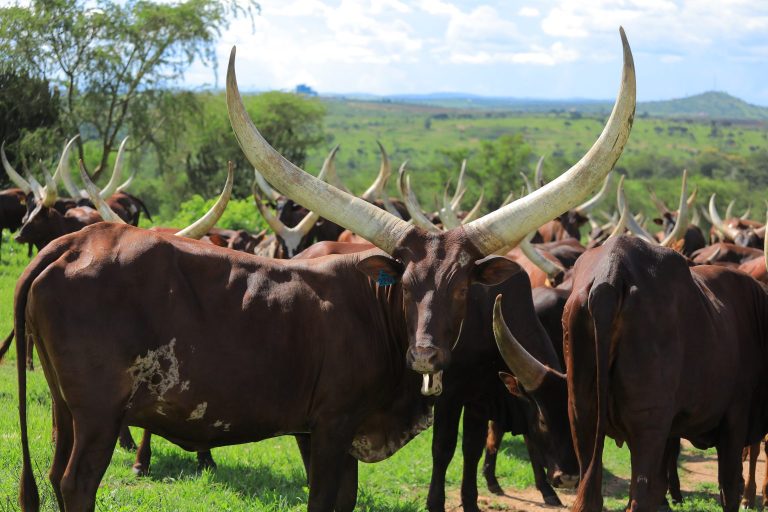
At Nshaara, Uganda is testing whether the Ankole Longhorn can deliver more milk through selective breeding while retaining its indigenous genetic identity.
Uganda is seeking to increase the milk productivity of its distinctive Ankole Longhorn cattle without sacrificing the genetic identity and adaptability of the indigenous breed, in a structured breeding programme at Nshaara Conservation Ranch.
The programme, being implemented by the National Animal Genetic Resources Centre and Data Bank (NAGRC&DB), is based on a proposition that could reshape how the Ankole is viewed commercially: that significant dairy potential already exists within the breed and can be progressively concentrated through selection rather than introduced through crossbreeding.
NAGRC&DB began the programme about three years ago by identifying superior milk-producing animals within the pure Ankole population and multiplying their genetics through controlled breeding. Selected Ankole genetics from recognised sources, including the Kisozi Ankole Longhorn conservation and improvement herd, have also been incorporated.
The approach combines genetic selection with pedigree management, performance recording and improved nutrition.
“We are not trying to turn the Ankole into an exotic dairy cow. We are identifying superior dairy traits that already exist within the pure Ankole population and systematically selecting and multiplying those genetics,” said Dr. Innocent Tuwangye, Manager of Nshaara Conservation Ranch.
That distinction is central to the programme. Rather than using exotic dairy breeds to raise milk output through crossbreeding, NAGRC&DB is attempting to improve the productive performance of the Ankole while retaining its genetic characteristics.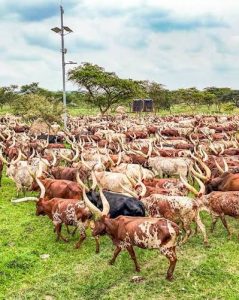
Milk yield is the principal selection trait, followed by lactation length, udder conformation and calving interval. The combination is intended to ensure that higher milk output does not come at the expense of reproductive performance or functional characteristics.
Replacement heifers are evaluated using information from their dams, including milk production, growth and fertility records. Physical assessment of body structure, udder development and temperament is also incorporated into selection decisions.
The programme gives particular weight to the selection of breeding bulls from high-performing maternal families.
Although bulls do not produce milk themselves, their genetic contribution can influence the productivity of many subsequent generations of cows. Candidate bulls are therefore assessed partly on the milk-production performance of their dams, alongside their own growth, body size, maturity, reproductive soundness, testicular development, libido and temperament.
The intention is to create a cumulative improvement process in which the best-performing animals contribute disproportionately to the next generation.
The results recorded at Nshaara suggest that the strategy is beginning to translate into higher measured productivity. In 2023, average milk productivity within the pool stood at 5.2 litres per active cow per day, with annual recorded production of about 56,040 litres. The number of active milking cows increased from 24 in January to 35 by December.
Average productivity rose to 7.0 litres per cow per day in 2024, while recorded annual production almost doubled to approximately 106,358 litres. The active milking population increased from 36 cows at the beginning of the year to 47 by December.
By December 2025, average productivity had reached 8.6 litres per cow per day, while annual recorded production climbed to approximately 168,285 litres. The active milking population grew from 47 cows in January to 60 by December.
On the reported averages, productivity increased by about 65.4 percent between 2023 and 2025, although the increase in the number of milking cows also contributed to the growth in total annual production.
That distinction matters because total milk output alone does not demonstrate genetic improvement. A larger milking herd will naturally produce more milk. The rise in average production per active cow provides a more relevant indicator of changing performance, although establishing the precise contribution of genetics requires longer-term records and appropriate comparisons.
Nshaara’s record-keeping system is therefore an important part of the programme. Performance and reproductive information is maintained through physical farm records and NAGRC&DB’s Integrated Livestock Management Information System (ILMIS). The system allows breeders to follow individual animals, maternal lines and production across successive lactations.
Such records provide the basis for moving beyond selection based primarily on appearance. An animal may have the physical characteristics associated with a desirable Ankole, but its breeding value becomes more useful when supported by evidence of milk production, fertility, growth and the performance of its relatives.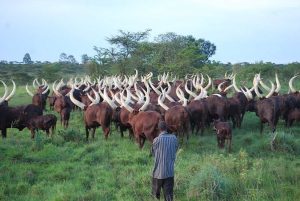
The emphasis on maternal families is particularly significant as the programme develops its bull selection strategy. By choosing bulls from cows with strong milk-production records, Nshaara is using the male side of the breeding population to spread desirable dairy traits through subsequent generations.
According to officials, the broader question is how much productivity can be added to an indigenous breed without changing its fundamental characteristics.
The Ankole Longhorn’s value to Uganda has traditionally extended beyond milk. Its adaptation to local production environments and its distinctive genetic and physical characteristics underpin its conservation importance. Increasing productivity through exotic genetics could produce faster gains in some circumstances, but would also alter the genetic composition of the population.
Nshaara is pursuing the slower and more controlled route of identifying variation within the breed, measuring it, selecting the better-performing animals and reproducing those traits over successive generations.
The emerging figures provide an early indication of what that approach may achieve. From 5.2 litres per active cow per day in 2023 to 8.6 litres in 2025, the recorded averages point to a population whose dairy performance is moving beyond conventional expectations of the Ankole.
Dr. Peter Beine, Executive Director of NAGRC&DB, says breeding and nutrition must work together to realise the animals’ productive potential.
“Selection identifies the animal with superior genetic potential, but nutrition determines how effectively that potential is expressed.”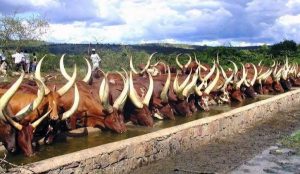
Whether those gains can be sustained, and how much of the improvement can ultimately be attributed to genetic selection rather than nutrition, management and changes in herd composition, will become clearer as the programme accumulates more generations of pedigree and performance data.
According to Dr. Beine, the long-term measure of success will be the ability to consistently reproduce superior milk production across generations rather than relying on individual exceptional animals.
Related Posts
 Airbus A350F Freighter Takes Flight as Cargo Market Shifts Toward Newer, More Efficient Aircraft
 Uganda Architects to Celebrate 60 Years as Profession Confronts a Technology-driven Future
 Africa Moves to Implement ‘Correct the Map’ Resolution as Equal Earth Cartographers Pledge Support
 Oyo Nyimba: The King Who Made Tooro Feel Close to the World
 In Karamoja, an 80-day Sorghum Variety Offers a Different Response to Drought
 UNBS Seizes 17,770 Litres of Illicit Alcohol as Kenya Deaths Raise Regional Concern
Get business news delivered to you everyday
Latest News

Uganda Targets Higher Milk Yields From Indigenous Ankole Cow Without Exotic Crossbreeding

Airbus A350F Freighter Takes Flight as Cargo Market Shifts Toward Newer, More Efficient Aircraft

Uganda Architects to Celebrate 60 Years as Profession Confronts a Technology-driven Future

Africa Moves to Implement ‘Correct the Map’ Resolution as Equal Earth Cartographers Pledge Support

Oyo Nyimba: The King Who Made Tooro Feel Close to the World

In Karamoja, an 80-day Sorghum Variety Offers a Different Response to Drought

Why Unlocking Africa’s Next Mining Powerhouse Requires Strong Financial Partnerships

Relief as UAE Eases Ebola-era Entry Curbs on Ugandans, Reopening Key Aviation Corridor

Equity Turns Schools into Climate Restoration Hubs as Lender Launches 200,000-tree Uganda drive

13 Feared Killed as Tracep Aviation L-410 Crashes in DRC