

Relief as UAE Eases Ebola-era Entry Curbs on Ugandans, Reopening Key Aviation Corridor
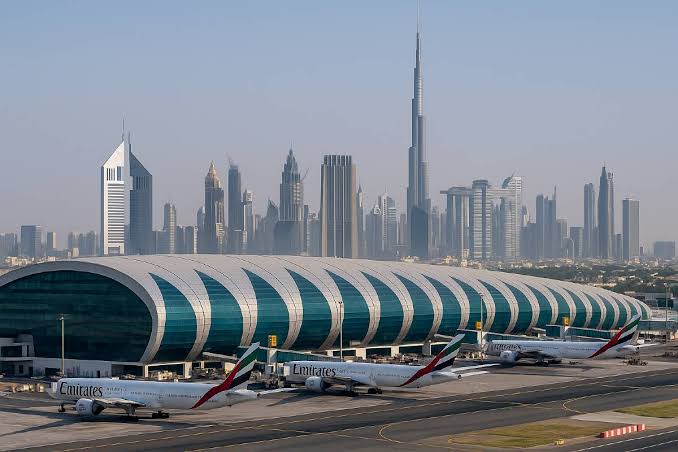
The UAE has eased Ebola-era entry restrictions on Ugandan nationals, potentially helping restore passenger demand on the Entebbe-Dubai corridor and supporting Uganda Airlines and Entebbe Airport traffic recovery.
The United Arab Emirates has begun easing precautionary entry measures imposed on Ugandan nationals during the Ebola outbreak, potentially removing a major constraint on traffic between Uganda and one of its most important aviation and business gateways.
In a notice issued by the UAE’s National Emergency Crisis and Disaster Management Authority (NCEMA), in coordination with the Ministry of Health and Prevention and the Federal Authority for Identity, Citizenship, Customs and Port Security, authorities said measures introduced in June 2026 for Ugandan nationals were being eased following continued assessment of the epidemiological situation.
The decision follows Uganda’s declaration on July 28 that it had ended its 2026 Ebola outbreak after completing the internationally established 42-day monitoring period without detecting new cases.
The UAE statement specifically says the easing follows the end of the Ebola outbreak in Uganda, while precautionary measures affecting the Democratic Republic of Congo and South Sudan remain in force.
The change could have significance for Uganda’s aviation industry, particularly the Entebbe-Dubai market, which links Uganda not only with the UAE but also with destinations across the Middle East, Asia and beyond.
Relief for Uganda Airlines
For Uganda Airlines, the development removes a major obstacle from one of its international routes, although the continuing closure of Uganda’s border with the DRC, still locks out significant connecting traffic.
The national carrier nominally operated four flights a week between Entebbe and Dubai. The route had faced an unusual combination of disruptions in 2026. Uganda Airlines temporarily suspended its Dubai services in March because of the wider Middle East airspace disruption, before subsequently resuming operations.
The Ebola-related UAE restrictions then complicated the market further by restricting entry of travellers who had recently been in Uganda unless they had spent more than 21 days outside the affected countries. The restrictions also affected passengers using indirect routings.
That created a particularly difficult operating environment for a route whose traffic includes Ugandan business travellers, traders, tourists and passengers connecting through Dubai to other international destinations.
Uganda’s Prime Minister Robinah Nabbanja acknowledged earlier this month that the restrictions were affecting trade between the two countries, saying Kampala was in talks with the UAE over their removal.
Entebbe traffic still carrying the scars
The timing of the UAE decision is significant for Entebbe International Airport, where international passenger traffic has remained well below 2025 levels despite a month-on-month recovery.
Entebbe handled 169,706 international passengers in August 2026, up from 156,342 in July. But August traffic was still 29pc below the 239,329 passengers recorded in August 2025.
The weakness followed a difficult first half of the year in which international passenger traffic fell by 10.8pc, according to Uganda Civil Aviation Authority figures. UCAA attributed the decline principally to the Middle East airspace disruption and the Ebola outbreak, which caused cancellations and reduced connectivity.
The UAE restrictions therefore came on top of an already disrupted aviation market. Dubai is particularly important to Uganda because it functions both as a destination and as a connecting hub for passengers travelling onward to Asia, the Middle East and other markets. Restrictions on Ugandan travellers consequently have effects beyond the number of people travelling specifically to the UAE.
The UAE measures announced in June were significant enough that Uganda’s aviation and health authorities engaged foreign diplomats and airline operators over what Uganda described as blanket restrictions, arguing that the country’s containment measures had prevented the export of Ebola cases.
Cargo between the UAE and Uganda was not subject to the June restrictions, with the UAE authorities explicitly stating that cargo flights would continue normally. The bigger disruption was therefore on the passenger side, particularly travel by Ugandan nationals.
For airlines, the return of unrestricted passenger movement should provide greater scope to rebuild demand on the Entebbe-Dubai route. For Entebbe, the development comes as the airport seeks to recover from a year in which international traffic has been affected by multiple external shocks.
The easing does not, however, mean that all aviation disruptions affecting Uganda have disappeared. The UAE notice says measures will continue to be reviewed as regional and international epidemiological conditions evolve, while restrictions concerning the DRC and South Sudan remain in place.
Related Posts
 13 Feared Killed as Tracep Aviation L-410 Crashes in DRC
 IATA Warns Cargo Screening Alone Cannot Contain Undeclared Dangerous Goods Risk
 Rwenzori Marathon: A Case of What’s Possible in Diversifying Uganda’s Tourism Offering
 Entebbe-Based Jet Fresh Cargo Takes Ugandan Air Freight into Global Awards Contest
 Uganda Set for First National ESG Conference as Sustainable Finance Gains Ground
 Frankfurt Airport Malaria Outbreak Raises Questions Over Aviation-Related Health Risks
Get business news delivered to you everyday
Latest News

Why Unlocking Africa’s Next Mining Powerhouse Requires Strong Financial Partnerships

Relief as UAE Eases Ebola-era Entry Curbs on Ugandans, Reopening Key Aviation Corridor

Equity Turns Schools into Climate Restoration Hubs as Lender Launches 200,000-tree Uganda drive

13 Feared Killed as Tracep Aviation L-410 Crashes in DRC

IATA Warns Cargo Screening Alone Cannot Contain Undeclared Dangerous Goods Risk

Rwenzori Marathon: A Case of What’s Possible in Diversifying Uganda’s Tourism Offering

Entebbe-Based Jet Fresh Cargo Takes Ugandan Air Freight into Global Awards Contest

Afreximbank Issues USD29m Guarantee to Expand EAC Customs Bond

Uganda puts UGX1.4tn Treasury Bonds on Auction

DHL Launches Direct Bahrain-Johannesburg Freighter Service