

Rwenzori Marathon: A Case of What’s Possible in Diversifying Uganda’s Tourism Offering
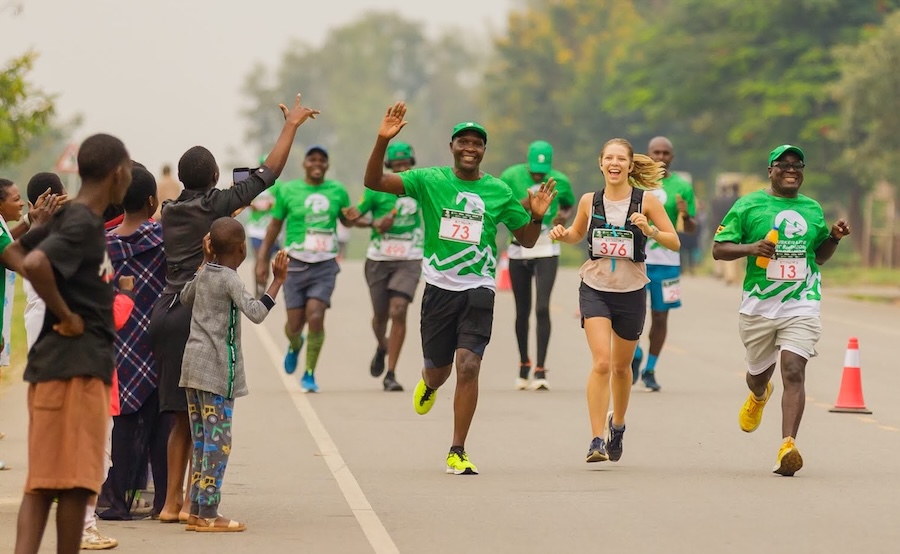
The Rwenzori Marathon shows how sports and experiential tourism can broaden Uganda’s tourism offering, attract visitors to lesser-known destinations and increase local economic activity.
By Hosea Katamba
 The recently concluded Mt. Rwenzori Marathon, now in its fifth year, presents a compelling case for what is still possible even in the wake of the grim blow that the Covid pandemic dealt to Uganda’s fragile tourism sector.
The marathon registered 8,000 runners from over 42 countries, a 33% growth from 6,000 runners that were drawn from 36 countries in the previous year. The 8,000 excludes other tourists, service providers, entertainers as well as individuals who participated just for the fun of it. This year, the marathon got certified as a World Athletics Label Road Race earning it prime endorsement at the international sporting level.
In a country like Uganda where tourism remains a key foreign exchange earner, contributing approximately 16% of Uganda’s total export revenues in 2025, there are lessons to be learnt in terms of what can be done to move this figure upward. One of the hurdles that the country faces in its pursuit of rapidly expanding the economy from US$ 50bn in 2023 to US$ 500bn in 2040, is how to diversify its tourism offering.
The National Development Plan IV (NDPIV), the first of 5-year operational blueprint that will deliver the ten-fold growth ambition, cites Uganda’s narrow product range as a barrier to fully exploiting the potential that lies in tourism which earned Uganda UGX 5.8 trillion (US$ 1.62bn) in 2025. To realize the ten-fold growth, government has set ambitious targets, among them; growing foreign exchange earnings from the US$ 1.6bn to US$ 10bn; growing tourists’ length of stay from 7.6 nights in FY2023/24 to 14 nights; and increasing domestic tourism expenditure from UGX 3.6 trillion in FY2023/24 to UGX 7.3 trillion.
This is where the story of Rwenzori marathon ties in. It offers a window into how the private sector and government can collaborate to innovatively expand what Destination Uganda can offer beyond wildlife and nature. The private sector leading as the engine of product creation, investment and service quality, while government creates the enabling infrastructure and conducive environment.
Until the marathon was conceived, Kasese was predominantly famous for Queen Elizabeth National Park, Rwenzori ranges, the Equator crossing in Kikorongo and other geographical features. Now, we have a weekend gateway that lures 8,000 people to Kasese town. But it is what they do on their way, while there and on the way back that is of economic significance to the country.
For example, a survey focusing on one of the organizations whose staff travelled to Kasese for this year’s race, indicated that individual expenditure oscillated between UGX 400,000 to UGX 5 million (depending on their mode of transport and how many people they moved with) during the marathon weekend. By a conservative estimate (using UGX 500,000 as the average spend), the 8,000 runners spent at least UGX 4 billion in the local economy, money that otherwise would not have been spent there. This spend went into accommodation, fuel, meals, entertainment, shopping, roadside food among others.
On top of the individual spend, entities such like UDB gave a financial boost to the marathon, as a way of sustaining the product, which points to the synergies that can be unlocked when the private sector takes lead. This aligns with one of the Bank’s mandate – to enhance Uganda’s attractiveness as a preferred tourism destination, through diversifying tourism opportunities by promoting experiential tourism.
Trends in global tourism indicate that unlike previously where travellers picked a destination first and chose what to do upon arrival, today’s traveller doesn’t treat experiences as afterthoughts. Their travel decisions are increasingly based on specific activity interests. This places experiences at the top of the cone.
A 2023 report by Mastercard Economics Institute on tourism trends found that consumers’ spending on experiences was up 65 percent from 2019. Potentially influenced by social media and entertainment, travellers are landing in lesser-known destinations in search of cultural immersion. Dynamics of the COVID-19 pandemic, during which shutdowns affected travel, restaurant dining, and ticketed events reminded consumers of the important role that experiences can play in a well-rounded life.
A sports tourism product such as Rwenzori marathon goes a long way in giving tourists a dynamic way to experience the attractions that Uganda has to offer. We have already witnessed what other groupings such as the Ntare League community have done in this space, by popularizing the idea that droves of people can drive miles to Jinja, Mbarara, Fort Portal and as far as Kigali, purely for sporting activity.
This begs the question. If each of Uganda’s regions, which are already uniquely endowed, created an innovative tourism activity that borrows from the strategic significance that Rwenzori marathon carries, how much revenue would they generate?
Picture an annual festival hosted on one of the islands in Lake Bunyonyi. A multi-day event combining dragon boat races, island‑hopping canoe safari, giant water slide that ends in the lake, campfire meals, sunrise birding and Batwa visits. An annual competitive dragon boat race specially curated for corporate entities would drive participation from Uganda’s middle class.
In Karamoja, a product could leverage the region’s peaks – Mount Napak, Mount Moroto, Mount Morungole and Mount Kadam – to create a guided multi-day trek linking two or more of them. The trek would feature portable camps, porters drawn from local communities, and a finishing certificate/medal. Visitors could as well partake in a bookable gravel-cycling route with stops for farm-to-table dining experiences in the wild and curated craft markets.
Development finance institutions like UDB offer affordable and patient capital requisite for the development of tourism products thereby amplifying tourism’s local economic impact through jobs, SME growth, and multiplier spending across communities. For example, as of 2025, services which include tourism constituted 17 percent of UDB’s portfolio.
Whereas international tourist arrivals increased by 19.7 percent to 1,642,215 visitors in 2025 (surpassing pre-pandemic levels) according to Ministry of Tourism’s Statistical Abstract 2025, only 13 percent of these tourists visited Uganda for the purpose of leisure and holiday, a meagre 0.4% increase from 2024. Positioning Uganda as a competitive destination for especially domestic travellers, will require a private sector that thinks out of the ordinary.
The writer is Senior Investment Manager – Services at Uganda Development Bank
Related Posts
 Entebbe-Based Jet Fresh Cargo Takes Ugandan Air Freight into Global Awards Contest
 Uganda Set for First National ESG Conference as Sustainable Finance Gains Ground
 Frankfurt Airport Malaria Outbreak Raises Questions Over Aviation-Related Health Risks
 What Maps Communicate: UN Resolution Challenges World Maps that Make Africa Look Smaller
 Independence Marathon Turns to Blood Storage Gap in Maternal Health Drive
 Fine Spinners Injects Fresh USD5m Into Technology as Uganda Textile Maker Targets African, European Markets
Get business news delivered to you everyday
Latest News

Rwenzori Marathon: A Case of What’s Possible in Diversifying Uganda’s Tourism Offering

Entebbe-Based Jet Fresh Cargo Takes Ugandan Air Freight into Global Awards Contest

Afreximbank Issues USD29m Guarantee to Expand EAC Customs Bond

Uganda puts UGX1.4tn Treasury Bonds on Auction

DHL Launches Direct Bahrain-Johannesburg Freighter Service

Uganda Set for First National ESG Conference as Sustainable Finance Gains Ground

Equity Wraps up Uganda Leg of Regional Trade Mission as Value Addition Drive Gains Traction

JPMorgan Abandons Oil Price Baseline as Iran Conflict Deepens Market Uncertainty

Frankfurt Airport Malaria Outbreak Raises Questions Over Aviation-Related Health Risks

What Maps Communicate: UN Resolution Challenges World Maps that Make Africa Look Smaller