

JPMorgan Abandons Oil Price Baseline as Iran Conflict Deepens Market Uncertainty
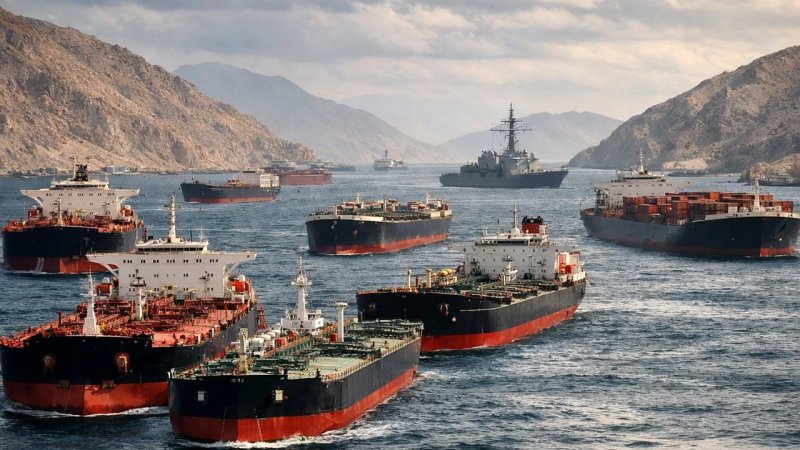
JPMorgan has abandoned its baseline oil forecast as the Iran conflict disrupts energy supplies, shipping routes and global fuel market expectations.
Global oil markets have entered unfamiliar territory, with JPMorgan’s commodities research team abandoning its baseline forecast for the first time since the start of the Iran conflict, warning that the path towards an end to the disruption has become increasingly difficult to model.
In its September 17, 2026, Oil Markets Weekly report, titled “Dry powder,” the bank’s analysts said they no longer had a baseline view of the market because they “simply don’t know how to model the endgame.”
The assessment highlights the growing uncertainty facing governments, businesses and consumers as disruptions to oil supplies, shipping routes and refining capacity continue to complicate expectations about energy prices.
The report was prepared by JPMorgan’s Global Commodities Research team, led by Natasha Kaneva, alongside Lyuba Savinova and Artem Fakhredtinov.
Economic red lines fail to contain the crisis
When the conflict began, JPMorgan’s analysts expected rising economic pressure to create limits on how far the disruption could extend.
Their initial assessment assumed that certain economic thresholds would constrain US policy, including oil prices reaching USD100 a barrel, gasoline approaching USD5 a gallon, headline inflation rising to 4pc and the 10-year US Treasury yield reaching 5pc.
The analysts had anticipated that these pressures would help drive some form of agreement to reopen the Strait of Hormuz by June.
Six months later, however, the report said several of those thresholds had been crossed without producing a clearer exit strategy.
Oil had risen above USD100 a barrel, while the 10-year Treasury yield had reached the 5pc range. US gasoline prices stood at USD4.37 a gallon and diesel had climbed to a record USD6.31 a gallon, according to the report.
The combination of elevated prices and depleted inventories has raised concerns about the ability of markets to absorb further supply disruptions, particularly as the northern hemisphere moves towards winter.
Reuters reported that JPMorgan estimated September fair value for oil at USD90 a barrel, compared with Brent crude trading at approximately USD106 at the time of the report. The difference indicated that market prices were reflecting a substantial risk premium associated with supply interruptions.
Supply routes under renewed pressure
JPMorgan’s assessment points to a widening geographical footprint of energy supply risks.
The report noted that Houthi attacks along Yemen’s Red Sea coast and into the Bab el-Mandeb had placed another important shipping route at risk. An attack on Saudi Arabia’s East-West pipeline had also temporarily closed a key alternative route for crude exports.
The developments increase pressure on the global oil transportation system, where the availability of alternative routes and the capacity to move crude to refineries are important determinants of supply security.
The report estimated that approximately 10 million barrels per day of supply had already been disrupted, with the market potentially pricing in another four million barrels per day of losses.
However, the analysts distinguished between risks reflected in market prices and disruptions that have been confirmed and sustained. The difference matters because oil prices respond not only to actual shortages but also to expectations of future supply constraints.
A prolonged disruption could therefore generate additional price pressure even before a corresponding physical shortage becomes evident across all markets.
Beyond the Middle East
The report also highlighted developments affecting oil refining and infrastructure in Russia.
Ukrainian drone strikes reportedly targeted the Slavyansk refinery, followed by attacks on the Taneco refinery in Tatarstan and the Syzran refinery in Russia’s Samara region.
These incidents add another layer of uncertainty to the oil products market, particularly when refining capacity is already under pressure.
Refinery disruptions can have consequences beyond crude oil prices because diesel, petrol and other refined products depend on the availability of processing capacity, inventories and transport infrastructure.
JPMorgan’s concerns therefore extend beyond the immediate disruption of crude supplies to the broader capacity of the energy system to maintain reliable deliveries.
The pressure on fuel markets
One of the report’s most significant observations concerns diesel.
The bank said diesel prices had reached an all-time high of USD6.31 a gallon heading into winter, while inventories remained at historically low levels.
Diesel is central to road freight, agriculture, construction, manufacturing and other economic activities. Persistent price increases can therefore affect a wide range of businesses, increasing operating costs and potentially feeding into the prices of goods and services.
The impact is not uniform across economies. Fuel pricing structures, taxation, exchange rates, subsidies and supply arrangements determine how changes in international oil prices reach consumers and businesses in individual markets.
Nevertheless, prolonged international energy market disruption creates a challenging environment for fuel-importing economies.
No clear endgame
JPMorgan’s decision to withdraw its baseline forecast is significant because financial institutions routinely use scenario modelling to assess how geopolitical developments may affect commodity prices.
The analysts’ conclusion does not mean that oil prices must continue rising indefinitely. Rather, it reflects the difficulty of assigning a sufficiently reliable central scenario to a conflict whose duration, geographic reach and economic consequences remain uncertain.
Indeed, oil prices subsequently eased on September 21 amid reported hopes of diplomatic progress and partial recovery in Saudi exports, demonstrating how rapidly market expectations can change.
But that movement does not resolve the structural risks identified in the JPMorgan report. It illustrates the distinction between short-term price movements and the underlying uncertainty surrounding supply routes, inventories and geopolitical developments.
For businesses and policymakers, the immediate challenge is to prepare for a range of outcomes rather than rely on a single oil price assumption.
For Uganda, that means paying close attention to international energy developments while strengthening domestic measures that can help limit the economic impact of external shocks.
Related Posts
 Frankfurt Airport Malaria Outbreak Raises Questions Over Aviation-Related Health Risks
 Independence Marathon Turns to Blood Storage Gap in Maternal Health Drive
 Fine Spinners Injects Fresh USD5m Into Technology as Uganda Textile Maker Targets African, European Markets
 Equity Trade Mission Puts Uganda’s Manufacturing Capacity to Regional Test
 Uganda Seeks to Calm Coffee, Cocoa Markets as Global Prices Fluctuate on Positive Sentiment
 Uganda Green Entrepreneurs Set for Paris Visit as Stanbic-France Partnership Graduates 106
Get business news delivered to you everyday
Latest News

JPMorgan Abandons Oil Price Baseline as Iran Conflict Deepens Market Uncertainty

Frankfurt Airport Malaria Outbreak Raises Questions Over Aviation-Related Health Risks

What Maps Communicate: UN Resolution Challenges World Maps that Make Africa Look Smaller

Independence Marathon Turns to Blood Storage Gap in Maternal Health Drive

Fine Spinners Injects Fresh USD5m Into Technology as Uganda Textile Maker Targets African, European Markets

Equity Trade Mission Puts Uganda’s Manufacturing Capacity to Regional Test

Uganda Seeks to Calm Coffee, Cocoa Markets as Global Prices Fluctuate on Positive Sentiment

Entebbe Airport Passenger Traffic Recovers in August but Remains Below 2025 Levels

Nile Breweries, Next Media Renew Road Safety Push with Focus on Boda Boda Riders

Equity Bank Explores Value-Chain Financing to Support Zigoti Coffee Expansion