

Uganda central bank rate stays at 9.75% as banks told to cash up
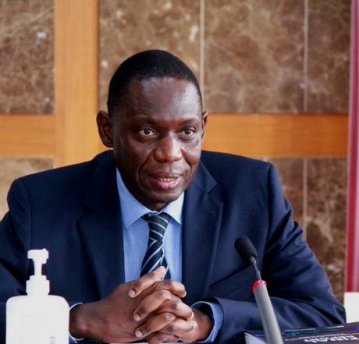 Atingi-Ego said uncertainty remains unusually elevated, with a wide range of possible outcomes depending on the duration of the Middle East conflict, implying that monetary policy needs to remain agile and responsive,
The Bank of Uganda has maintained the central bank rate (CBR) at 9.75 percent following the latest meeting of the Monetary Policy Committee (MPC), chaired by the Governor, Michael Atingi-Ego.
“The MPC assessed that inflation could rise moderately during the second half of2026 before stabilizing around the medium-term target. However, uncertainty remains unusually elevated, with a wide range of possible outcomes depending on the duration of the conflict, implying that monetary policy needs to remain agile and responsive,” he said.
He said, “Against this backdrop, the MPC judged it appropriate to maintain the CNBR at 9.75 percent as it continues to assess developments in the global economic environment.”
Atingi-Ego said monetary policy remains focused on mitigating the impact of the current fuel price increase on inflation, while supporting the economy’s adjustment to global headwinds. The CBR has been at 9.75% for well over a year.
However commercial banks have been directed have more cash available at hand. “To contain liquidity conditions in the banking system while ensuring that inflation expectations remain anchored around the medium-term target, the Bank of Uganda increased the Cash Reserve Requirement (CRR) to 11 pc from the 9.5 percent in March 2026.”
CRR is a key monetary policy tool used to manage banking system liquidity, control inflation, and ensure banks can meet customer withdrawals.
Over the 2 months to April 22026, inflation remained below the medium-term target of five percent, reflecting the continued effectiveness of monetary policy. According to an MPC statement, Annual headline and core inflation averaged 3.4 percent and 3.5 percent respectively. However, the conflict in the Middle East has resulted in significantly higher global oil prices and heightened uncertainty surrounding the economic outlook.
Although the Uganda economy continues to face challenges arising from global developments and geopolitical uncertainty, it remains on an upward trajectory. Real economic growth strengthened in the first half of FY20225/226, supported by broad-based improvements across the agriculture, industry and services sectors. During the first two quarters of 2025/2026, economic activity expanded at a pace consistent with the current potential growth, averaging 6.7 percent.
The forecast for GDP growth in FY2026/2027 remains broadly unchanged from the February 2026 projection round. While the conflict in the Middle East could alter the sectoral composition of growth, higher global oil prices, in particular, could increase the value of Uganda’s oil exports even as they place pressure on household consumption and business costs.
Over the medium term, economic growth is projected to average around eight percent, supported by stronger export growth and increased business investment.
Related Posts
 UDB Commissions Titivated Headquarter Tower as Development Lender Scales up Transformation Role
 Equity Bank Urges Diaspora Ugandans to Turn Remittances into Investments
 Exim Bank Uganda Backs Yangtze Industry Expansion into Manufacturing
 Uganda puts UGX1.4tn Treasury Bonds on Auction
 JPMorgan Abandons Oil Price Baseline as Iran Conflict Deepens Market Uncertainty
 Equity Trade Mission Targets Capital, Markets to Unlock Uganda’s Investment Potential
Get business news delivered to you everyday
Latest News

Beyond the Classroom: A Ugandan Student Inside China’s Manufacturing World

Hon. John Musila and the Duty of MPs to Respect Institutional Accountability

UDB Commissions Titivated Headquarter Tower as Development Lender Scales up Transformation Role

Equity Bank Urges Diaspora Ugandans to Turn Remittances into Investments

Uganda Private Sector Sustains Demand Despite Rising Costs

IATA says Aviation Safety’s Next Gains Will Depend on People, Technology and Standards

Equity Bank Targets Uganda’s Artisanal Miners as Financing Gap Limits Mining Growth

Airlink Expands Cape Town Network with New Lanseria and Mauritius Links

Africa Faces Gunboat Diplomacy Without the Gunboats

Exim Bank Uganda Backs Yangtze Industry Expansion into Manufacturing