
Equity Group CEO wants more space for private sector initiatives to drive growth
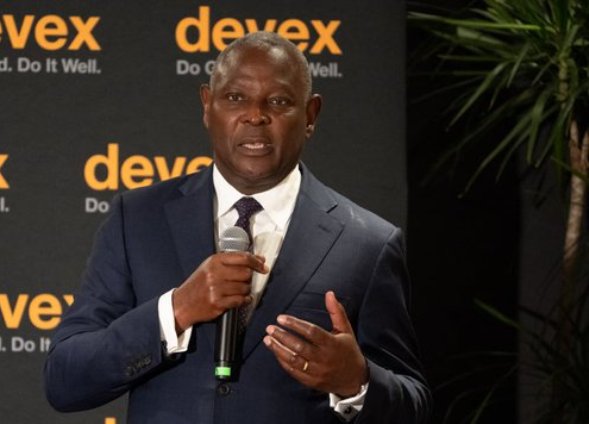 Dr Mwangi said total global private capital is presently about 136% of the total GDP of national economies, but the challenge in Africa is convincing governments to create more space for private sector initiatives.
A month after being named on the Devex Power 50 List 2026, Equity Group Managing Director and CEO Dr. James Mwangi said amidst constraints in public finances, and reduced donor aid flows, he wants to see more space for private sector-led initiatives to drive economic growth in Africa.
Speaking on the sidelines of the World Bank/IMF Spring Meetings at a Devex event in Washington recently, Dr Mwangi said total global private capital is presently about 136% of the total GDP of national economies, “The private sector has much more money than the sovereigns. So essentially giving it a space to play alongside governments would be a lasting solution, but what remains is how to convince governments,” he said.
Devex is a media platform and social enterprise, created to drive the global development agenda. Devex describes the Power 50 list as individuals who are transforming development as we know it. Dr. Mwangi is also a member of the World Bank Group High-Level Advisory Council on Jobs.
He said, “After some 80 years of multilateral operations, particularly the Bretton Woods institutions, I think the question of relevance is being asked more seriously. I think that the response— that the answer lies in the private sector is giving us hope. The private sector can drive development, through the production of goods, and creation of employment. But this will not happen unless the multilateral lenders engage governments to create an enabling environment for the private sector to be a true partner.”
He said, “The money from the World Bank, IMF, and the IFC is not sufficient to fund development, but it’s sufficient to act as a catalyst and create a platform for the private sector to engage.”
Against this backdrop, Equity Group is implementing its Africa Recovery and Resilience Plan (ARRP). This is a $6 billion-plus initiative designed to boost Africa’s economy by financing and building the capacity of value chains in agriculture, manufacturing, and SMEs. It aims to foster 50 million jobs, support 25 million MSMEs, and promote social/environmental transformation by 2030. Dr Mwangi said all the capital for ARRP is sourced from the private sector.
He said through synergies and collaborations amongst private sector players it is creating a uniform way of approaching the market. “Through consistent collaboration, we are seeing significant impact and as a bank, our role is to orchestrate and allocate resources on the basis of that plan.”
Dr. Mwangi said inadequate government resources and rising public debt, coupled with the events in the Middle East is causing uncertainty. “At the moment, Equity customers are feeling the challenge of government capacity. Debt stress in Africa is real. We also see inflation, particularly due to the crisis in the Middle East, has picked up significantly and there is a lot of uncertainty. That is what is leading in the minds of our customers,” he said.
He said the most critical area of concern is rising energy costs, because these feed into production, including the cost for fertilizers which directly affects Africa’s agriculture sector and food security.
Related Posts
 Equity Trade Mission Puts Uganda’s Manufacturing Capacity to Regional Test
 Equity Bank Explores Value-Chain Financing to Support Zigoti Coffee Expansion
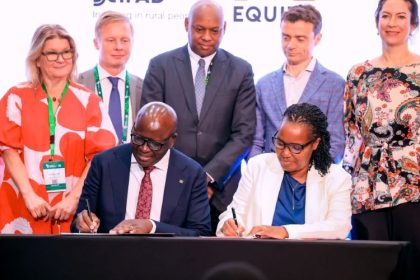 IFAD, Equity Launch USD200m Mechanism to Take Climate Finance to East Africa’s Farmers
 Equity Financing Helps Vurra Secondary School turn Enrolment Pressure into Growth Opportunity
 Digital Banking Growth puts Cyber Fraud Firmly on Uganda’s Financial Sector Agenda
 New lender HCH targets Uganda’s SME Financing Gap With Invoice Finance to Unlock Working Capital
Get business news delivered to you everyday
Latest News

Uganda puts UGX1.4tn Treasury Bonds on Auction

DHL Launches Direct Bahrain-Johannesburg Freighter Service

Uganda Set for First National ESG Conference as Sustainable Finance Gains Ground

Equity Wraps up Uganda Leg of Regional Trade Mission as Value Addition Drive Gains Traction

JPMorgan Abandons Oil Price Baseline as Iran Conflict Deepens Market Uncertainty

Frankfurt Airport Malaria Outbreak Raises Questions Over Aviation-Related Health Risks

What Maps Communicate: UN Resolution Challenges World Maps that Make Africa Look Smaller

Independence Marathon Turns to Blood Storage Gap in Maternal Health Drive

Fine Spinners Injects Fresh USD5m Into Technology as Uganda Textile Maker Targets African, European Markets

Equity Trade Mission Puts Uganda’s Manufacturing Capacity to Regional Test