

Does Africa need more Boeing or fleet diversification?

As African airlines battle grounded fleets, engine shortages, and weak maintenance ecosystems, the instinct to deepen reliance on Boeing may appear practical. But long-term resilience lies in fleet diversification, stronger competition among OEMs, and binding commitments for local MRO, training, and technical support that turn aircraft acquisition into industrial strategy.
Michael Wakabi
The easiest answer in African aviation today may not be immune to hidden risk.
As airlines across the continent struggle with grounded aircraft, delayed spare parts, engine shortages, and fragile maintenance systems, many fleet planners are arriving at what appears to be the obvious conclusion: lean harder into Boeing.
The argument is simple enough. Boeing already commands roughly 70 percent of Africa’s commercial aircraft market. Its installed base is large. Engineers are familiar with its systems. Pilots are easier to source. Lessors are more comfortable financing it. Spare parts networks are deeper. Maintenance ecosystems emerge faster around scale.
On paper, it sounds like common sense. If Africa’s biggest aviation problem is weak support infrastructure, then surely concentrating around the largest existing platform is the safest route.
That logic mistakes convenience for resilience. What Africa needs is not deeper dependence on a single manufacturer, but deliberate fleet diversification. As recent events have demonstrated, concentration can easily become exposure.
This is not an argument against Boeing. It is an argument against dependence. And in aviation, overdependence can turn one manufacturer’s problem into a continental crisis.
This is not even a uniquely African problem. From Kenya Airways and Uganda Airlines to Air Tanzania and Ethiopian Airlines, airlines across the continent have felt the consequences of global supply chain fragility. Beyond Africa, reliability challenges involving Rolls-Royce and Pratt & Whitney powerplants have shown how quickly propulsion bottlenecks can ripple across global fleets.
That a carrier with the scale and technical depth of Ethiopian Airlines can feel that pressure should reinforce the need for greater margin within fleet strategy.
The propulsion systems market itself has also become dangerously concentrated. The growing Airbus A350 fleet, for example, depends heavily on a narrow engine supply ecosystem, effectively reducing competition and leaving operators exposed to the vulnerabilities of a single supplier chain. If a major technical issue were to arise beyond routine advisories, the implications for operators would be severe.
This is precisely why Africa should resist the temptation to simply “buy more Boeing.”
The issue is not that Boeing is the problem. The issue is that dependence is.
When too much strategic capacity sits inside one OEM ecosystem, a certification issue, labour strike, production bottleneck, regulatory crisis, or safety event at that manufacturer can trigger cascading disruption across the continent.
One catastrophic event should not have the power to paralyse African aviation at scale. Yet that is exactly the risk concentration creates.
There is another danger too—one that receives less attention, but may be even more costly over time. When dependence grows, competition dies.
The assumption that Boeing scale automatically creates efficiency ignores how monopolistic dominance shifts bargaining power. Airlines become price takers rather than strategic customers. Pricing hardens. Support responsiveness weakens. Localisation promises become optional rather than necessary.
Africa already sits low in the global priority queue behind North America, Europe, the Gulf, and Asia. If the continent voluntarily narrows its options further, it surrenders competition, one of the few negotiating tools it has.
A strong Airbus presence matters. So does stronger support for ATR, Embraer, and other aircraft types suited to African markets. Diversity at scale is not fragmentation. It is leverage.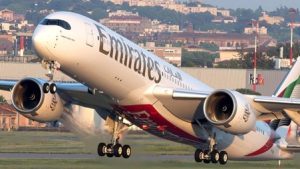
Without it, Africa becomes a customer to be sold to, not a market to be built with.
There is often resistance to this argument because fleet diversification appears inefficient. Multiple aircraft types mean more training requirements, more maintenance complexity, and less standardisation. For airlines already operating on thin margins, simplicity is understandably attractive.
But over the long term, diversification is not inefficiency. It is strategic insurance.
No serious energy system depends on one fuel source. No financial system depends on one lender. Aviation should not depend on one manufacturer.
A diversified fleet spreads operational risk. It protects airlines from grounding shocks. It reduces vulnerability to OEM bottlenecks. It creates competitive pressure among manufacturers. It gives airlines options when the global supply chain breaks.
The objective should not be fleet simplicity at all costs. It should be survivability.
And this is where the conversation must move beyond aircraft choice itself.
Airspace Africa, in a recent article, correctly argued that Africa is not buying aircraft it cannot afford. It is buying aircraft it cannot sustain. That diagnosis is right.
But the answer is not choosing the biggest OEM. It is forcing every OEM to localise support.
Fleet acquisition should no longer be treated as a procurement exercise. It should be treated as industrial policy.

Small narrow bodies such as the Embraer’s E190 series are key to increase intra-African connectivity
Every major aircraft order should come tied to enforceable commitments: regional MRO facilities, local spare parts inventory, certified technical training academies, engine maintenance partnerships, engineering support, and real transfer of technical capability.
Aircraft should not arrive alone. They should arrive with systems.
If manufacturers want African scale, they must build African roots—not just sales offices.
Airbus opening a customer support centre in Johannesburg is a step in the right direction. Boeing should be expected to do the same at greater depth. Engine makers should be held to the same standard. Lessors and financiers too.
Governments must also stop treating aircraft deliveries as political trophies and start seeing aviation as industrial infrastructure.
China’s aviation strategy offers an important lesson here. Fleet planning was never treated simply as airline procurement—it was embedded within a broader national industrial strategy that included MRO capability, technical training, supply chains, financing structures, and eventually indigenous manufacturing ambition.
Africa must think in similarly strategic terms. Tax incentives, financing guarantees, bilateral agreements, and public-private partnerships should all be used to ensure that aircraft procurement leaves behind maintenance ecosystems, engineering jobs, and technical sovereignty.
Ethiopian did not become Africa’s strongest carrier because it flies Boeing aircraft. It succeeded because it built training depth, MRO capability, technical redundancy, and institutional discipline.
Africa’s next aviation mistake would be choosing convenience over resilience. Buying more Boeing may feel like the easiest answer. It may even work in the short term.
But the continent has already seen what happens when supply chains fail, engines disappear, and grounded aircraft become balance-sheet disasters.
The answer is not to concentrate more risk. It is to distribute it intelligently.
Fleet diversification—paired with aggressive localisation of maintenance, technical support, and industrial capability—is the only serious long-term strategy.
But fleet diversification without labour mobility and geopolitical awareness would still leave Africa exposed.
Diversification cannot simply mean buying different aircraft from different manufacturers. It must also mean distributing operational capacity intelligently across the continent, with a clear understanding of geopolitical risk, technical concentration, and labour realities.
 Africa’s aviation support system today is unevenly distributed. A handful of countries—most notably Ethiopia, South Africa, Kenya, Morocco, and to a growing extent Rwanda—carry a disproportionate share of the continent’s MRO capability, technical training infrastructure, and certified engineering talent. Large parts of the continent still depend heavily on external maintenance support or on ferrying aircraft long distances for technical work.
That concentration creates another form of vulnerability.
If geopolitical instability, regulatory disruptions, currency crises, or bilateral tensions affect one of these hubs, the impact can spread far beyond national borders. Fleet diversification therefore must also be geographic diversification.
Africa needs multiple centres of technical excellence, not a single dominant node. This requires intentional policy support. Governments cannot leave this entirely to market forces because aviation infrastructure is too strategic and too capital-intensive to emerge organically at the speed the continent requires.
The uneven distribution and scarcity of technical talent make labour mobility just as important as aircraft choice. Engineers, technicians, instructors, inspectors, and licensed maintenance personnel must be able to move across borders with far less friction than they currently face. Visa barriers, licensing incompatibilities, slow work permit systems, and fragmented regulatory frameworks all weaken the continent’s ability to build a truly integrated aviation ecosystem.
An aircraft grounded in West Africa should not wait unnecessarily because the right certified engineer is trapped behind administrative barriers in East or Southern Africa.
This is precisely why the conversation must be embedded within the broader pursuit of the Single African Air Transport Market (SAATM).
Too often, SAATM is discussed mainly through the lens of passenger rights, market access, and airline competition. But its real long-term success depends just as much on the invisible infrastructure behind the flights: maintenance, certification, training, technical labour, and cross-border operational cooperation.
A single market for aircraft movement without a single framework for technical support is incomplete. SAATM should therefore evolve beyond traffic rights and become a platform for aviation industrial integration.
That means harmonising licensing standards, accelerating mutual recognition of technical qualifications, supporting regional MRO hubs, and enabling free movement of aviation professionals across the continent.
Aircraft diversity without talent mobility creates fragmentation. Talent mobility without technical infrastructure creates dependency. Both must move together. Africa’s aviation future will be secured by building a continent where aircraft, skills, and support systems can move with equal efficiency.
Related Posts
 Uganda Emerges as Africa’s Largest Organic Farming Country as Exports Reach USD225 Million
 Uganda Coffee Roasters Tap Richard Rugaya as Executive Director, with Focus on Commercial Growth
 Why Africa’s Institutions Must Turn Knowledge and Investment into Farmer Prosperity
 Forbes ranks MTN Group third globally on best telecom employer list
 Stanbic experts offer investment insights to navigate current market uncertainty
 Africa Carbon Markets Urged to Turn Potential into Investment and Delivery
Get business news delivered to you everyday
Latest News

Uganda Emerges as Africa’s Largest Organic Farming Country as Exports Reach USD225 Million

SITA Acquisition of Collins Airport Solutions Signals Moves to Consolidate Aviation Technology

Uganda Coffee Roasters Tap Richard Rugaya as Executive Director, with Focus on Commercial Growth

Equity Bank Reports UGX37.6 Billion in Green Loans as Uganda Seeks to Scale Climate Investment

Why Africa’s Institutions Must Turn Knowledge and Investment into Farmer Prosperity

Forbes ranks MTN Group third globally on best telecom employer list

Stanbic experts offer investment insights to navigate current market uncertainty

Bank of Uganda hikes base rate from 9.75% to 12% amidst global tensions

Corporate Buyers Could Help Unlock SAF Market Worth Millions of Tonnes by 2030

Airbus sees USD420bn Global Aviation Services Boom: Can Africa Capture its Share?