

Stanbic National Schools Championship bridges gap between certificates and skills
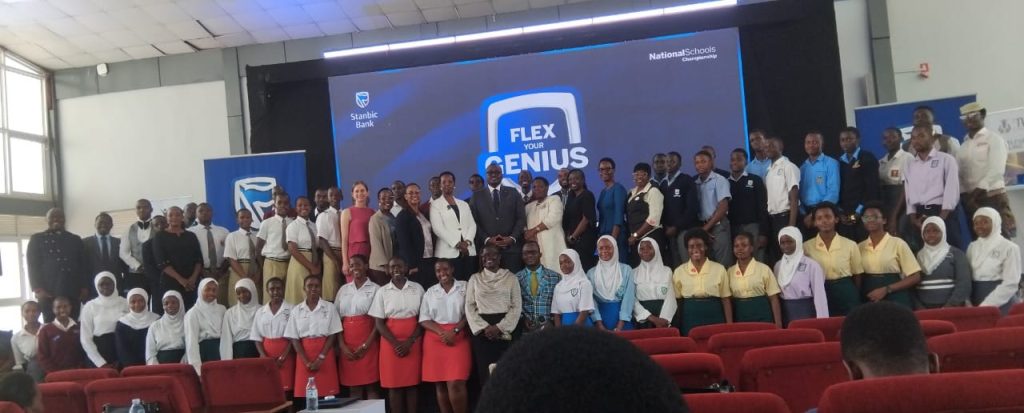
Stanbic Bank Uganda has launched the 11th National Schools Championship, targeting youth unemployment by equipping students with practical skills in entrepreneurship, innovation, and financial literacy.
Stanbic Bank Uganda has launched the 11th edition of its National Schools Championship (NSC), positioning the initiative as a key platform for nurturing innovation and tackling youth unemployment through skills development.
The programme, flagged off on Monday, is part of the bank’s corporate social investment as it marks 35 years of operations in Uganda. It seeks to equip learners with practical competencies in entrepreneurship, financial literacy, and problem-solving, shifting focus from academic certification to job creation.
This year’s edition, themed “Powering Innovation for Job Creation,” has already attracted nearly 1,000 applications from secondary and vocational institutions, underlining growing interest among young people in enterprise and innovation.
Speaking at the launch, Stanbic Bank’s Executive Head for Business and Commercial Banking, Tunde Thorpe, said the championship is designed to reshape how young people approach employment.
“Uganda’s future lies in empowering young people to become innovators and entrepreneurs,” Thorpe said. “Through this programme, we are equipping learners with the skills and confidence to create solutions, build enterprises, and drive economic growth.”

Tunde-Thorpe-Stanbic-Bank-Uganda-Executive-Head-of-Business-and-Commercial-Banking-making-remarks
He added that the initiative aligns with the bank’s broader purpose of supporting inclusive growth and enterprise development, particularly among youth, women, and underserved communities.
The championship comes at a time when Uganda is intensifying efforts to reform its education system towards a more skills-based and vocational approach.
Chairperson of the Technical and Vocational Education and Training (TVET) Council, Allen Kagina, said initiatives that emphasise practical skills are critical in addressing structural unemployment among young people.
“Skills are the currency of the future,” Kagina said. “Programmes like this are essential in preparing young people to participate productively in the economy.”
She noted that youth unemployment remains a pressing challenge, with a significant proportion of young people either out of school or not engaged in formal employment. According to Kagina, the core issue lies in the gap between education and opportunity.
“The issue is not just jobs; it is the transition from education to opportunity,” she said. “When learners complete school, there must be a clear pathway to employment or enterprise.”
The NSC, she added, aligns with government efforts to shift from education for certification to education for innovation—ensuring that graduates leave school with market-relevant skills.

Allen Kagina
Juliet Muzoora Atuhairwe, Commissioner for Secondary Education, echoed the sentiment, noting that the programme complements the rollout of competence-based learning in schools.
“This initiative gives learners an opportunity to apply knowledge, innovate, and develop solutions that are relevant to their communities,” she said.
The National Schools Championship is structured around hands-on learning rather than theoretical instruction. Participants benefit from teacher training, innovation toolkits, mentorship, and a residential boot camp designed to refine business ideas.
Top-performing students will advance to a national boot camp scheduled for May at Gayaza High School, where they will further develop their innovations and entrepreneurial concepts.
Stanbic Bank Corporate Social Investment Manager Diana Ondoga said the programme goes beyond competition to build long-term capabilities among participants.
“We are investing in the next generation of entrepreneurs and innovators,” Ondoga said. “This platform nurtures ideas, builds confidence, and equips young people with skills to succeed.”
She added that approximately 70pc of the bank’s corporate social investment is directed towards education, reflecting a sustained commitment to human capital development.
Since its inception, the National Schools Championship has grown into one of the country’s largest youth-focused innovation platforms.
The initiative has reached nearly one million learners, supported the creation of over 200 student-led enterprises, and engaged more than 500 schools nationwide.
This year, around 200 schools are expected to participate, with organisers aiming to deepen impact by strengthening mentorship and expanding access to innovation resources.
The strong response to the 2026 edition signals a shift in how young people are engaging with education—moving beyond traditional career paths towards entrepreneurship and problem-solving.
The championship also forms part of Stanbic Bank’s wider strategy to support enterprise development and economic transformation, with the bank committing up to Shs1 trillion towards business growth and socio-economic impact initiatives.
By focusing on youth, the programme targets a demographic seen as central to Uganda’s long-term economic prospects. Ondoga urged participants to take full advantage of the opportunity to innovate and develop solutions with real-world impact. “Think boldly, innovate fearlessly, and develop solutions that can transform your communities and create jobs,” she said.
Related Posts
 SITA Acquisition of Collins Airport Solutions Signals Moves to Consolidate Aviation Technology
 Uganda Coffee Roasters Tap Richard Rugaya as Executive Director, with Focus on Commercial Growth
 Equity Bank Reports UGX37.6 Billion in Green Loans as Uganda Seeks to Scale Climate Investment
 Nile Breweries Celebrates 75 Years of Growing with Uganda
 Stanbic installs solar power system at Mbale School for the Deaf
 Airbus-Kratos Valkyrie Unmanned Combat Aircraft Completes First Flight Ahead of 2029 Combat Target
Get business news delivered to you everyday
Latest News

Uganda Emerges as Africa’s Largest Organic Farming Country as Exports Reach USD225 Million

SITA Acquisition of Collins Airport Solutions Signals Moves to Consolidate Aviation Technology

Uganda Coffee Roasters Tap Richard Rugaya as Executive Director, with Focus on Commercial Growth

Equity Bank Reports UGX37.6 Billion in Green Loans as Uganda Seeks to Scale Climate Investment

Why Africa’s Institutions Must Turn Knowledge and Investment into Farmer Prosperity

Forbes ranks MTN Group third globally on best telecom employer list

Stanbic experts offer investment insights to navigate current market uncertainty

Africa Carbon Markets Urged to Turn Potential into Investment and Delivery

Bank of Uganda hikes base rate from 9.75% to 12% amidst global tensions

Corporate Buyers Could Help Unlock SAF Market Worth Millions of Tonnes by 2030