

Uganda fuel prices undercut Kenya as supply reforms pay off amid global disruptions
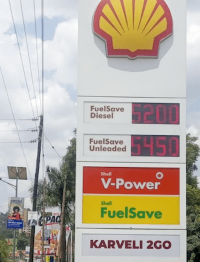
Uganda’s fuel prices have fallen below regional averages despite global supply disruptions, as centralized procurement and a flexible tax regime begin to pay off—raising fresh questions about East Africa’s divergent fuel pricing models.
Six weeks into the ongoing conflict involving the United States, Israel and Iran that has disrupted global crude and refined petroleum supply chains, Uganda is emerging with significantly lower pump prices than its regional peers.
The development comes as the Uganda National oil Company (UNOC), announced Tuesday, that a new consignment of petroleum products including 119 million litres of petrol, had landed at Mombasa, further allaying emerging jitters in the market. UNOC, said petroleum product supply remains secure and sufficient to meet national demand.
Latest regional pricing data shared on X (formerly Twitter) by the Money Academy Kenya, shows Uganda’s fuel prices now sit comfortably below most East African markets when denominated in Kenyan shillings:
- Kenya: Petrol Sh206 | Diesel Sh206
- Uganda: Petrol Sh184 | Diesel Sh177
- Rwanda: Petrol Sh204 | Diesel Sh195
- Tanzania: Petrol Sh190 | Diesel Sh189
- Ethiopia: Petrol Sh118 | Diesel Sh135
The price gap, particularly with Kenya, is now being cited as early validation of Uganda’s controversial decision to restructure its fuel import system by sidelining private oil marketing companies from direct procurement.
Under the new model, all fuel imports are handled centrally by the Uganda National Oil Company (UNOC), which has contracted global energy trader Vitol to manage supply.
The shift, implemented earlier this year, effectively removed intermediaries that previously sourced fuel through Kenyan supply chains—cutting out multiple layers of mark-ups that had long inflated pump prices.
Uganda’s relative price stability is being attributed to two key policy shifts: centralised procurement and a differentiated tax regime.
By consolidating imports under UNOC, the government has introduced a more controlled pricing framework, where local oil marketing companies now purchase fuel domestically rather than navigating complex regional supply chains.
This has significantly reduced exposure to price distortions linked to transit, brokerage, and foreign exchange layers—costs that are often passed on to consumers.
Equally important is Uganda’s tax structure. Unlike Kenya, which applies Value Added Tax (VAT) on fuel, Uganda does not levy VAT. Instead, it relies on excise duty, which can be adjusted periodically rather than rising automatically.
This gives policymakers greater flexibility to cushion consumers during periods of global price volatility—such as the current disruptions triggered by tensions in the Middle East.
The pricing divergence is likely to reignite debate over fuel taxation and supply chain structures across East Africa.
Kenya’s liberalised system, while competitive in theory, has increasingly come under scrutiny for exposing consumers to higher and more volatile prices, particularly during global shocks.
Uganda’s model, by contrast, reflects a more interventionist approach—one that prioritises price stability and supply security, even at the cost of reduced private sector participation in procurement.
Analysts say the current crisis offers a real-world stress test of both systems. Global fuel markets have been unsettled by supply uncertainties linked to the conflict involving the United States, Israel and Iran, with concerns over potential disruptions to key shipping routes and refining capacity.
In such an environment, countries with streamlined procurement systems and flexible tax policies are better positioned to absorb shocks.
Uganda’s ability to maintain relatively lower pump prices suggests that reducing inefficiencies within the supply chain can be as important as managing global price exposure.
However, questions remain about the long-term sustainability of the model.
Centralized procurement places significant operational responsibility on UNOC, raising concerns about the risks associated with reliance on a single supplier.
There are also broader considerations around market competition and whether reduced private sector involvement could have unintended consequences over time.
Still, in the short term, the results clearly show that Uganda’s fuel pricing reforms are delivering measurable benefits at the pump.
Related Posts
 Energy Ministry and Equity Bank target lower hotel energy costs through green investment initiative
 Aviation Industry Coalition Presses EU to Protect Voluntary use of Biometric Travel Technology
 Somalia Recognises IATA Safety Audits in Push for Common African Aviation Standards
 Stanbic Donates UGX40 Million in Maternal Health Equipment to Obongi Facility
 Airlink Adds Lanseria–Harare Route, Expands Regional Flights for Summer
 Uganda SGR Nears €1bn Funding Milestone as OPEC Fund Targets November Approval for €150m
Get business news delivered to you everyday
Latest News

Energy Ministry and Equity Bank target lower hotel energy costs through green investment initiative

FAA Certifies Boeing 737-10, Clearing Path for Deliveries of Largest 737 MAX Variant

Aviation Industry Coalition Presses EU to Protect Voluntary use of Biometric Travel Technology

Somalia Recognises IATA Safety Audits in Push for Common African Aviation Standards

Stanbic Donates UGX40 Million in Maternal Health Equipment to Obongi Facility

Airlink Adds Lanseria–Harare Route, Expands Regional Flights for Summer

Solar Power Linked to More Births and Better Patient Access at Rural Ugandan Clinics

China’s GPMI Interface Leapfrogs HDMI, USB With 192Gbps Speeds and 480W Power

Stanbic Seeks Northern Uganda Business Feedback as It Marks 35 Years in Country

Uganda Emerges as Africa’s Largest Organic Farming Country as Exports Reach USD225 Million