

AI takes on fuel risk as airlines grapple with Middle East supply pressures
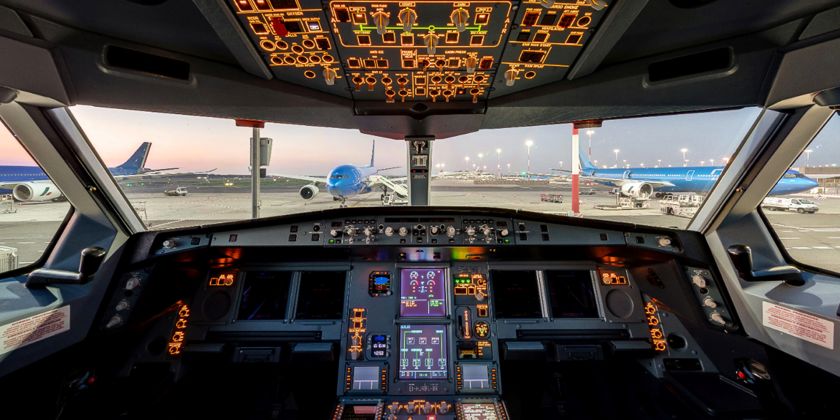
As fuel supply disruptions in the Middle East heighten cost pressures for airlines, ITA Airways is turning to AI-powered flight optimisation from SITA to cut fuel burn and emissions. The carrier expects to save over 7,100 tonnes of fuel and reduce more than 22,100 tonnes of CO₂ by 2026 through smarter climb performance management.
As airlines grapple with rising fuel uncertainty linked to disruptions in Middle East supply chains, technology providers are increasingly positioning artificial intelligence as a critical tool for balancing operational efficiency with sustainability goals.
Global air transport technology firm SITA says its AI-powered solution, SITA OptiFlight®, is helping ITA Airways significantly cut fuel consumption and carbon emissions, offering a model for carriers navigating volatile fuel markets and tightening environmental regulations.
The Italian national carrier is using the system to optimise aircraft climb performance, a phase of flight that can heavily influence overall fuel burn. According to SITA, the deployment is expected to save more than 7,100 tonnes of fuel and reduce over 22,100 tonnes of CO₂ emissions across 2025 and 2026.
The development comes at a time when airlines across Europe, Africa and the Middle East are facing renewed concerns over fuel pricing and supply resilience as geopolitical tensions in the Middle East continue to disrupt energy flows. Aviation analysts say such pressures are forcing carriers to look beyond traditional cost-cutting measures and toward data-driven operational efficiency.
SITA OptiFlight uses aircraft-specific performance data combined with real-time four-dimensional weather intelligence to calculate the most efficient climb profile for every flight. The system adjusts factors such as airspeed, altitude transitions, acceleration and climb Mach to ensure optimal performance without compromising safety or operational reliability.
Unlike standard flight optimisation tools, the platform applies tail-specific modelling for each aircraft, allowing for more precise recommendations based on the aircraft’s unique performance characteristics and changing operational conditions.
Francesco Presicce, Chief Innovation and Strategic Projects/Vision at ITA Airways, said the technology aligns with the airline’s long-term sustainability and growth strategy.
“At ITA Airways, we know that innovative technologies are key to delivering our long-term growth and sustainability strategy. Data-driven insights and artificial intelligence allow us to achieve significant fuel saving and emissions reductions without compromising efficiency or safety,” he said.
He noted that the initiative forms part of the airline’s broader effort to pursue more sustainable and responsible aviation while maintaining operational excellence.
The system has now been rolled out across ITA Airways’ fleet, underscoring the carrier’s ambition to position itself among Europe’s leaders in sustainable airline operations.
For SITA, the partnership reflects a wider industry shift in which fuel efficiency is becoming both an environmental and financial priority.
Yann Cabaret, Chief Executive Officer of SITA for Aircraft, said fuel consumption remains one of the biggest operational and regulatory challenges facing airlines worldwide.
“Fuel consumption is one of the biggest hurdles for airlines facing increasing regulatory and environmental pressures, and with it being one of the biggest costs in day-to-day operations, the need for intelligent solutions has never been greater,” Cabaret said.
He added that real-time predictive modelling enables airlines to reduce emissions while preserving optimal flight performance, making digital transformation central to aviation sustainability.
Industry observers note that while sustainable aviation fuel remains a long-term solution for decarbonisation, immediate gains are increasingly being found in operational technologies such as AI-assisted route planning, predictive maintenance and climb optimisation.
For carriers operating in Africa and the Middle East—where fuel logistics can be especially vulnerable to regional instability—such technologies could provide a significant competitive advantage. And as the world’s airlines seek to shield themselves from fuel volatility while meeting investor and regulatory demands for greener operations, solutions like SITA OptiFlight may increasingly become an operational necessity.
Related Posts
 Independence Marathon Turns to Blood Storage Gap in Maternal Health Drive
 Fine Spinners Injects Fresh USD5m Into Technology as Uganda Textile Maker Targets African, European Markets
 Equity Trade Mission Puts Uganda’s Manufacturing Capacity to Regional Test
 Uganda Seeks to Calm Coffee, Cocoa Markets as Global Prices Fluctuate on Positive Sentiment
 Uganda Green Entrepreneurs Set for Paris Visit as Stanbic-France Partnership Graduates 106
 Entebbe Airport Passenger Traffic Recovers in August but Remains Below 2025 Levels
Get business news delivered to you everyday
Latest News

Independence Marathon Turns to Blood Storage Gap in Maternal Health Drive

Fine Spinners Injects Fresh USD5m Into Technology as Uganda Textile Maker Targets African, European Markets

Equity Trade Mission Puts Uganda’s Manufacturing Capacity to Regional Test

Uganda Seeks to Calm Coffee, Cocoa Markets as Global Prices Fluctuate on Positive Sentiment

Uganda Green Entrepreneurs Set for Paris Visit as Stanbic-France Partnership Graduates 106

Nile Breweries, Next Media Renew Road Safety Push with Focus on Boda Boda Riders

Equity Bank Explores Value-Chain Financing to Support Zigoti Coffee Expansion

Uganda Breaks Ground on USD310m Kampala Fuel Terminal, Targets September 2028 Completion

Uganda Will Not Close Its 2.4-Million-Unit Housing Deficit with Ribbon-Cuttings in Kira

Nairobi’s 2029 World Athletics Win Draws Doping Scrutiny in UK Media