

Stanbic’s growth run delivers record payout as strategy, scale drive performance
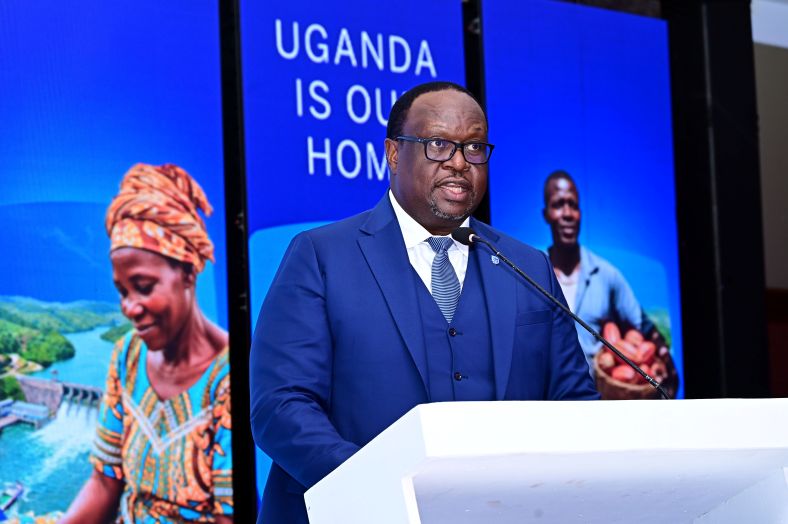
Stanbic Uganda Holdings Limited posted a strong 2025 performance, with profits rising 23.6pc to UGX 591 billion and a Ushs 360 billion dividend payout. The results highlight disciplined execution, balance sheet strength, and sustained growth driven by its banking subsidiary and an improving macroeconomic environment.
Stanbic Uganda Holdings Limited has delivered a strong business growth story for 2025, combining balance sheet expansion, disciplined cost management, and sustained investor confidence to post record earnings and a UGX 360 billion dividend payout to shareholders.
The results validate a model built not just on capital strength, but on consistent execution and strategic focus across its core banking operations.
At the centre of this growth is a 23.6pc surge in net profit to UGX 591 billion, up from UGX 478 billion the previous year, alongside an 11pc increase in revenue. The Group maintained tight cost controls, improving its cost-to-income ratio to 47.1pc, reinforcing operational efficiency even as it scaled.
Return on equity rose to 26.8pc, well above internal targets, signalling the bank’s ability to generate strong value from its capital base. This performance has translated into sustained market confidence, with the Group’s share price rising 89pc over three years to UGX 60 by the end of 2025.
Growth has been anchored by Stanbic Bank Uganda, the Group’s primary revenue driver, which delivered broad-based expansion across deposits, lending, and income streams.
Customer deposits grew by 13pc to UGX 8.0 trillion, reflecting deepening trust and a stable funding base. Lending activity also accelerated, with net loans and advances rising 16.4pc to UGX 5.1 trillion, supported by improved credit processes and measured risk-taking.
Revenue from the banking subsidiary increased to UGX 1.4 trillion, driven by both interest income and diversified non-funded income streams—highlighting a shift toward a more balanced earnings mix.
This performance comes amid a leadership transition, with outgoing Group CEO Francis Karuhanga closing his tenure on a high, while Mumba Kalifungwa delivered a strong first year at the helm of the banking subsidiary.
Stanbic’s growth trajectory has been supported by robust financial fundamentals, positioning it to scale without compromising stability.
Capital adequacy remains strong, with a total capital ratio of 23pc—nearly double regulatory requirements—providing ample headroom for future expansion. Asset quality is equally solid, with non-performing loans at just 1.7pc, significantly below the bank’s risk threshold.
Liquidity levels remain exceptionally high, with a liquidity coverage ratio of 354pc, ensuring resilience even under stressed market conditions. These metrics point to a business growing from a position of strength rather than leverage.
The Group’s performance aligns with an improving macroeconomic environment in Uganda, where GDP growth accelerated to 6.3pc in 2025, supported by easing monetary conditions and stronger investor sentiment.
Inflation remained contained at 3.6%, while the local currency strengthened, reflecting improved foreign exchange inflows. Progress toward oil production has also bolstered medium-term growth expectations, creating a supportive backdrop for credit expansion and investment.
Beyond financial performance, Stanbic is positioning its next phase of growth around sustainability and inclusion through its “Positive Impact” agenda.
The strategy focuses on expanding financial access, supporting enterprise development, financing infrastructure, and advancing climate resilience—areas increasingly seen as critical to long-term economic transformation.
As the Group approaches 35 years in Uganda this year, its growth story reflects a shift from scale alone to impact-driven expansion—where profitability, resilience, and national development are increasingly intertwined.
In effect, Stanbic’s 2025 performance illustrates a broader lesson in business growth: sustained success is less about rapid expansion, and more about disciplined execution, diversified income, and the ability to align strategy with evolving economic realities.
Related Posts
 Uganda Returnees Look to Rebuild Livelihoods as Government Pledges UGX2bn
 ERAM Award puts Uganda’s Animal-Health Manufacturing Ambitions in Focus
 Agroecology Week Targets Stronger links Between Farmers, Policy and Markets
 Energy Ministry and Equity Bank target lower hotel energy costs through green investment initiative
 FAA Certifies Boeing 737-10, Clearing Path for Deliveries of Largest 737 MAX Variant
 Aviation Industry Coalition Presses EU to Protect Voluntary use of Biometric Travel Technology
Get business news delivered to you everyday
Latest News

Uganda Returnees Look to Rebuild Livelihoods as Government Pledges UGX2bn

Beyond Gold Exports, Uganda’s Next Test Is Economic Transformation

ERAM Award puts Uganda’s Animal-Health Manufacturing Ambitions in Focus

Why Community-Led Climate Action Is Essential to Building Climate Resilience

Agroecology Week Targets Stronger links Between Farmers, Policy and Markets

Stanbic Commits UGX20m to Virunga Gorilla Marathon’s Conservation Drive

Energy Ministry and Equity Bank target lower hotel energy costs through green investment initiative

FAA Certifies Boeing 737-10, Clearing Path for Deliveries of Largest 737 MAX Variant

Somalia Recognises IATA Safety Audits in Push for Common African Aviation Standards

Stanbic Donates UGX40 Million in Maternal Health Equipment to Obongi Facility