
Equity Group eyes AI systems to become Transformation Finance Institution
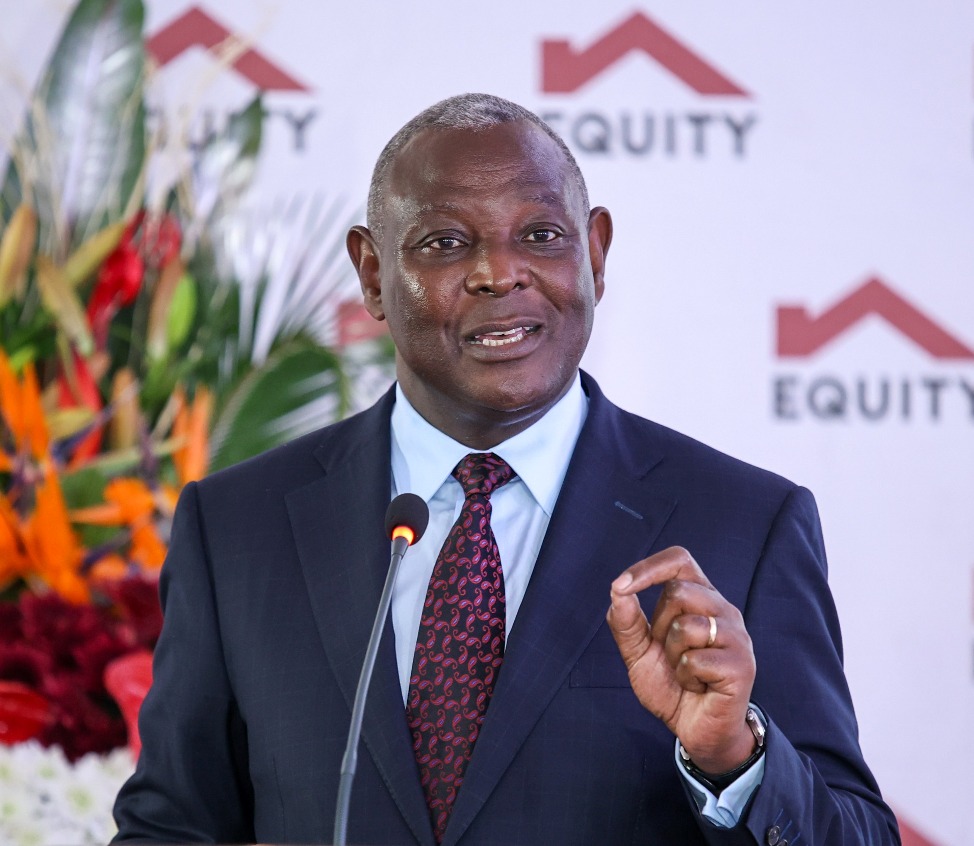 Dr. Mwangi said Equity’s technology-led transformation is now firmly embedded across the Group, reinforced by large-scale staff up-skilling.
Equity Group Holdings, the rapidly expanding financial services company based in Nairobi, is preparing for the next phase of growth under its 2030 strategy, anchored on the $65 billion Africa Recovery and Resilience Plan (ARRP).
The strategy aims to expand operations to 15 countries from the current seven, serve 100 million customers, and deploy next generation digital and AI-enabled systems and become a Transformation Finance Institution.
Besides Kenya, Equity Group, has banking operations in the Democratic Republic of Congo (DRC), Tanzania, Uganda, Rwanda, South Sudan and a representative office in Ethiopia.
Speaking recently during the release of first quarter results, Dr. James Mwangi, Group Managing Director and CEO said, “As we progress toward our 2030 ambitions, we are evolving beyond traditional banking into a Transformation Finance Institution that mobilizes capital, connects ecosystems, and accelerates inclusive, sustainable prosperity across Africa.”
ARRP is a targeted strategy aimed at catalyzing green industrialization, boosting regional supply chains, and increasing investments in agriculture, extractive sectors, and value-added manufacturing. ARRP is also a blueprint designed to transition Equity Group from a traditional bank into a regional, technology-led Transformation Finance Institution.
Dr. Mwangi said Equity’s technology-led transformation is now firmly embedded across the Group. “Customer behaviour continues to shift decisively toward digital channels, with 98.3 pc of all transactions occurring outside branches and 89.5 pc processed through digital platforms, demonstrating that customers are actively choosing the convenience and reliability of Equity’s digital ecosystem,”
The transformation is being reinforced by large-scale staff up-skilling, with employees embracing AI and digital training in a way that will position them to lead the next phase of the Group’s innovation strategy. This includes 80% of Group staff completing a business-focused generative AI course, with over 20,000 hours of instruction achieved. Investments in human resources, is expected to result in faster service delivery, improved risk management, and scalable growth across all markets.
Another major component of ARRP is redirecting liquidity equivalent to two percent of the region’s GDP toward the private sector, targeting critical value chains in agriculture, manufacturing, MSMEs, and infrastructure. The plan also aims to create up to 50 million jobs across the continent by 2030 in an equal mix of both direct and indirect.
Dr. Mwangi said, “We are building a future-ready institution; scalable, secure, and impact-led, anchored in digital capabilities, staff up-skilling, and a culture of disciplined execution.”
In implementing ARRP, Equity Group, among other underlying objectives, wants to capacitate, finance and connect East African Community (EAC) value chains to global supply chains. EAC membership is presently made up of Burundi, the DRC, Kenya, Rwanda, Somalia, South Sudan, Tanzania and Uganda.
Addressing the Africa CEO Forum 2026 in Kigali recently, Dr. Mwangi said, “We want to enable trade across the continent and create platforms that empower businesses and entrepreneurs to scale.”
Equity Group is betting on a positive outlook for a region that has access to critical raw materials; can support industrial capacity needs and an entrepreneurial and innovative local work force; and provides a sizeable market that is increasingly becoming more integrated.
The EAC is seen as the cornerstone for the successful implementation of ARRP. By providing an integrated single market with unified regulations, the EAC allows Equity Group to scale its financial services across borders, directly fueling the plan’s ambitious goals to reach 100 million customers and create 50 million jobs.
For the past three years, the African Development Bank has ranked East Africa, as the fastest growing economic region. According to the 2026 African Economic Outlook released during midweek, although East African growth is projected to ease from 6.6 percent in 2025 to 5.9 percent in 2026, due to rising energy and import costs linked to Middle East disruptions, a rebound to 6.4 percent is anticipated in 2027.
Related Posts
 Stanbic experts offer investment insights to navigate current market uncertainty
 Equity Bank Urges Diaspora Ugandans to Turn Remittances into Investments
 Equity Bank Targets Uganda’s Artisanal Miners as Financing Gap Limits Mining Growth
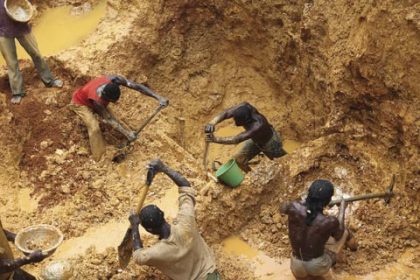 Why Unlocking Africa’s Next Mining Powerhouse Requires Strong Financial Partnerships
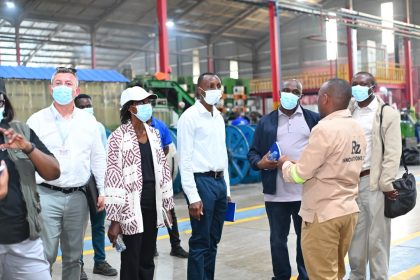 Equity Trade Mission Puts Uganda’s Manufacturing Capacity to Regional Test
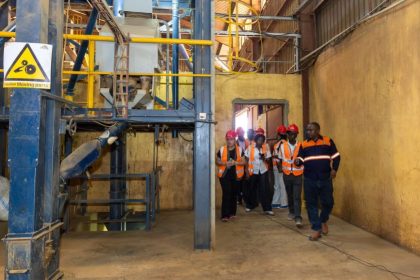 Equity Bank Explores Value-Chain Financing to Support Zigoti Coffee Expansion
Get business news delivered to you everyday
Latest News

SITA Acquisition of Collins Airport Solutions Signals Moves to Consolidate Aviation Technology

Uganda Coffee Roasters Tap Richard Rugaya as Executive Director, with Focus on Commercial Growth

Equity Bank Reports UGX37.6 Billion in Green Loans as Uganda Seeks to Scale Climate Investment

Why Africa’s Institutions Must Turn Knowledge and Investment into Farmer Prosperity

Forbes ranks MTN Group third globally on best telecom employer list

Stanbic experts offer investment insights to navigate current market uncertainty

Africa Carbon Markets Urged to Turn Potential into Investment and Delivery

Bank of Uganda hikes base rate from 9.75% to 12% amidst global tensions

Corporate Buyers Could Help Unlock SAF Market Worth Millions of Tonnes by 2030

Airbus sees USD420bn Global Aviation Services Boom: Can Africa Capture its Share?