

From Aid to Enterprise: Financial Inclusion Reshapes Refugee Economies in Uganda
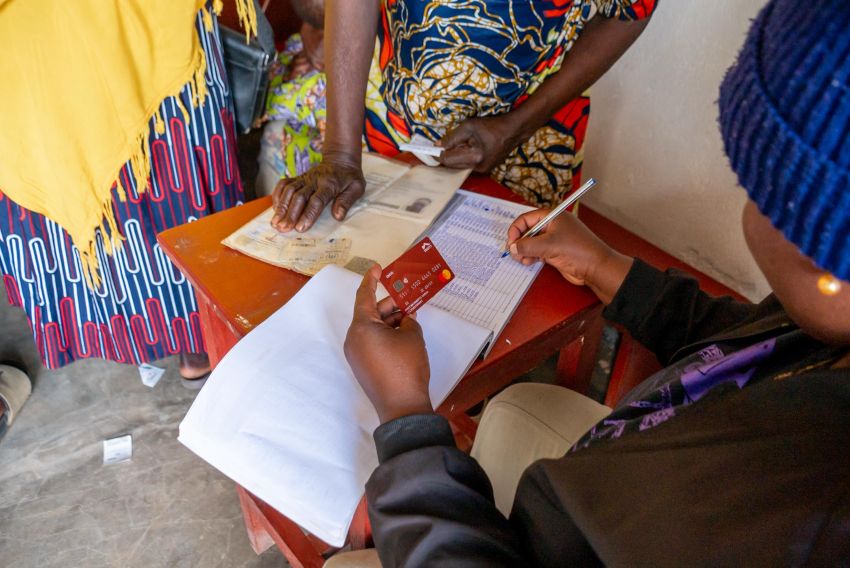 Equity Bank staff working on one of the Refugee client
Access to banking, credit and digital payments is helping thousands of refugees in Uganda transition from humanitarian dependence to entrepreneurship, creating businesses, jobs and new opportunities for host communities.
For decades, humanitarian responses to refugee crises have focused on immediate needs—food, shelter, healthcare and protection. While essential, such interventions often leave displaced populations trapped in cycles of dependency, with limited opportunities to rebuild livelihoods and regain economic independence.
In Uganda, a different story is beginning to emerge. As the world marked World Refugee Day on June 20, evidence from refugee-hosting districts across the country suggests that access to financial services is becoming a powerful tool for economic transformation. Increasingly, refugees are opening bank accounts, accessing credit, receiving digital payments and building businesses that support both their families and local economies.
The shift reflects a growing recognition that refugees are not merely beneficiaries of aid but potential contributors to economic growth when given access to the right financial tools.
One institution at the centre of this transition is Equity Bank Uganda, which has worked with humanitarian and development partners to expand financial access among refugee and host communities.
Through its digital banking infrastructure, the bank has facilitated cash transfers worth more than UGX301.7 billion to over 132,699 refugee households. While the funds have helped families meet immediate needs such as food, education and healthcare, they have also served as an entry point into the formal financial system for many beneficiaries.
Access to financial services remains a challenge in many refugee-hosting areas, which are often located far from urban centres and traditional banking infrastructure. To bridge that gap, Equity Bank has deployed more than 262 banking agents across refugee settlements and surrounding host communities.
The network has brought banking services closer to thousands of people who previously faced long and costly journeys to access financial institutions.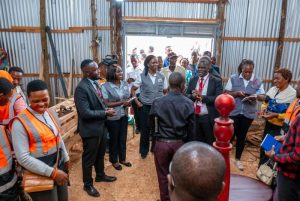
Through these agents, refugees can open accounts, receive payments, save money and conduct transactions within their communities, reducing dependence on cash-based systems and increasing participation in the formal economy.
Access to bank accounts aside, the most important step toward economic independence for many refugees has been access to credit.
Recognising that many refugees lack conventional collateral or formal credit histories, Equity Bank introduced lending programmes that assess borrowers based on business viability, character and cash flow potential rather than traditional security requirements.
Over the past three years, 381 refugee groups have accessed loans worth approximately UGX1.8 billion. The financing has supported businesses ranging from tailoring workshops and retail shops to agricultural enterprises and small-scale trading operations.
These ventures are generating income for refugee households while creating employment opportunities and stimulating economic activity within surrounding communities.
The impact is particularly visible among women entrepreneurs. Women account for the majority of beneficiaries reached through the programmes, with 7,182 women participating compared to 3,867 men. Their growing involvement reflects broader evidence that women’s economic empowerment often produces multiplier effects through increased spending on education, healthcare and household welfare.
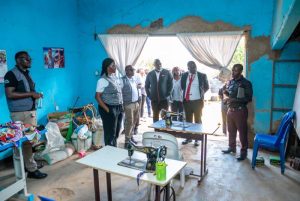
Equity Bank officials visiting one of their clients in the Refugee settlement area
Uganda’s refugee policy has also played a critical role in enabling this progress. Unlike many countries that restrict economic participation among displaced populations, Uganda allows refugees to work, move freely and establish businesses. This framework has created opportunities for financial institutions, development agencies and private-sector actors to support refugees as active participants in local economies.
The result is an increasingly integrated economic model in which refugee settlements are becoming centres of entrepreneurship, commerce and financial activity.
When humanitarian resources move through formal financial channels, local businesses benefit from increased spending, markets expand and opportunities emerge for both refugee and host communities.
The broader lesson from Uganda’s model is that financial inclusion can be a powerful development tool. While humanitarian assistance remains essential, long-term resilience depends on creating pathways to self-reliance. Access to savings, payments, credit and business opportunities enables displaced populations to build assets, generate income and contribute to economic growth.
As the international community reflected on World Refugee Day, the experience emerging from Uganda’s refugee settlements offers compelling insights for policymakers and development practitioners alike.
The future of refugee support may lie not only in meeting immediate needs but also in unlocking economic potential. Increasingly, refugees are demonstrating that when given access to finance and opportunity, they can become entrepreneurs, employers and engines of local development.
For Uganda, that transformation is helping rewrite the refugee narrative—from one of displacement and dependency to one of enterprise and economic participation.
Related Posts
 Uganda Coffee Roasters Tap Richard Rugaya as Executive Director, with Focus on Commercial Growth
 Why Africa’s Institutions Must Turn Knowledge and Investment into Farmer Prosperity
 Forbes ranks MTN Group third globally on best telecom employer list
 Stanbic experts offer investment insights to navigate current market uncertainty
 Africa Carbon Markets Urged to Turn Potential into Investment and Delivery
 Corporate Buyers Could Help Unlock SAF Market Worth Millions of Tonnes by 2030
Get business news delivered to you everyday
Latest News

SITA Acquisition of Collins Airport Solutions Signals Moves to Consolidate Aviation Technology

Uganda Coffee Roasters Tap Richard Rugaya as Executive Director, with Focus on Commercial Growth

Equity Bank Reports UGX37.6 Billion in Green Loans as Uganda Seeks to Scale Climate Investment

Why Africa’s Institutions Must Turn Knowledge and Investment into Farmer Prosperity

Forbes ranks MTN Group third globally on best telecom employer list

Stanbic experts offer investment insights to navigate current market uncertainty

Africa Carbon Markets Urged to Turn Potential into Investment and Delivery

Bank of Uganda hikes base rate from 9.75% to 12% amidst global tensions

Airbus sees USD420bn Global Aviation Services Boom: Can Africa Capture its Share?

Nile Breweries Celebrates 75 Years of Growing with Uganda